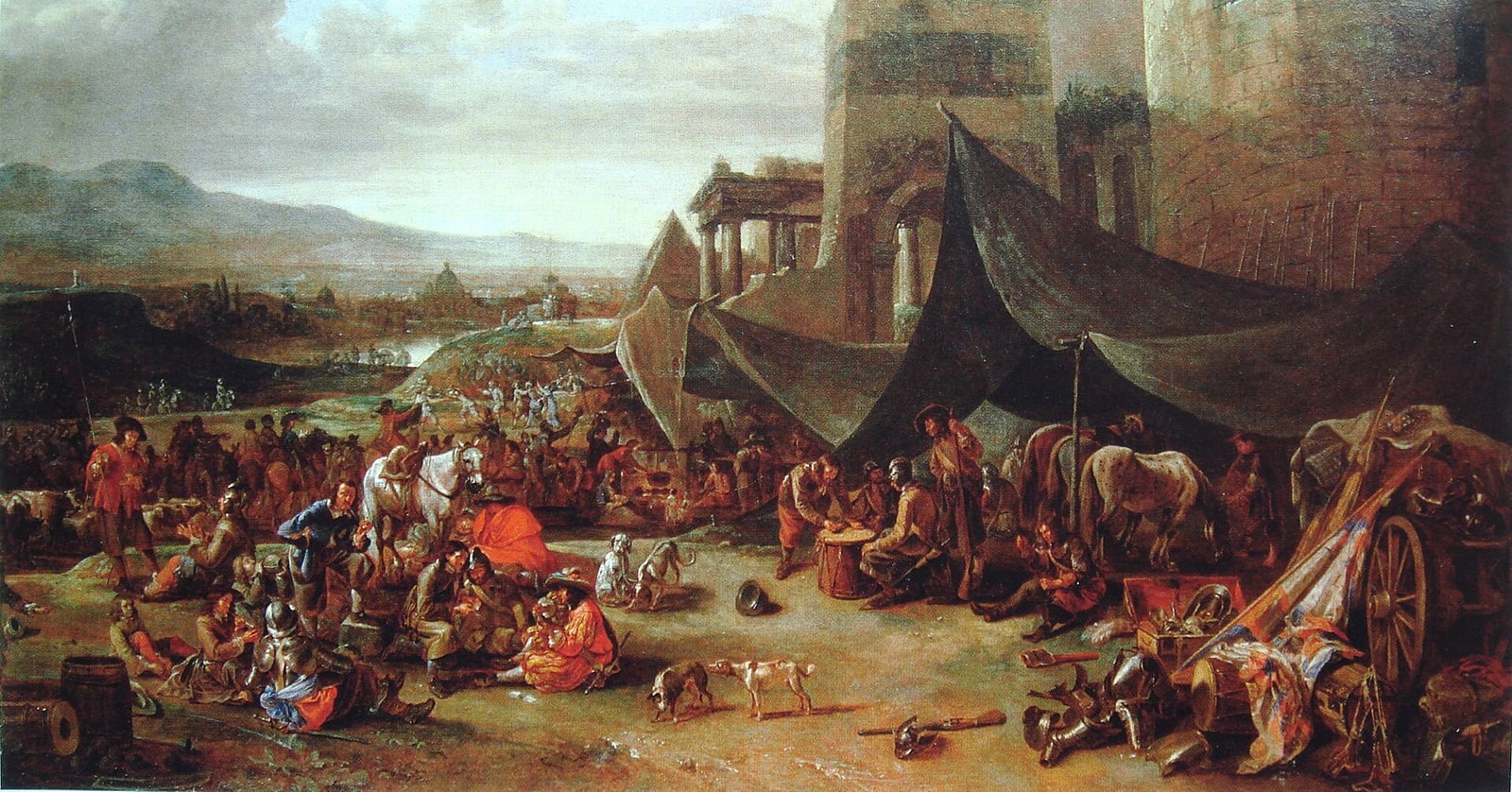
Mutinous Imperial Troops Sack Rome
Unpaid soldiers of Emperor Charles V stormed Rome, plundered it for months and kept Pope Clement VII shut in the Castel Sant’Angelo.
On May 6, 1527, mutinous soldiers under the nominal command of the Holy Roman Emperor Charles V assaulted the walls of Rome. The imperial forces had advanced south during the War of the League of Cognac, an alliance formed by Pope Clement VII alongside France, Venice, Milan, and Florence to resist the expanding power of the Habsburg monarchy. Historians disagree on whether Charles V authorized the attack, and he later distanced himself from the atrocities. His treasury was empty, and an army of perhaps 20,000 men or more, made up mostly of German Landsknechte and Spanish troops, with Italian soldiers as well, went unpaid, refused to honor a truce agreed in March 1527 and marched toward the wealthy papal capital.
Rome had the ancient Aurelian Walls, but its defending force was small and poorly trained. Approximately 5,000 local militiamen under Renzo da Ceri and 189 Swiss Guards stood against the invaders. Early in the morning assault on the Vatican and Gianicolo hills, the imperial commander, Duke Charles III of Bourbon, was fatally wounded. The artist Benvenuto Cellini later claimed credit for firing the fatal shot. The loss of Bourbon removed any remaining discipline from the imperial ranks, and the attackers quickly breached the fortifications.

Keep reading in Yester
Coming soonKeep following the story
Sources
Image: Johannes Lingelbach · Public domain · Wikimedia Commons · cropped
