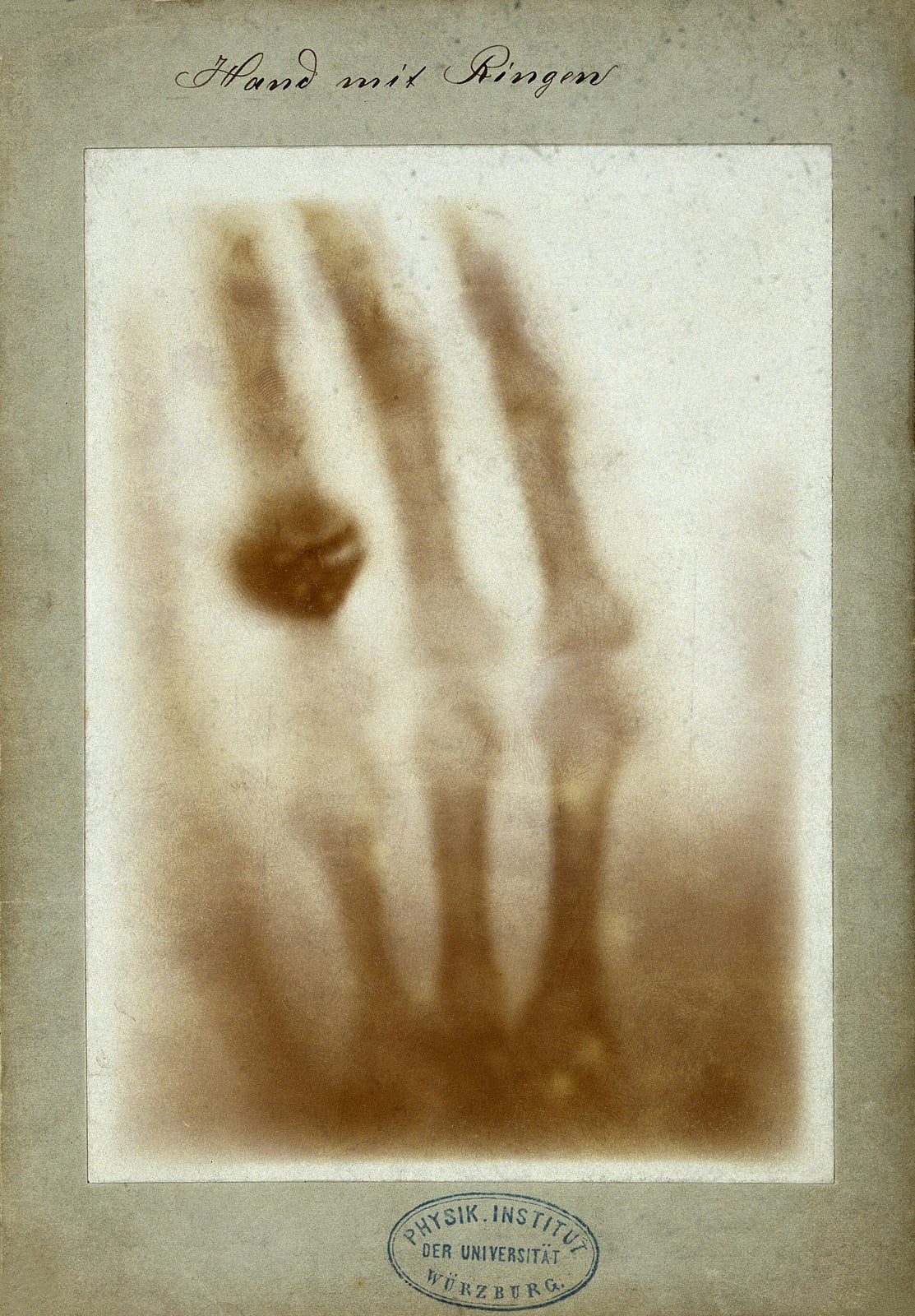
Röntgen Takes an X-Ray of His Wife’s Hand
Within weeks of the first X-ray image, doctors were using the new rays to find bullets and broken bones.
In the late autumn of 1895, Wilhelm Conrad Röntgen was working in his laboratory at the Physical Institute of the University of Würzburg, examining the effects of electric charges passed through evacuated glass tubes. He had assembled apparatus designed by contemporary investigators, including Johann Hittorf, William Crookes, and Philipp Lenard. On the afternoon of November 8, 1895, Röntgen covered a thick-walled Crookes-Hittorf tube with opaque black cardboard to block all visible light, intending to verify whether cathode rays could stimulate fluorescence through the heavier glass. After darkening the room and activating the induction coil, he observed an unexpected glimmer from a nearby bench, where a small cardboard screen coated with barium platinocyanide sat several feet away.
Repeated discharges generated the same faint luminescence, confirming to the physicist that an invisible emission was traversing the space between the tube and the coated surface. Because the emissions cast regular shadows, Röntgen concluded that they behaved as rays, yet their properties differed fundamentally from ordinary light or previously identified cathode emissions. Unable to determine their exact physical nature, he used the mathematical symbol for an unknown quantity and designated them X-rays. Over the ensuing weeks, Röntgen lived almost continuously in his workspace, methodically examining how different substances obstructed or transmitted the mysterious radiation.

Keep reading in Yester
Coming soonKeep following the story
Sources
- This Month in Physics History: November 8, 1895: Roentgen's Discovery of X-Rays (American Physical Society)
- When the invisible was made visible (LMU Munich)
- Wilhelm Conrad Roentgen biography (International Day of Radiology, reproducing the Nobel biography)
- "I Have Seen My Death": The First X-Ray Photograph (Hyperallergic)
- Do we really stand on the shoulders of giants? (AuntMinnie Europe)
- Wilhelm Röntgen
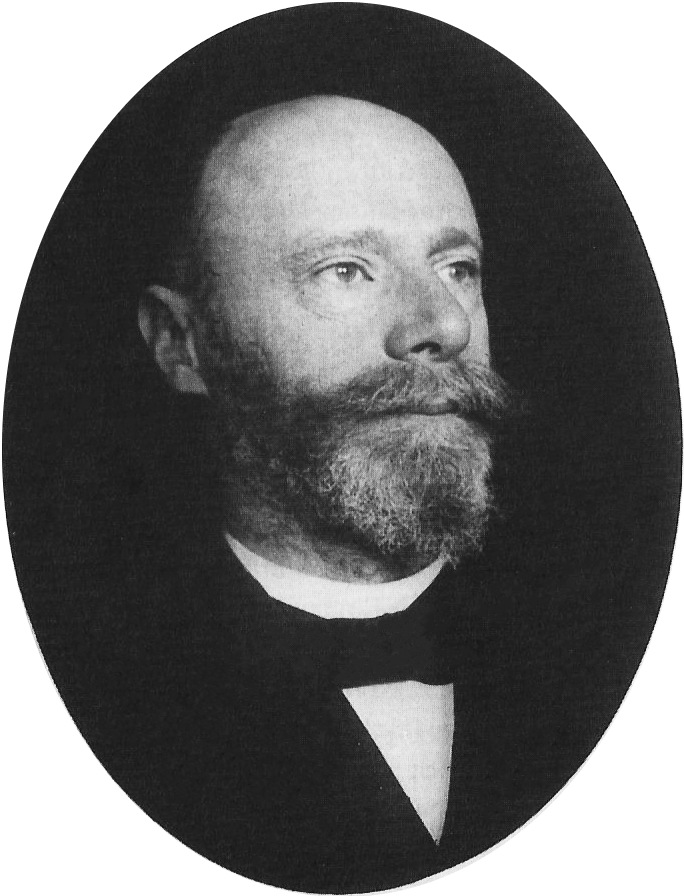
Image: Wilhelm Röntgen · Public domain · Wikimedia Commons · cropped
