Fishermen’s Wives Start Japan’s Rice Riots
A protest by women in a Toyama fishing town against soaring rice prices spread across Japan and brought down the government.
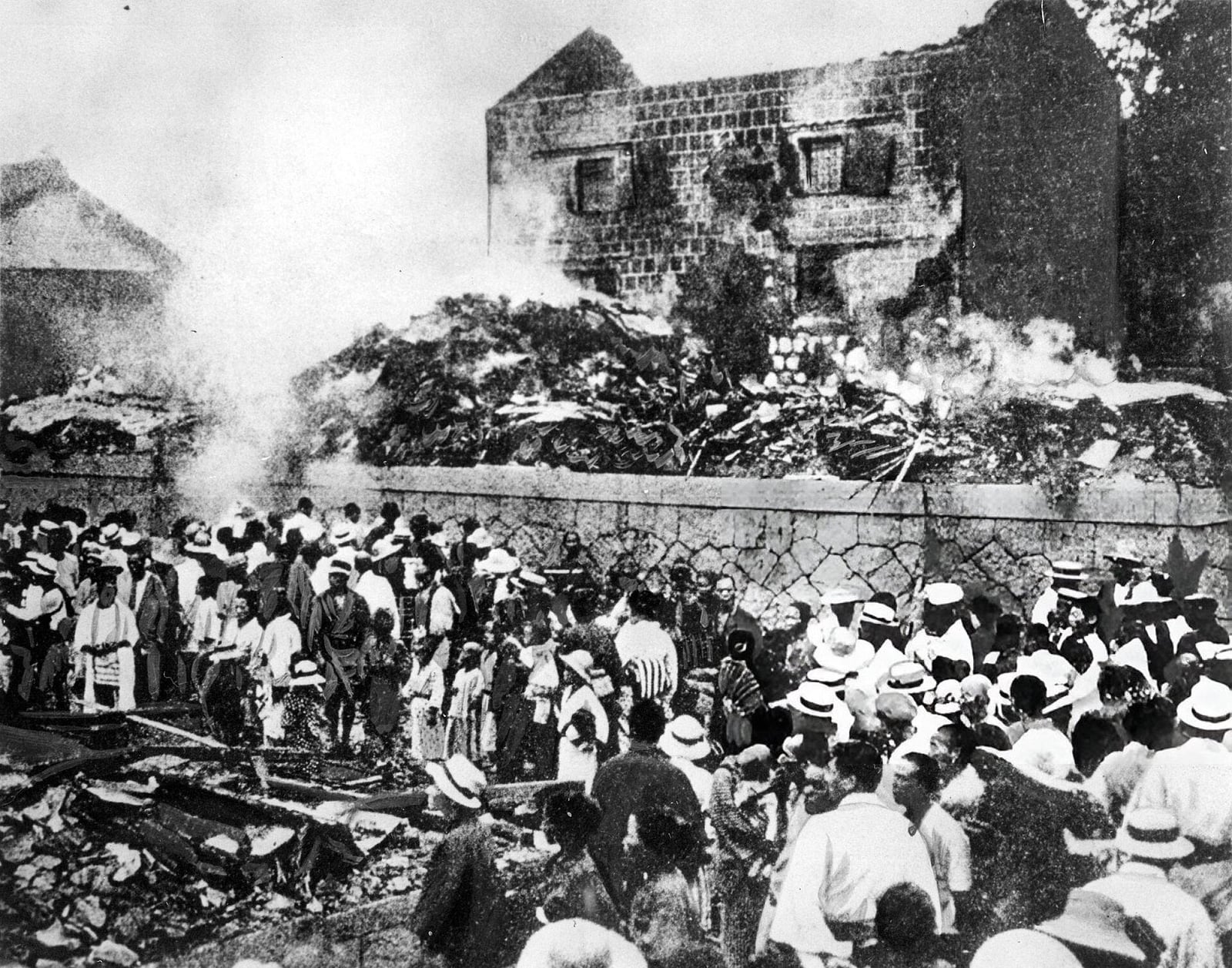
In the early morning of 23 July 1918, a gathering of women in the coastal town of Uozu, located along Toyama Bay, sparked an unprecedented wave of unrest across Japan. While industrial production had expanded rapidly during the First World War, wartime inflation and speculation tied to the Siberian Intervention pushed the price of rice sharply upward, and it roughly doubled within a short time, while real wages fell. Despite Toyama being a productive rice-growing area, local grain was regularly shipped out for sale in distant urban centers, pushing local prices out of reach. Resentful of being priced out while seeing grain leave their ports, the wives of local fishermen and stevedores gathered at the shore to stop rice from being loaded onto ships and appealed to merchants and authorities to lower prices.
These early coastal demonstrations relied on traditional appeals to community norms, demanding that local elites guarantee access to affordable food. However, the movement quickly transformed as word of the Toyama protests spread. Within days, massive disturbances erupted in major cities including Tokyo, Osaka, Kyoto, Kobe, and Nagoya. In these urban environments, public anger shifted from traditional appeals to direct confrontation with the political order. Citizens gathered in large public rallies to denounce merchant hoarding, wartime profiteers, and the administration of Prime Minister Terauchi Masatake. Crowds attacked rice exchanges, dealer offices, and government property, while sympathy walkouts disrupted municipal transport systems and state-run production facilities.

Keep reading in Yester
Coming soonKeep following the story
Sources
Image: Unknown, originally published in Asahi Shimbun · Public domain · Wikimedia Commons · cropped
