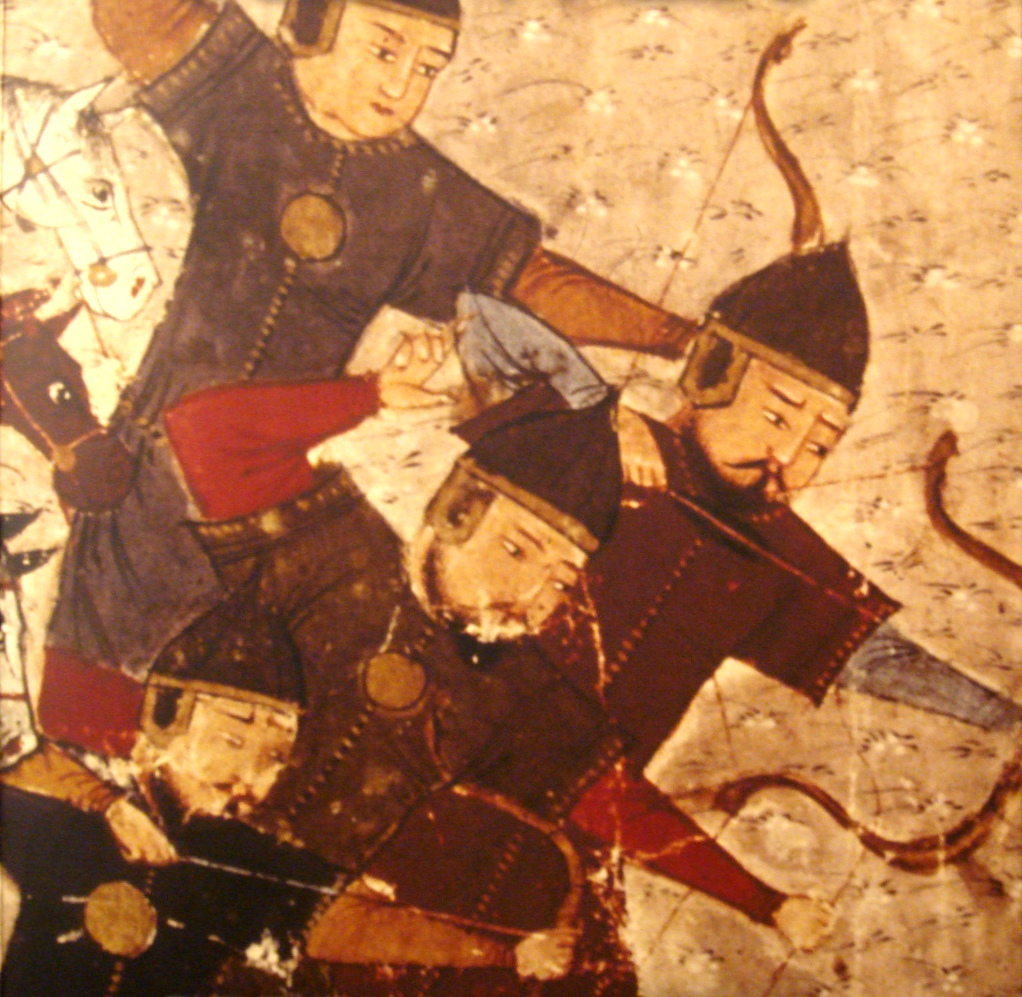
Rashid al-Din Writes a History of the World for the Mongol Ilkhans
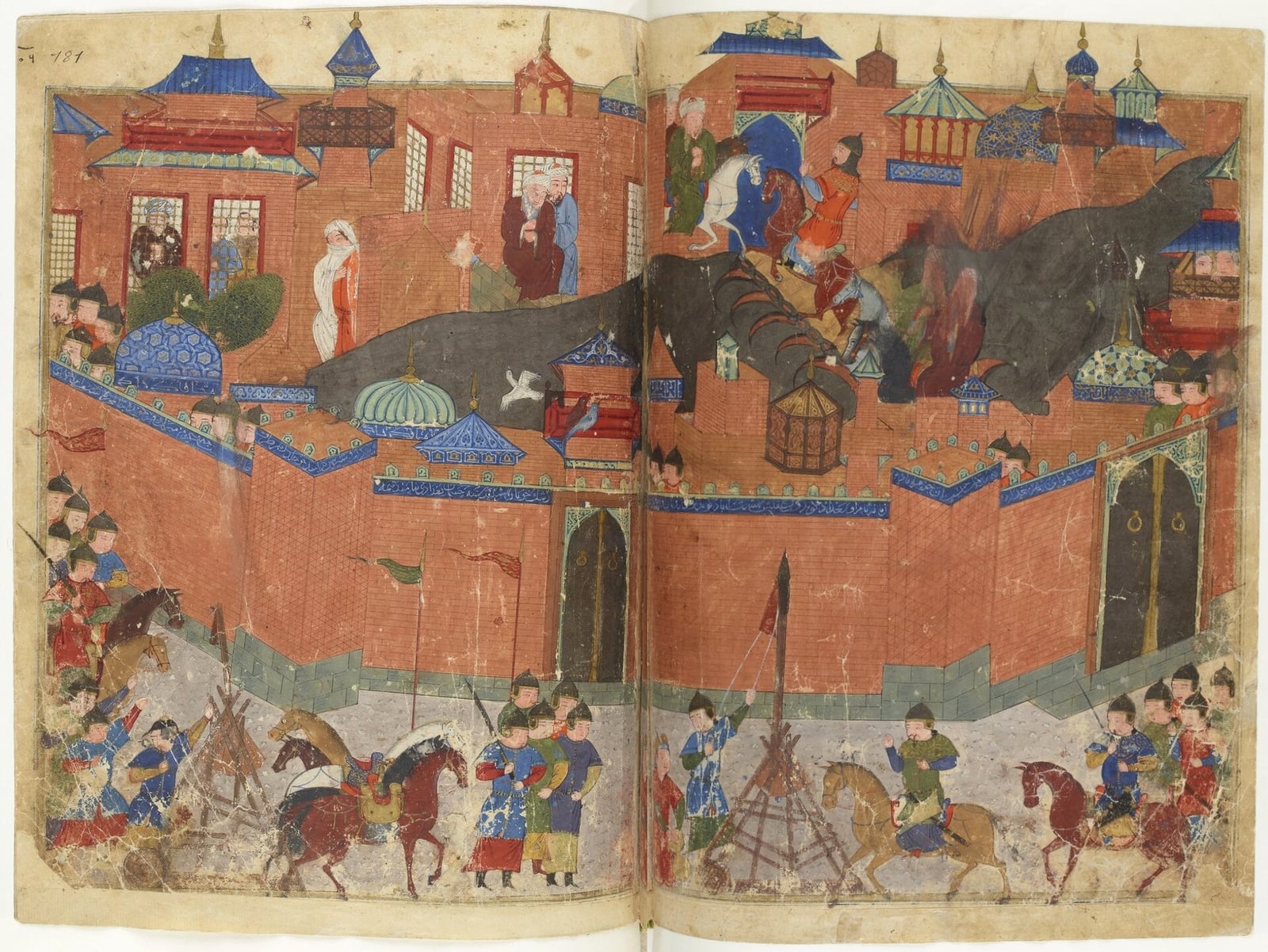
Vizier to the Ilkhans, Rashid al-Din compiled a world history in Tabriz whose illustrated copies hold some of the earliest pictures of the Mongols.
At the beginning of the fourteenth century, the Mongol Ilkhanate centered in northwestern Iran undertook an extraordinary literary and artistic enterprise. Born around 1247, probably in Hamadan, to a Jewish family, the physician Rashid al-Din Hamadani had converted to Islam around age thirty and risen through the imperial administration to become co-vizier in 1298. Commissioned initially by the Ilkhan Mahmud Ghazan, Rashid al-Din set out to record the genealogical traditions and history of the Mongols and their steppe predecessors. Following Ghazan's death in 1304, his successor Öljaitü expanded the project's scope, ordering a universal history that would cover the known world.
The resulting work, titled Jami al-tawarikh or Compendium of Chronicles, was written between about 1300 and 1310, although it is uncertain that Rashid al-Din's version was ever fully completed. Planned in several volumes, it opened with the history of the Mongol and Turkic tribes up through Ghazan's reign, followed by accounts of non-Mongol civilizations across Eurasia. These narratives encompassed biblical patriarchs, pre-Islamic Persian monarchs, Muhammad and the caliphs, as well as distinct sections on Jewish history, China, India, and western Europe. The compendium was also planned to include a geography, although that volume is not known to survive. The work framed Mongol rule within the wider history of the world.

Keep reading in Yester
Coming soonKeep following the story
Sources
Image: Rashid al-Din · Public domain · Wikimedia Commons · cropped
