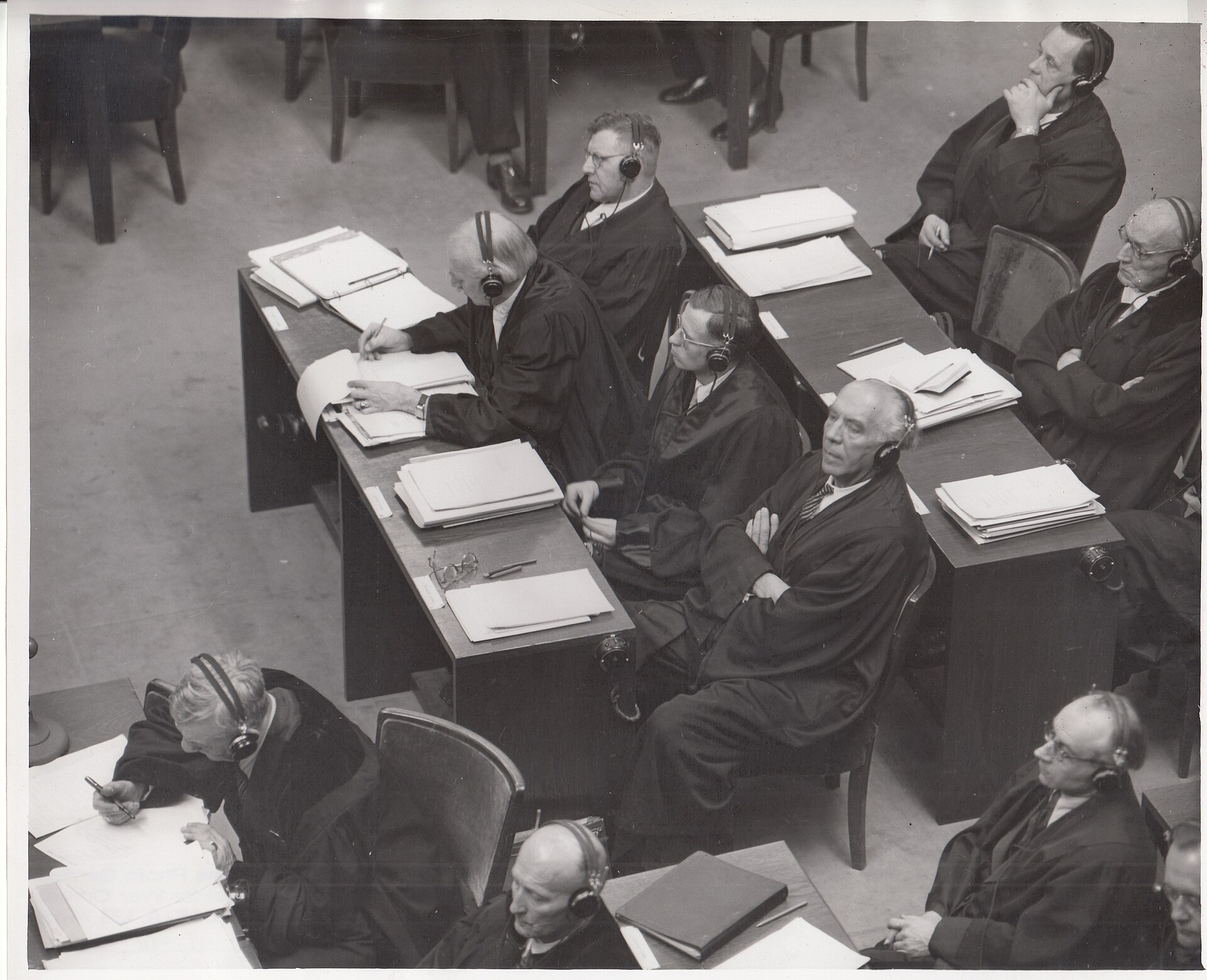
Judges at Nuremberg Set Rules for Human Experiments
After trying Nazi doctors, the court declared that no one may be experimented on without informed consent.
On August 20, 1947, an American military tribunal in Nuremberg, Germany, delivered its verdict in the trial of United States v. Karl Brandt. Known colloquially as the Doctors' Trial, the proceedings targeted twenty-three defendants, predominantly German physicians, accused of orchestrating severe war crimes and crimes against humanity. The charges encompassed brutal, non-consensual medical experiments performed on prisoners in concentration camps, as well as the so-called euthanasia program that killed people with mental and physical disabilities. The court found sixteen of the defendants guilty, including Karl Brandt, and sentenced seven of them to death, but the part of the ruling that lasted longest was a section setting out ten principles for permissible medical research.
Concerns over unethical research practices had arisen in Germany decades before the trial. During the 1920s, public critics and health officials condemned experiments that carried no therapeutic value. In response, the Weimar Republic issued formal guidelines in 1931 that emphasized beneficence, non-maleficence, and consent, strictly banning non-therapeutic experiments conducted without a subject's permission. Following Adolf Hitler's rise to power, however, the Nazi regime set these protections aside. Thousands of physicians joined party organizations and embraced racial hygiene ideologies, ultimately leading to systemic medical atrocities during the Second World War.

Keep reading in Yester
Coming soonKeep following the story

Sources
Image: OMGUS Military Tribunal · Public domain · Wikimedia Commons · cropped
