Newcomen’s Engine Pumps Water from the Mines
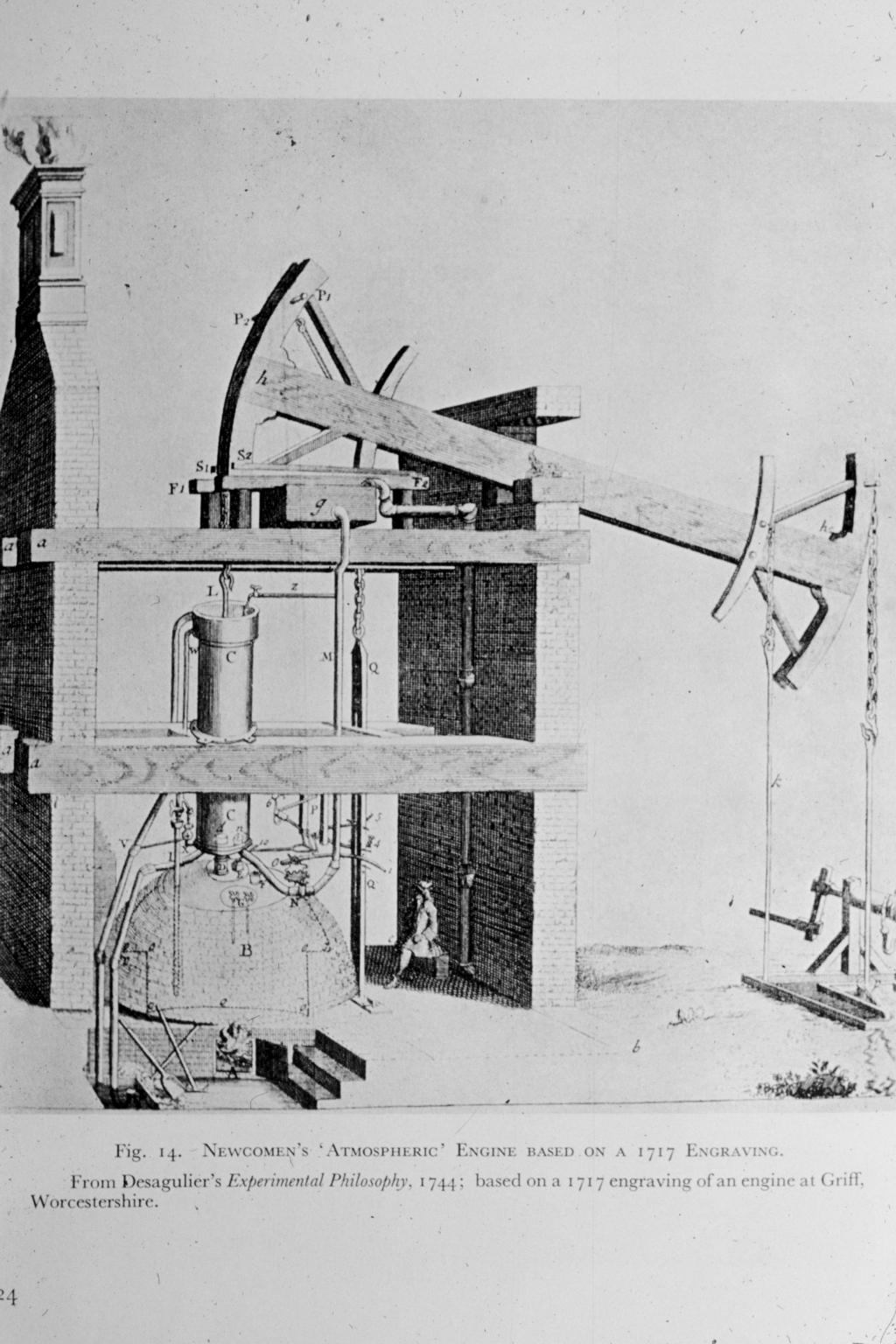
Near Dudley Castle, Thomas Newcomen and John Calley set up a steam engine that drained a coal mine, the first successful engine to drive a piston with steam.
In 1712, ironmonger Thomas Newcomen and his partner John Calley installed an atmospheric steam engine at a colliery near Dudley Castle, usually identified as the Conygree Coalworks. Deepening coal pits throughout Britain faced chronic flooding, yet existing drainage methods could not keep pace with the water levels. Newcomen addressed this crisis by devising an atmospheric engine, creating the first successful piston-driven steam engine.
Earlier inventors had demonstrated the fundamental forces of steam and vacuums, but none had produced a sustained mechanical drive. Denis Papin had shown in 1690 that condensing steam beneath a piston inside a cylinder produced a partial vacuum, allowing atmospheric weight to force the piston down. However, Papin lacked a mechanism to repeat the cycle reliably. Thomas Savery subsequently patented a steam pump in 1698 called the Miner's Friend. Savery relied entirely on direct steam pressure and vacuum suction without moving pistons or rods, leaving his apparatus unable to drive external machinery and limited in how high it could elevate water.

Keep reading in Yester
Coming soonKeep following the story

Sources
Image: Unknown author · Public domain · Wikimedia Commons · cropped
