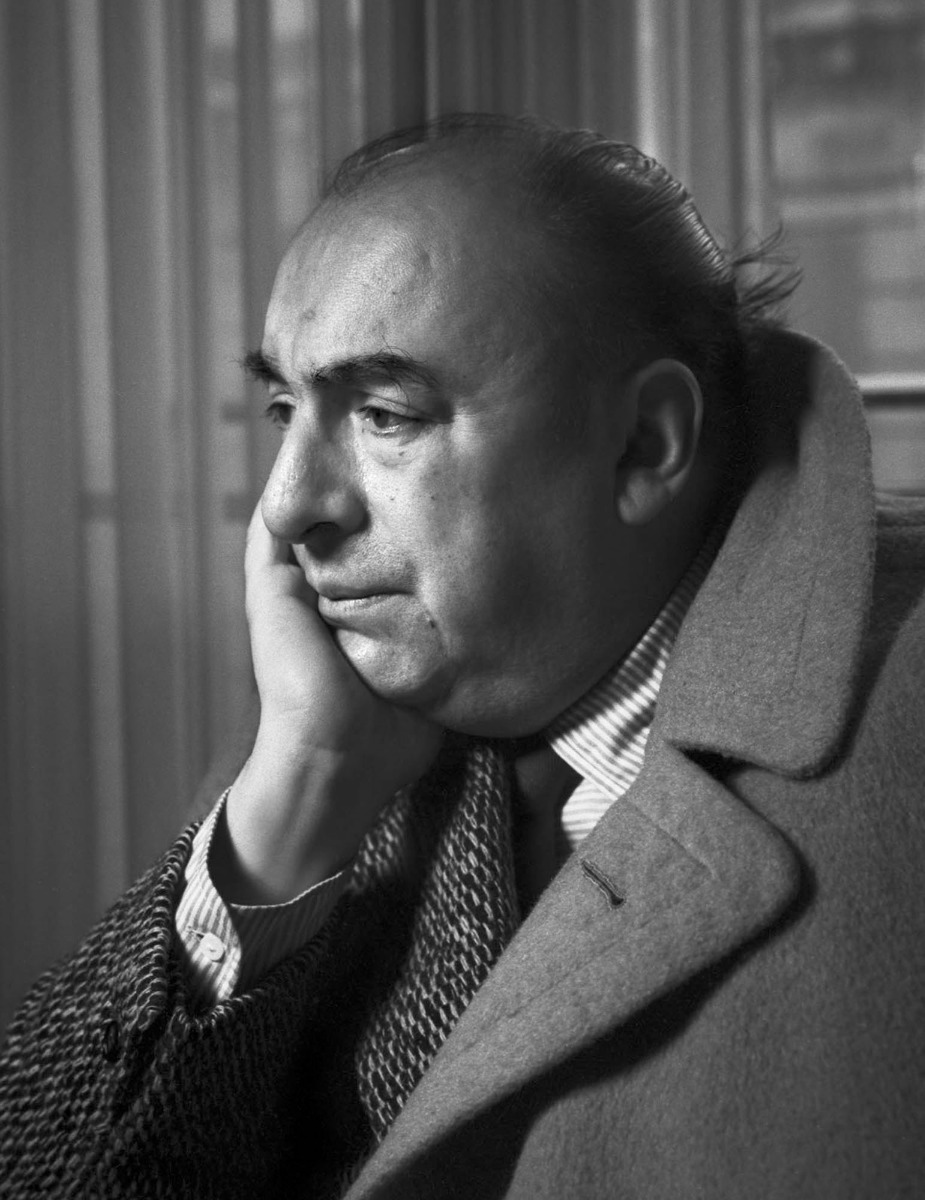
Pablo Neruda Wins the Nobel Prize in Literature
The Chilean poet of love poems and the Canto General became Latin America’s third Nobel laureate in literature.
On October 21, 1971, the Swedish Academy announced that Chilean poet Pablo Neruda had won the Nobel Prize in Literature. The honor celebrated a career spanning five decades, during which Neruda evolved from a precocious author of romantic lyricism into an expansive voice of Latin American political and cultural identity. Born Ricardo Eliecer Neftalí Reyes Basoalto in 1904, he had adopted his pseudonym by 1920, establishing an enduring reputation at age nineteen with the publication of Twenty Love Poems and a Song of Despair.
Neruda had received early literary encouragement from the educator and future Nobel laureate Gabriela Mistral while growing up in Temuco. To support his craft, he entered Chile's foreign service, taking consular postings across Asia in places such as Burma, Ceylon, Java, and Singapore. These solitary years generated the bleak, surrealist verse of Residencia en la Tierra. Later diplomatic assignments brought him to Spain, where the outbreak of the Spanish Civil War and the execution of close friend Federico García Lorca transformed his creative focus toward overt political engagement.

Keep reading in Yester
Coming soonKeep following the story
Sources
- Pablo Neruda: Biographical (NobelPrize.org)
- Pablo Neruda: Nobel Lecture, Towards the Splendid City (NobelPrize.org)
- Homenaje en el Estadio Nacional a Pablo Neruda (Memoria Chilena, Biblioteca Nacional de Chile)
- Allende: Mensaje en homenaje al poeta Pablo Neruda, 5 Dec 1972 (Marxists Internet Archive)
- Pablo Neruda assassination and botulism (McMaster University)
- Pablo Neruda
Image: Annemarie Heinrich · Public domain · Wikimedia Commons · cropped
