Jamaica’s Morant Bay Rebellion Is Crushed with Hundreds of Executions
Paul Bogle led a protest against injustice that turned into a rising, and Governor Eyre’s brutal response became a scandal in Britain.
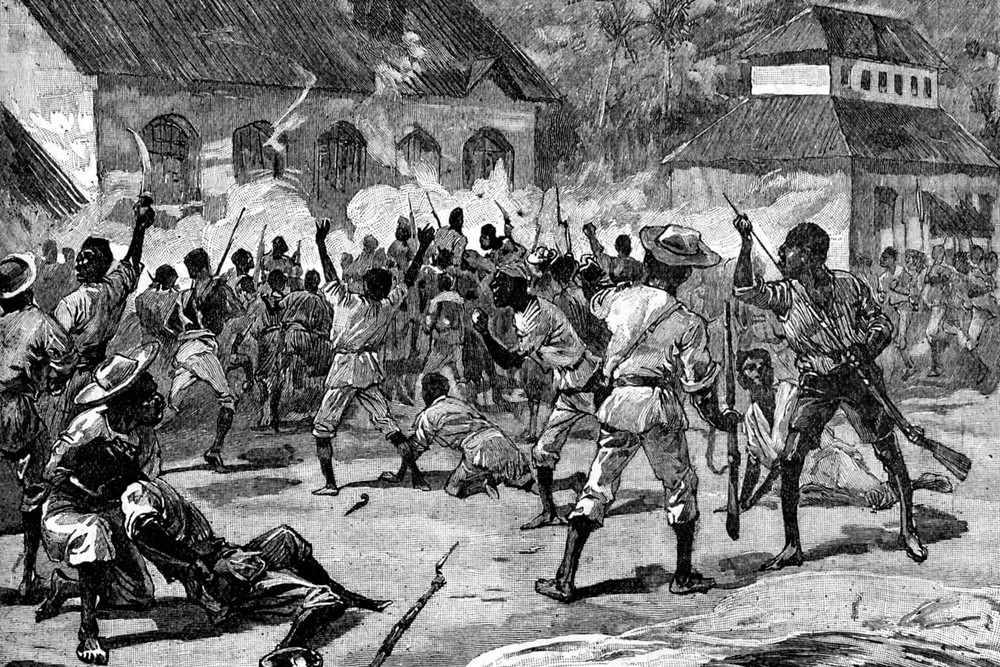
On October 11, 1865, Baptist deacon Paul Bogle led hundreds of rural Jamaican laborers into the coastal town of Morant Bay. Protesting widespread impoverishment, heavy poll taxes, and denial of access to land, the demonstrators converged on the local courthouse. When a local volunteer militia confronted the crowd and opened fire, killing seven men, the demonstration escalated into an uprising. Demonstrators burned the courthouse and nearby buildings, and about 25 people were dead in all, among them seven protesters and 18 officials and militia members, before the unrest subsided. Within days, unrest spread across much of the parish of Saint Thomas-in-the-East.
The rising had been brewing amid decades of deep structural inequality following the end of enslaved apprenticeship in 1838. Although emancipated Jamaicans held legal freedom, colonial authorities kept tax and property qualifications that left most Black Jamaicans without a vote, even though they far outnumbered white residents. Crop damage from floods and a long drought, the decline of many sugar estates, and outbreaks of disease added to the hardship of the rural population.

Keep reading in Yester
Coming soonKeep following the story
Sources
Image: William Heysham Overend · Public domain · Wikimedia Commons · cropped
