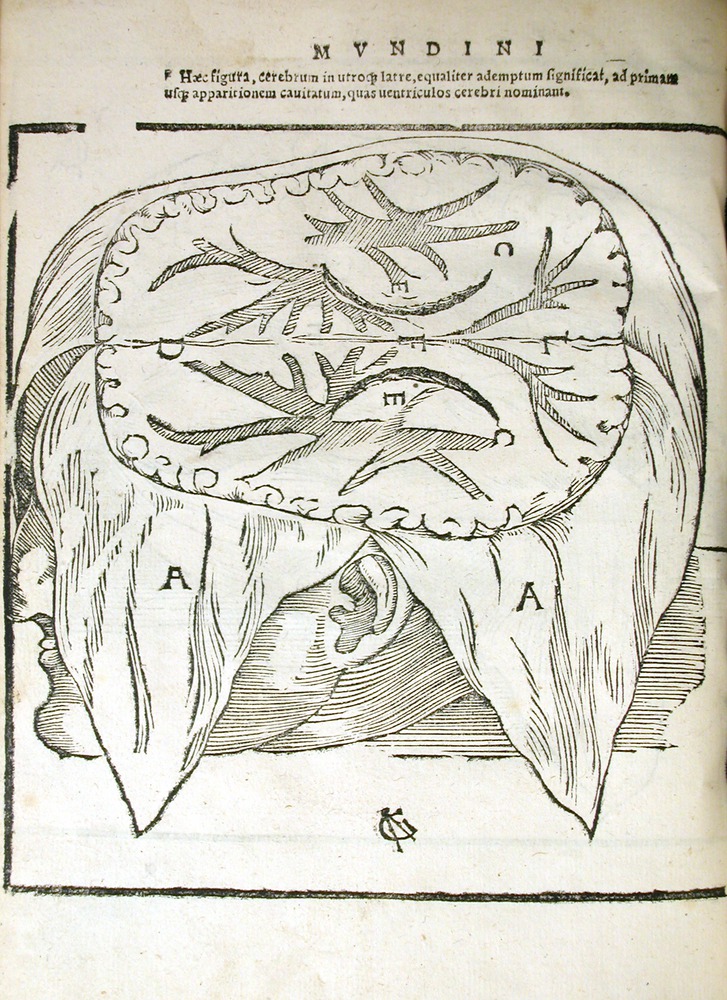
Mondino de Luzzi Writes a Manual Based on Human Dissection
A Bologna professor revived public dissection and wrote the anatomy textbook used for the next two centuries.
In January 1315, the Bolognese physician Mondino de Luzzi conducted a public dissection of a human cadaver, most likely an executed female criminal, before a gathered audience of medical students and spectators. Systematic human dissection had flourished in the ancient Alexandrian school associated with anatomists such as Herophilos, but the practice had long since lapsed. In medieval northern Italy, where bodies were already being opened for medicolegal inquiries, growing acceptance of the procedure created fresh opportunities to explore the interior of the body directly, and Mondino seized the moment by incorporating dissection into the formal medical curriculum at the University of Bologna.
Academic anatomy in the early fourteenth century typically followed a detached ceremony. The senior professor presided from an elevated, ornate chair, reading aloud and commenting upon traditional authorities, while an assistant surgeon performed the incisions and an ostensor pointed to the exposed structures. Mondino appears to have set aside this division of labor at least some of the time. Historians still debate how often he held the knife himself, but he wrote that he had personally anatomized bodies, and he worked his own observations into his teaching. In 1316, drawing on this practical experience, he compiled Anathomia corporis humani as a concise technical handbook for students.

Keep reading in Yester
Coming soonKeep following the story
Sources
Image: Mondino Dei Luzzi, 1541 · Public domain · Wikimedia Commons · cropped
