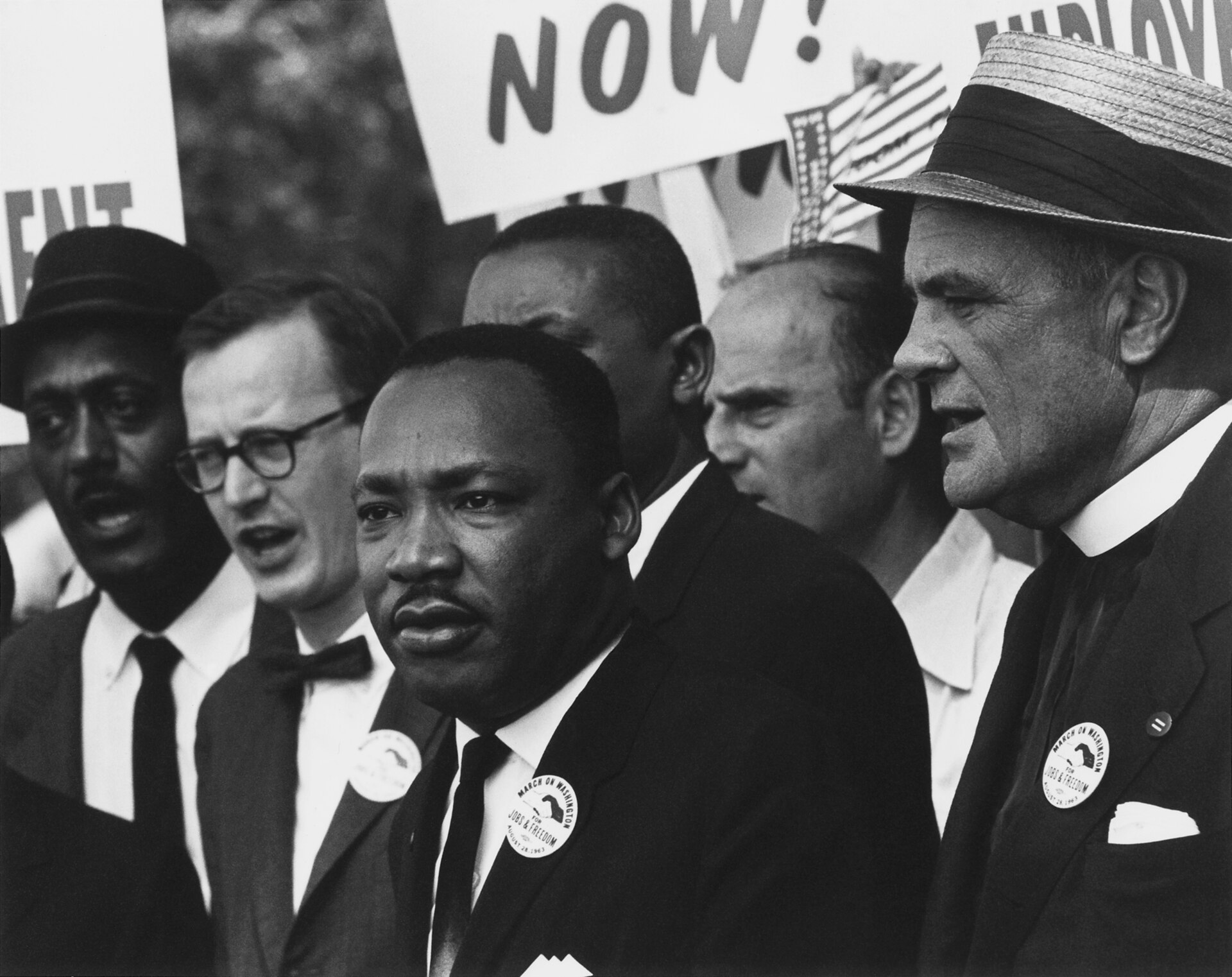
Martin Luther King Jr. Tells the March on Washington “I Have a Dream”
About 250,000 people gathered at the Lincoln Memorial to demand civil rights and economic justice.
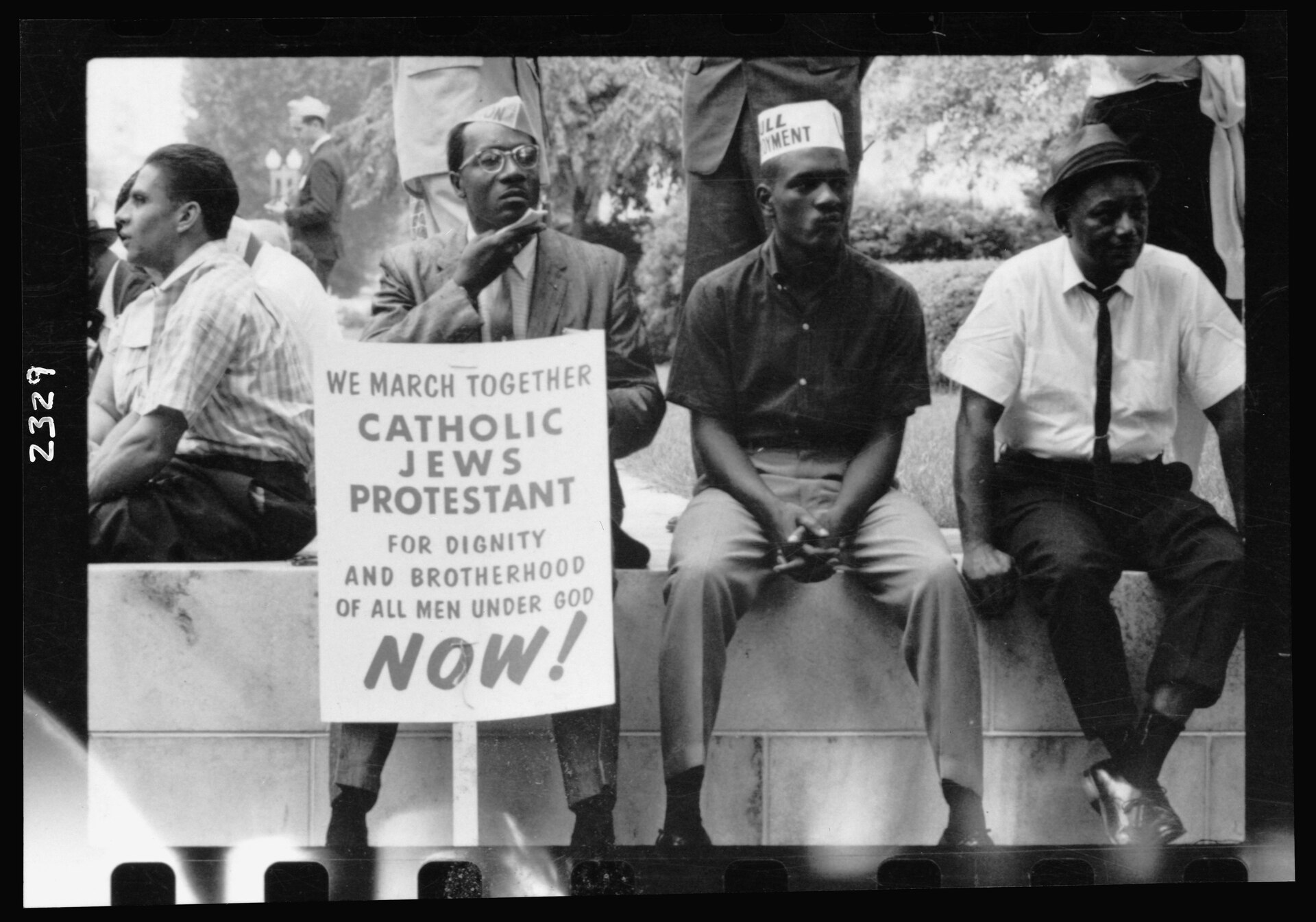
On August 28, 1963, an estimated crowd of between 200,000 and 300,000 people converged on the National Mall in Washington, D.C., for the March on Washington for Jobs and Freedom. The event stood as one of the largest political rallies for human rights in United States history. While the assembly brought together religious groups, labor unions, and civil rights organizations, observers estimated that roughly three-quarters to four-fifths of the participants were Black. Demonstrators arrived from across the country by air, train, car, and thousands of chartered buses, uniting behind demands for economic opportunity and legal equality.
The demonstration grew out of discussions about a large march that had begun by 1962, led by labor leader A. Philip Randolph and civil rights strategist Bayard Rustin. Randolph had previously conceived a march during World War II to protest discrimination in defense hiring, which was canceled when President Franklin D. Roosevelt prohibited bias in defense contractors. For the 1963 effort, Randolph served as titular head while Rustin directed logistics, working with a core staff of about two hundred volunteers to coordinate transportation, schedules, and volunteer marshals. The planning leadership eventually expanded into the Big Ten, incorporating the heads of major civil rights groups alongside religious figures and labor leaders, including United Auto Workers president Walter Reuther.

Keep reading in Yester
Coming soonKeep following the story
Sources
- March on Washington for Jobs and Freedom (Martin Luther King, Jr. Research and Education Institute, Stanford)
- March on Washington for Jobs and Freedom (National Park Service)
- Official Program for the March on Washington (National Archives)
- March on Washington (Encyclopaedia Britannica)
- The 1963 March on Washington got off to a rocky start (AFRO American Newspapers)
- 10 fascinating facts about the I Have a Dream speech (National Constitution Center)
- March on Washington
Image: Rowland Scherman / Adam Cuerden · Public domain · Wikimedia Commons · cropped
