A Tiny Rodent Becomes the First Mammal Lost to Climate Change
Rising seas washed over a coral cay in the Torres Strait and wiped out the only home of the Bramble Cay melomys.
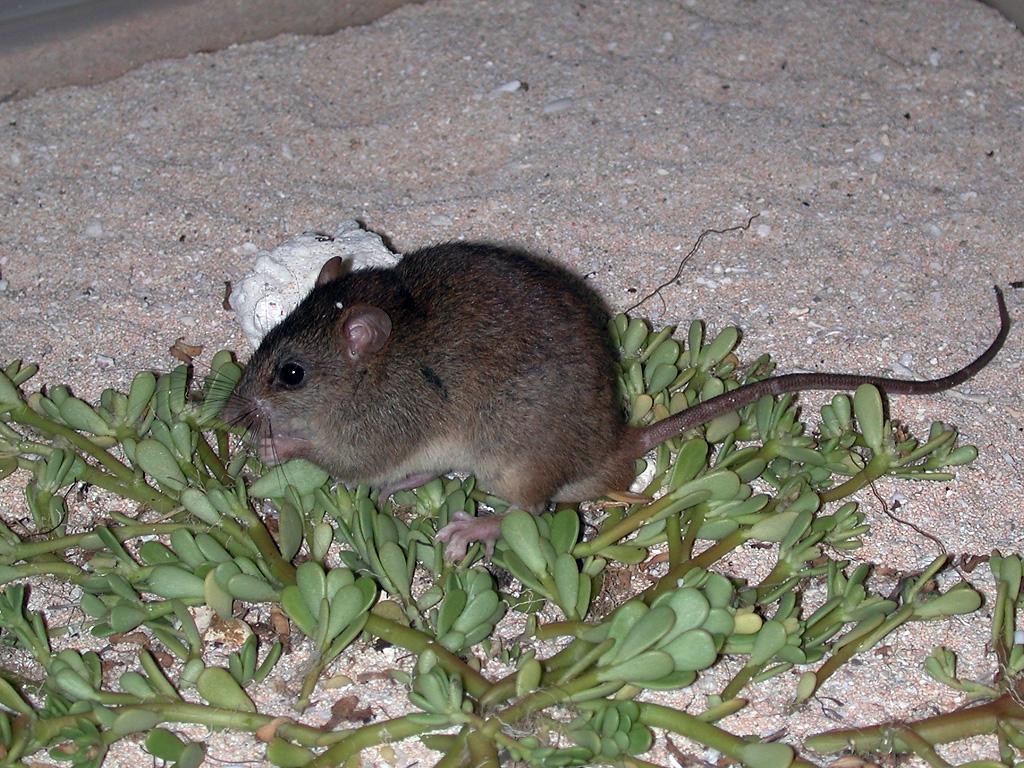
At the northern tip of the Great Barrier Reef lies Bramble Cay, a low-lying coral cay roughly fifty kilometres from the mouth of Papua New Guinea's Fly River. Rising no more than three metres above sea level, the cay encompasses an overall area of four to five hectares, but its vegetated interior covered only about two hectares. This tiny patch of grasses and low herbs was the sole known home of the Bramble Cay melomys, also called the Bramble Cay mosaic-tailed rat. First documented by European mariners in April 1845, the rodent was formalised as Melomys rubicola by Oldfield Thomas in 1924, based on a specimen gathered during an 1845 expedition. Later genetic assessments confirmed that the animal was closely related to the Cape York melomys.
The species was notable as the only mammal endemic to the Great Barrier Reef. Larger than Australia's mainland melomys species, it had reddish-brown fur with a paler belly, relatively small ears, and a long scaled tail with a prehensile tip. It shared its cramped habitat with large seabird colonies and nesting green turtles, feeding on coastal herbs such as Portulaca oleracea as well as turtle eggs. Scientists debated how the rodent initially colonised the cay, proposing that ancestral populations either drifted from New Guinea on floating timber or remained stranded there after prehistoric land bridges submerged.

Keep reading in Yester
Coming soonKeep following the story

Sources
- Scientists declare first mammal extinction due to climate change (Mongabay)
- Extinct: Bramble Cay melomys (Australian Geographic)
- Climate change has claimed its first mammal extinction (Scientific American)
- How Australia failed the Bramble Cay melomys (Canberra Times)
- Climate change mammal extinction (The Revelator)
- Bramble Cay melomys
Image: I. Bell · CC BY 4.0 · Wikimedia Commons · cropped
