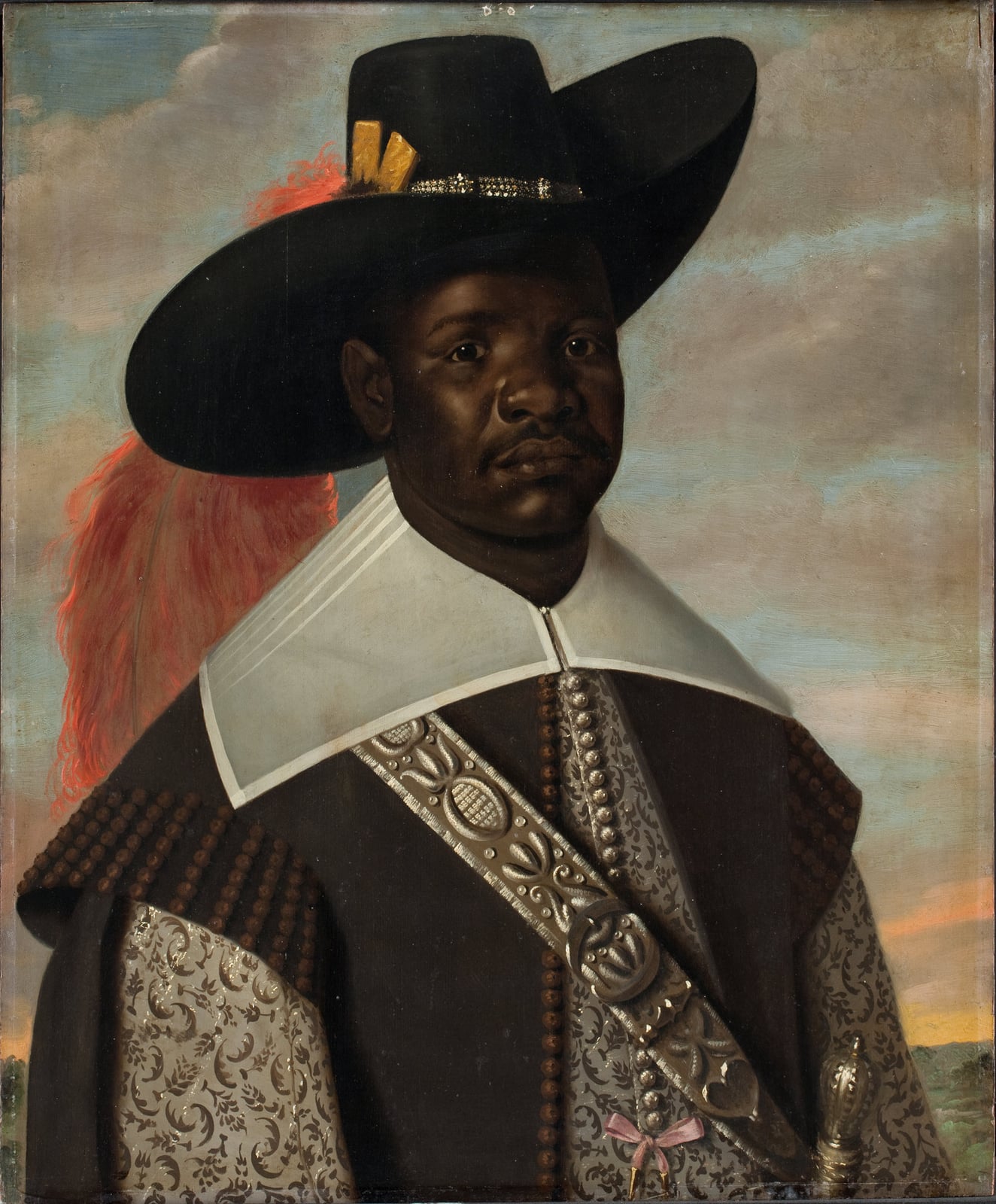
Portugal Defeats the Kingdom of Kongo at Mbwila
King António I was killed and beheaded, and Kongo collapsed into decades of civil war.
On October 29, 1665, an armed confrontation unfolded along the valley of the Ulanga River, just south of the capital of Mbwila. The engagement pitted the expanding colonial apparatus of Portuguese Angola against the central authority of the Kingdom of Kongo. Relations between the two powers had fluctuated for nearly a century, ever since Portugal established its foothold at Luanda in 1575. Initial periods of military cooperation and diplomatic exchanges had given way to territorial competition, an aggressive Portuguese drive to secure captives for the transatlantic slave trade, and disputes over the semi-independent borderlands known as the Dembos.
Tensions peaked when a disputed succession arose in Mbwila, a small border realm over which both polities asserted authority. Competing factions within Mbwila turned to external backers, prompting both states to mobilize substantial expeditionary forces. King António I of Kongo, also known as Nvita a Nkanga, had previously sought anti-Portuguese pacts with Spain and attempted to recruit regional leaders in the Dembos. In response to the crisis, he led a major army southward to defend his claims, while Portuguese authorities dispatched an army commanded by Luís Lopes de Sequeira.

Keep reading in Yester
Coming soonKeep following the story
Sources
Image: Albert Eckhout · Public domain · Wikimedia Commons · cropped
