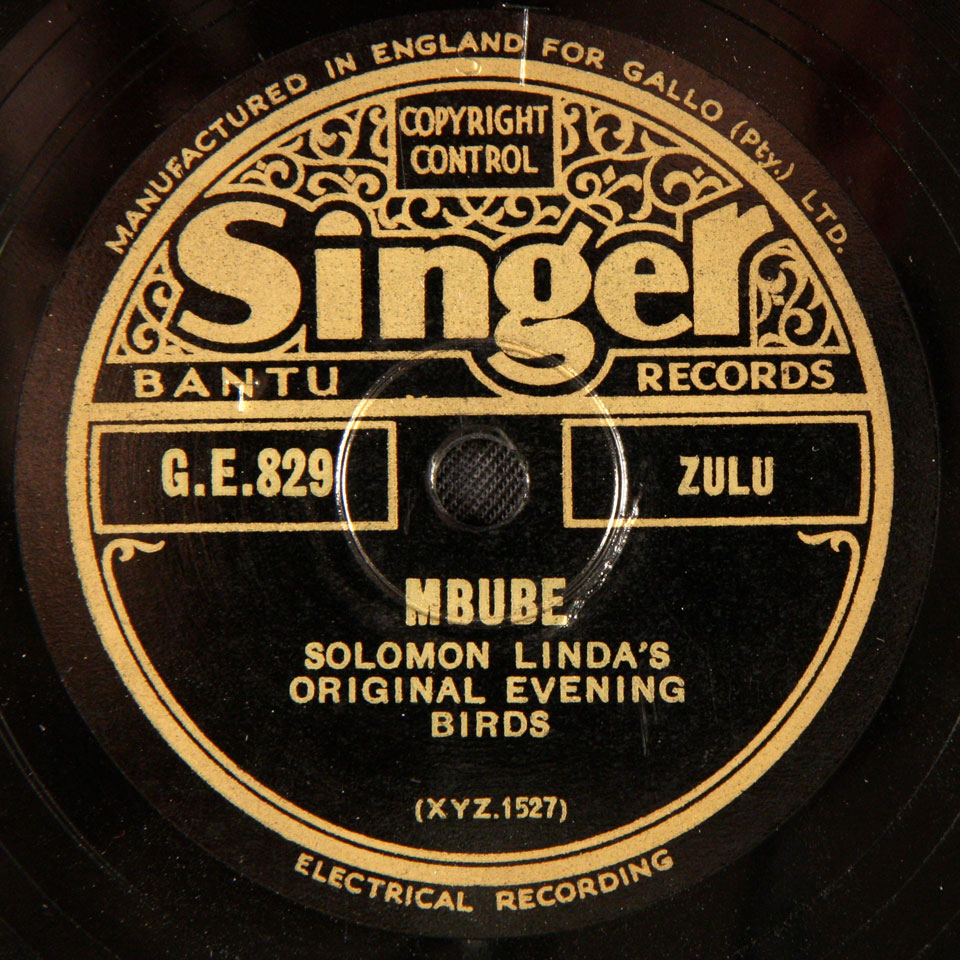
Solomon Linda Records Mbube in Johannesburg
A Zulu migrant worker’s song became a global hit as The Lion Sleeps Tonight while he died almost penniless.
In 1939, migrant worker Solomon Linda stepped into Eric Gallo's recording studio in Johannesburg alongside his vocal group, the Evening Birds. Backed on the released take by piano, guitar and banjo, the ensemble recorded a choral piece titled Mbube, recounting a lion-hunting memory from Linda's rural youth in Natal. Delivered in four-part close harmony with Linda singing soprano over dense bass patterns, the song concluded with a distinctive falsetto vocal line. The version Gallo released was the third take, on which Linda improvised the soaring melody. Gallo pressed the performance onto 78 rpm records.
Mbube quickly found widespread popularity, selling more than 100,000 copies in South Africa by 1949 and establishing the foundation for isicathamiya, a dominant genre of South African choral music. However, Linda derived virtually no long-term financial gain from this breakthrough. He assigned his worldwide copyright in Mbube to Gallo for ten shillings. Linda worked for Gallo for years and kept performing, but he died in poverty in 1962, leaving behind a family unable to afford a headstone.

Keep reading in Yester
Coming soonKeep following the story

Sources
Image: Singer Records · Public domain · Wikimedia Commons · cropped
