The Great Dam of Marib Gives Way
The final failure of a Sabaean dam that had watered Marib’s oasis for a thousand years entered Arabian memory and the Quran.
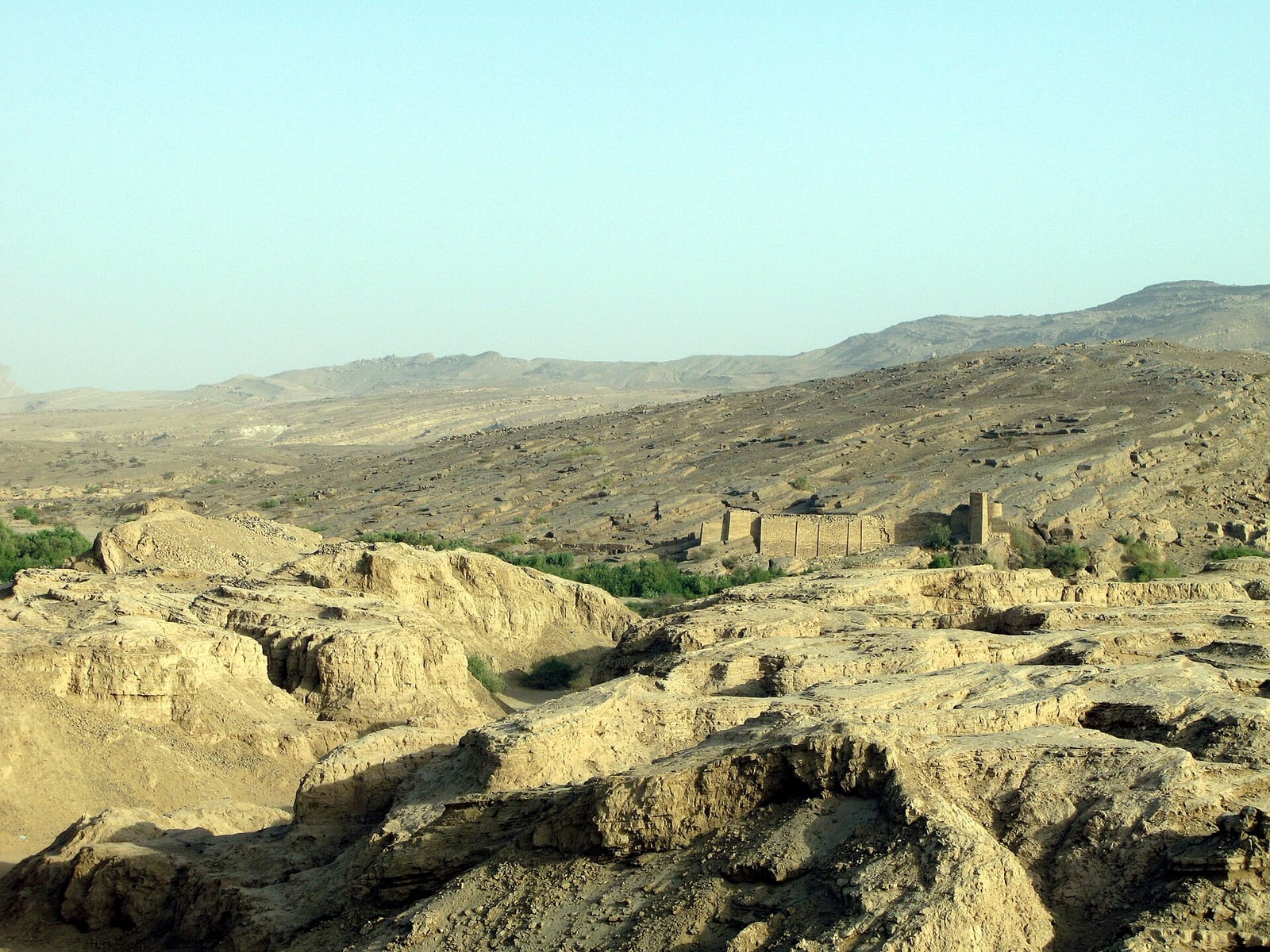
Upstream from the ancient city of Marib in southwestern Yemen, the Great Dam of Marib once held back the seasonal mountain floods of the Wadi Adhanah. Positioned in the Balaq Hills, the monumental earth-and-stone barrier served as the agricultural engine of the Kingdom of Saba, an influential trade power controlling major frankincense and spice routes across southern Arabia. Tentative archaeological finds point toward simple earth embankments and canals as early as the eighteenth century BC, but confirmed inscriptions and structural remains trace the monumental dam to around the eighth or seventh century BC.
According to archaeological reconstructions, the original Sabaean structure formed a triangular earthen dike more than half a kilometer long and a few meters tall, anchored to rock outcroppings on both flanks. It diverted seasonal monsoon spates into northern spillways and sluices, channeling water into cultivated desert fields. Around 500 BC, rulers raised its height to seven meters, armored the upstream face with stone, and expanded irrigation to the south. Under later Himyarite rule, centuries of further engineering culminated by the fourth century AD in a fourteen-meter-tall barrier equipped with spillways, masonry sluices, a settling basin, and an extensive distribution canal capable of watering roughly 100 square kilometers.

Keep reading in Yester
Coming soonKeep following the story
Sources
Image: Ljuba brank at Slovenian Wikipedia · Public domain · Wikimedia Commons · cropped
