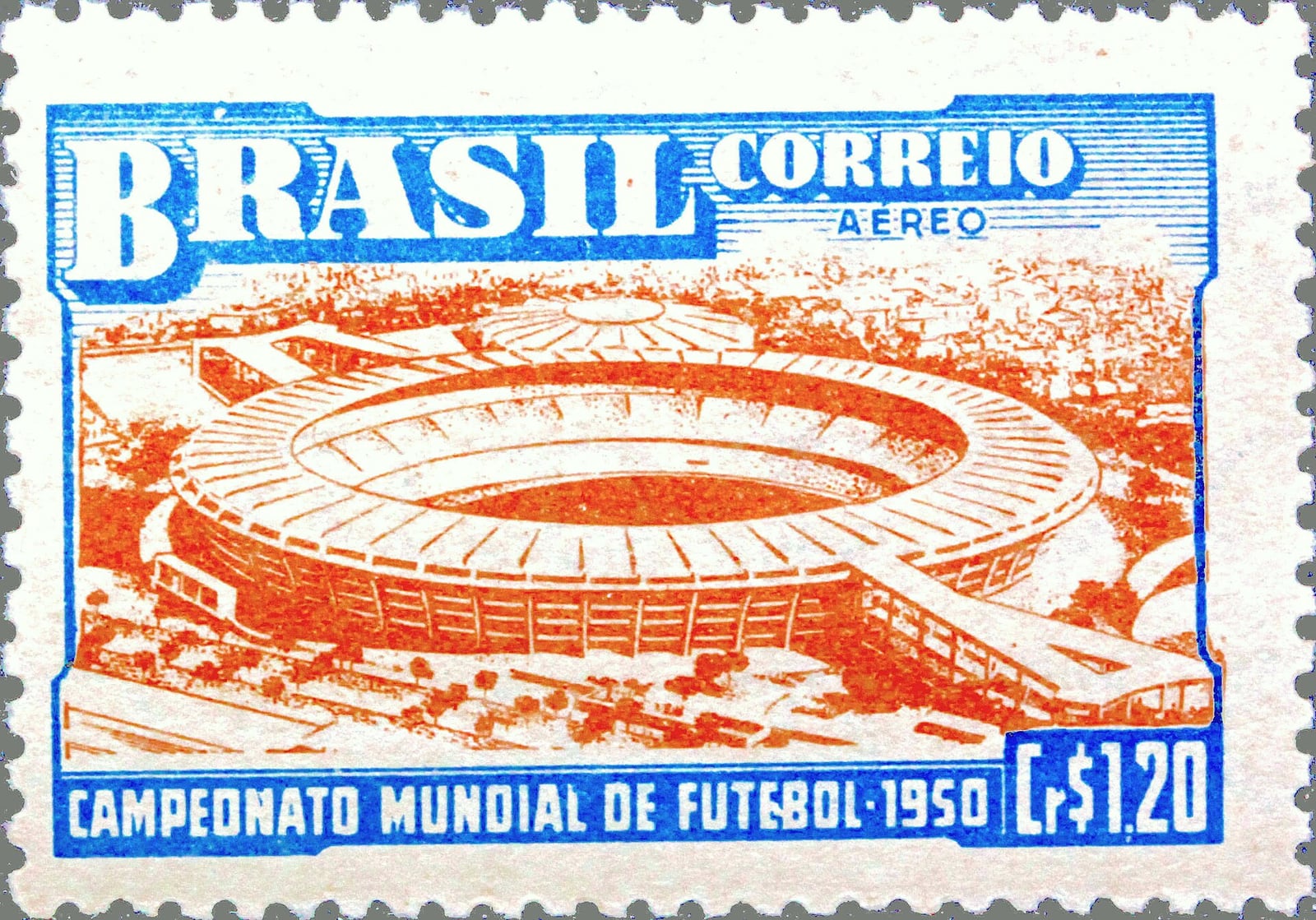
Uruguay Silences 200,000 Fans in the Maracanazo
Brazil needed only a draw to win its own World Cup, but Uruguay came from behind to take the title.
On July 16, 1950, the Maracanã Stadium in Rio de Janeiro hosted the decisive match of the fourth FIFA World Cup. The tournament followed an unusual format in which the title was determined by a four-team round-robin rather than a traditional knockout final. Brazil entered the game at the top of the group standings after sweeping victories of 7-1 over Sweden and 6-1 against Spain. Uruguay sat one point behind, having drawn with Spain and narrowly defeated Sweden. Because of the standings, Brazil required only a draw to secure the championship, while Uruguay needed an outright victory to claim the trophy.
Brazilian confidence ran exceptionally high before the contest. Some local newspapers proclaimed Brazil the world champions in advance, and Rio de Janeiro Mayor Angelo Mendes de Moraes addressed the squad as certain victors. A victory song had already been composed and rehearsed. Inside the massive concrete stadium, the official paid attendance was recorded at 173,850, though total crowds, including unticketed entrants, were estimated at up to 220,000. Uruguay's captain, Obdulio Varela, sought to steel his teammates against the overwhelming atmosphere, urging them to ignore the public expectations and take the game directly to the hosts.

Keep reading in Yester
Coming soonKeep following the story
Sources
- The Maracanazo Turns 75: The World Cup Final That Shook Brazil (beIN Sports)
- World Cup 1950 (Football History)
- 1950 FIFA World Cup: the silence at the Maracana (Meer)
- Alcides Ghiggia, the Uruguayan hero of Maracanazo, dies aged 88 (Off The Ball)
- Designer of Brazil soccer team kit dies at age 83 (AP via KSL)
- Uruguay v Brazil (1950 FIFA World Cup)
Image: Brasil Correio · Public domain · Wikimedia Commons · cropped
