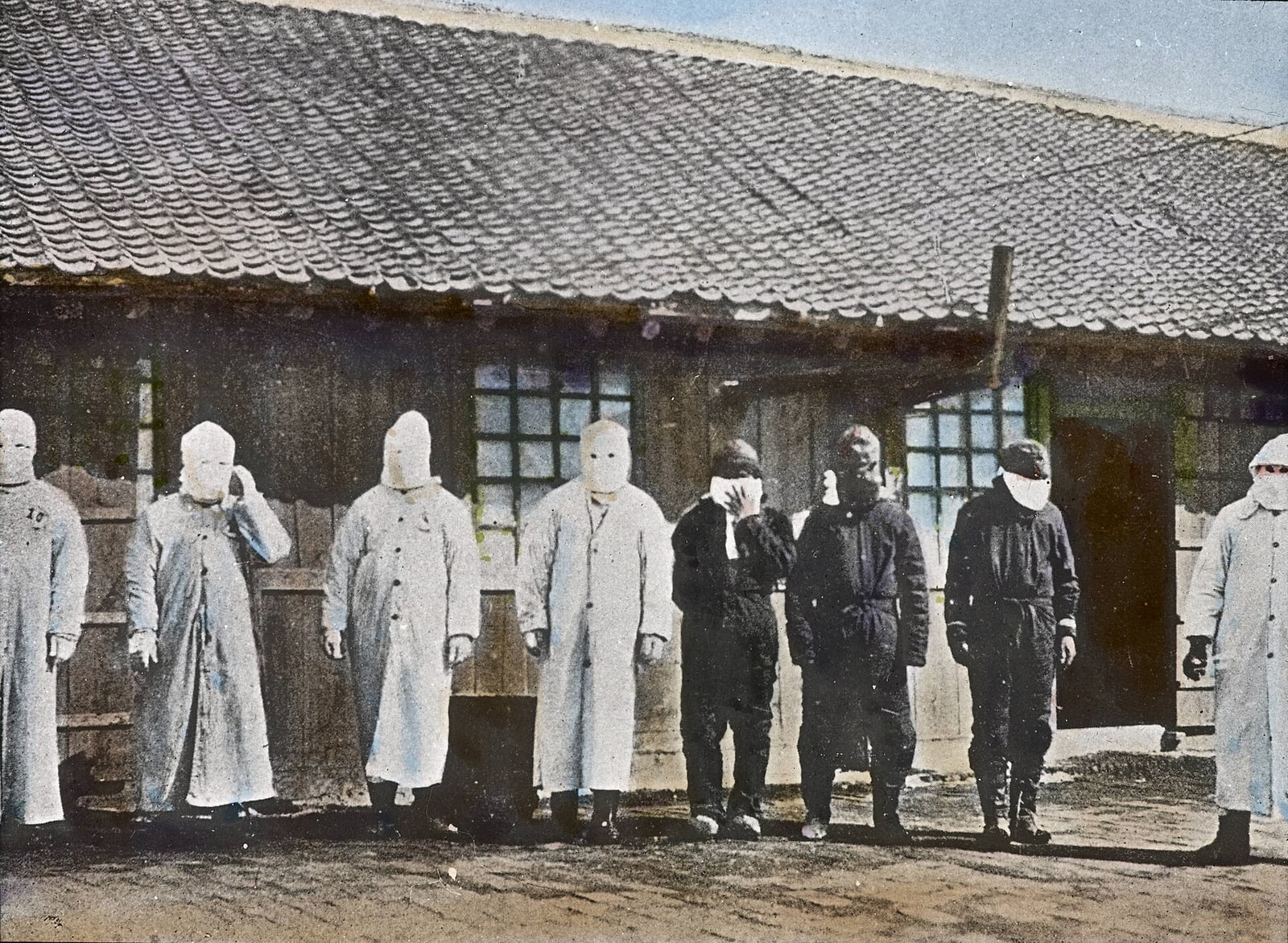
Wu Lien-teh Stops the Manchurian Plague with Masks and Quarantine
A Malayan-Chinese doctor proved the plague spread through the air and contained an epidemic that killed 60,000.
In the autumn of 1910, a devastating contagion began spreading rapidly across northeastern China, initiating what became known as the Manchurian plague. The lethal pathogen behind the crisis was Yersinia pestis, the bacterium responsible for bubonic, septicaemic, and pneumonic plague. The outbreak is believed to have originated from tarbagan marmots, rodents hunted extensively in Manchuria for their pelts. During the cold winter months, trappers gathered closely together in crowded shelters, facilitating the transmission of the bacteria among themselves. The movement of migrant laborers traveling home for the Chinese New Year subsequently accelerated the spread along transport routes, igniting an epidemic characterized by an almost one hundred percent mortality rate.
Unlike bubonic outbreaks, which primarily depend on rodent fleas to transmit infection, this manifestation attacked the respiratory system as pneumonic plague and spread directly between humans through airborne droplets. Major urban and transit hubs suffered immediate losses, with the cities of Harbin, Changchun, and Mukden, now Shenyang, bearing the brunt of the disaster. While the crisis remained largely concentrated in the northeastern provinces, secondary chains of transmission reached major metropolitan centers further south, including Tianjin and Beijing. Faced with mounting panic and a death toll that would eventually claim roughly 60,000 lives, regional authorities required an aggressive and scientifically grounded containment strategy.

Keep reading in Yester
Coming soonKeep following the story
Sources
- An epidemic averted in early 20th century Manchuria, Jeremiah Jenne (LA Review of Books China Channel)
- Dr Wu Lien-Teh: The Plague Fighter (Universiti Malaya, Department of Social and Preventive Medicine)
- What China can learn from the Manchurian plague of 1911 (TheArticle)
- Arthur Jackson and the Plague of 1911 (Asia Harvest)
- Manchurian plague
Image: Unknown author · Public domain · Wikimedia Commons · cropped
