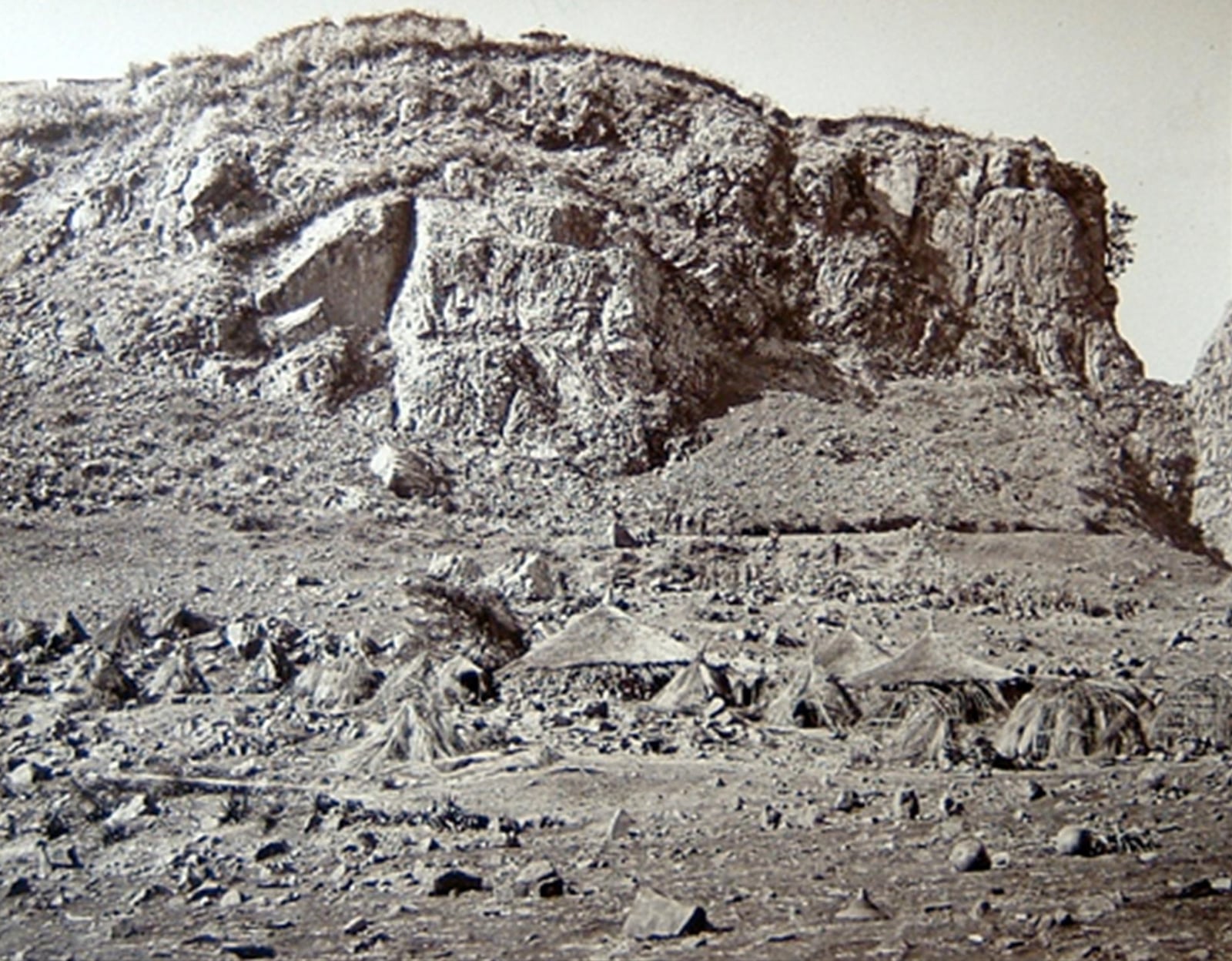
Tewodros II Dies as the British Storm Magdala
A British expedition marched into the Ethiopian highlands to free hostages, and Emperor Tewodros took his own life as his fortress fell.
On April 13, 1868, British and Indian troops stormed the mountain fortress of Magdala, bringing an end to the reign of Emperor Tewodros II. Tewodros had risen to power determined to unify the Ethiopian Empire and modernize its armed forces, a goal shaped by earlier defeats against well-equipped foreign armies. Seeking to manufacture modern weaponry domestically, the emperor wrote to European powers, notably Britain, requesting skilled artisans and technical assistance. When the British government left his correspondence unanswered, Tewodros detained the British consul, Captain Charles Duncan Cameron, alongside European missionaries and envoys, compelling them to assist his gun foundries at Gafat.
Diplomatic efforts to secure their freedom collapsed, prompting Britain to organize an armed expedition in 1867 under Lieutenant-General Robert Napier. The expeditionary force landed at Annesley Bay on the Red Sea and began a grueling march of two to three months across some four hundred miles of mountainous terrain. Equipped with modern breech-loading Snider-Enfield rifles, artillery hauled with the help of Indian elephants, and extensive supply trains, Napier’s troops advanced deep into the Ethiopian interior. Tewodros, whose authority had been weakened by rebellions across his empire, withdrew toward his stronghold atop the basalt plateau of Magdala.

Keep reading in Yester
Coming soonKeep following the story
Sources
Image: Unknown author · Public domain · Wikimedia Commons · cropped
