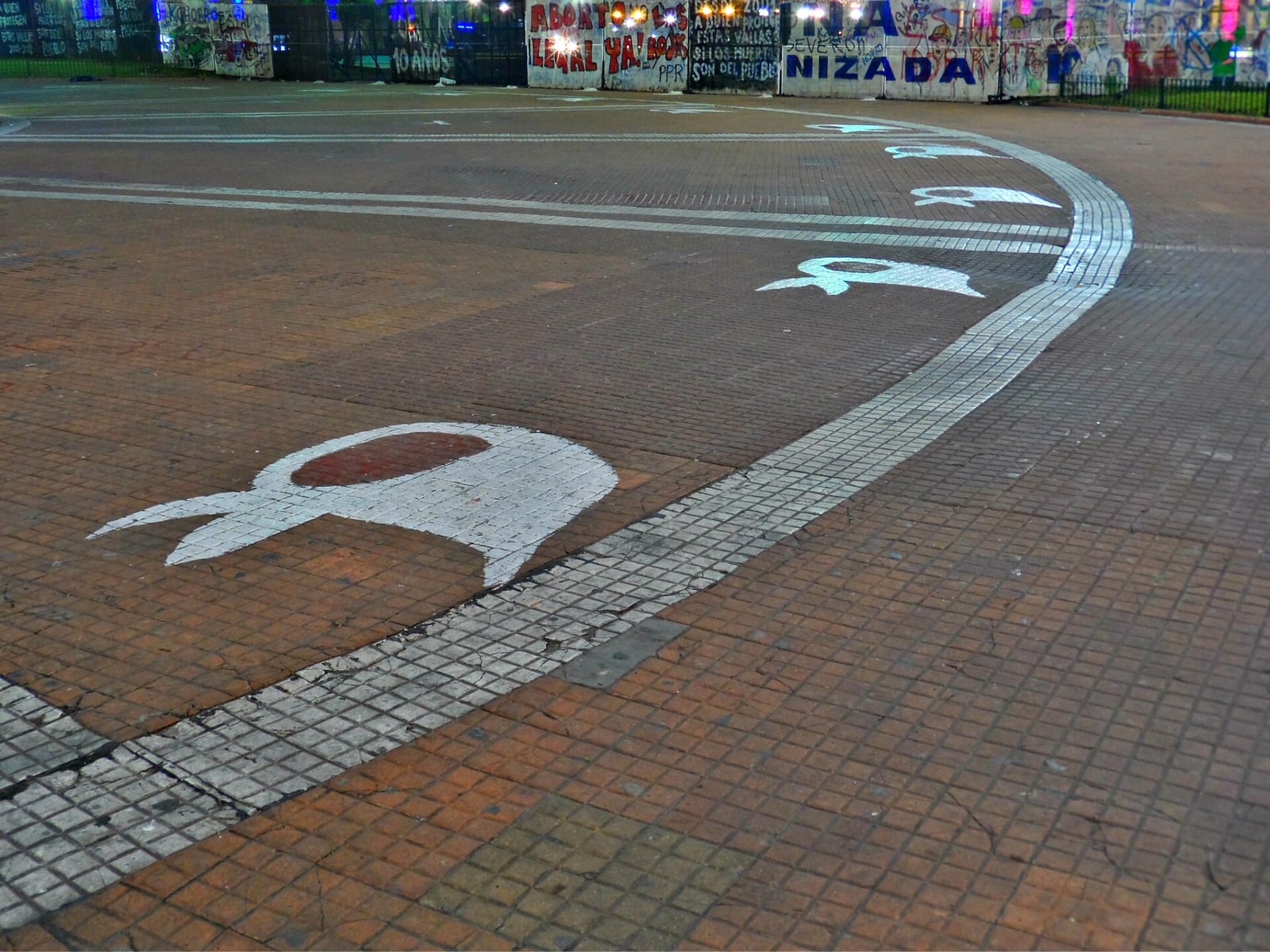
Mothers Begin Marching in the Plaza de Mayo
Fourteen women whose children had disappeared under Argentina’s dictatorship gathered in front of the presidential palace, and kept coming back.
On 30 April 1977, Azucena Villaflor de De Vincenti and thirteen other women assembled in the Plaza de Mayo in Buenos Aires. Faced with the state-enforced disappearances of their young adult children, each woman had previously pursued inquiries in isolation across police stations, hospitals, and prisons. Recognizing that these individual cases represented a systematic campaign orchestrated by the Argentine military dictatorship under Jorge Rafael Videla, they gathered directly in front of the Casa Rosada presidential palace to demand answers from the de facto government.
Because the authorities banned people from stopping or gathering in the square and told them to keep moving, the women adapted their protest. They linked arms and walked in pairs around the central square, mimicking an ordinary stroll across from the executive offices. To make their presence unmistakable, they later incorporated distinct visual symbols, most notably white cloth headscarves fashioned from infant diapers. These scarves bore the names of their missing children, publicly confronting state officials with the identities of those who had been erased without records or trials.

Keep reading in Yester
Coming soonKeep following the story

Sources
Image: Aleksandrs Timofejev… · CC BY 3.0 · Wikimedia Commons · cropped
