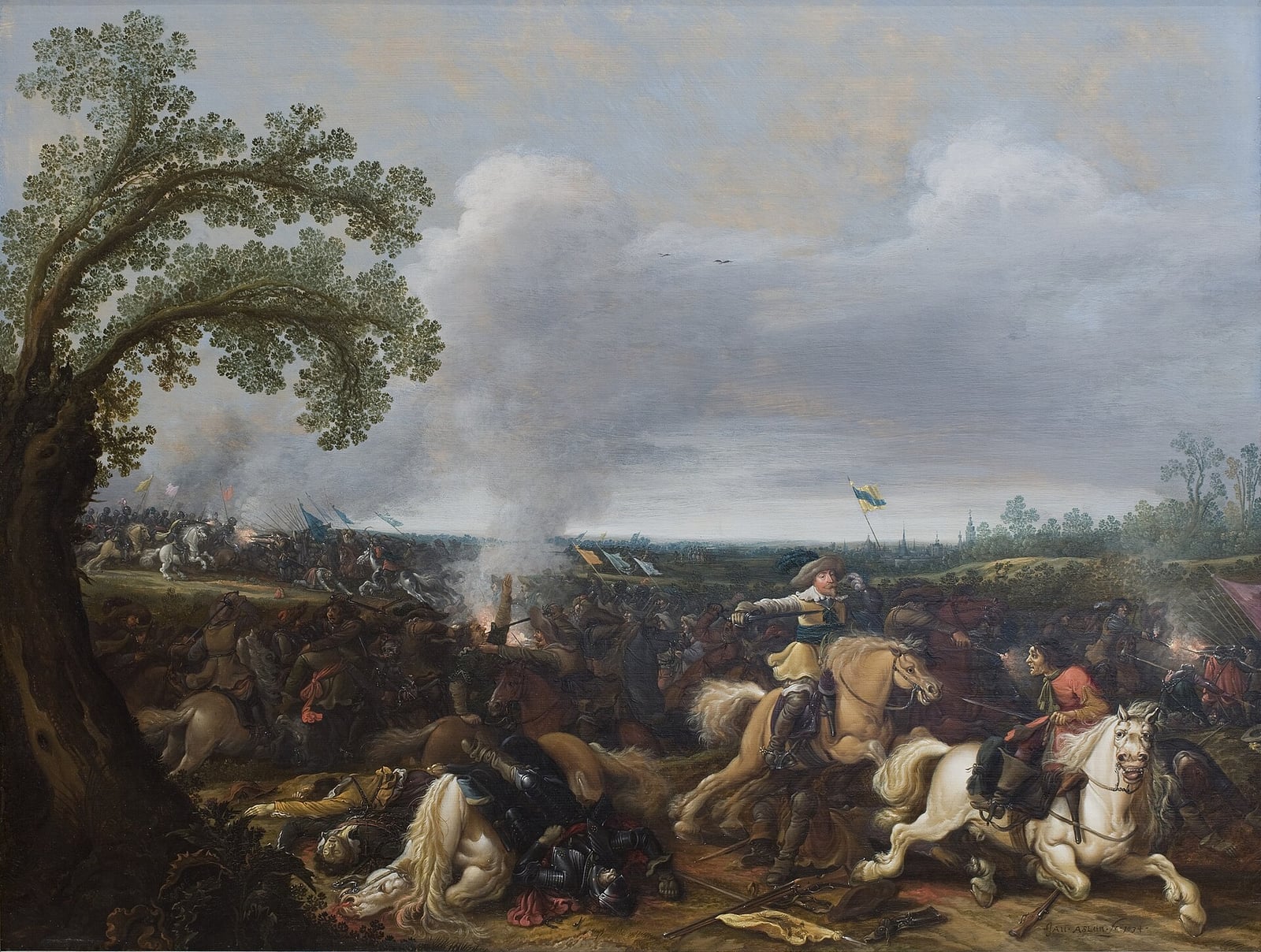
Gustavus Adolphus Wins at Lützen but Dies in Battle
The Swedish king’s army held the field against Wallenstein’s imperial forces near Leipzig, but Gustavus Adolphus was killed leading a cavalry charge in the fog.
In November 1632, the Swedish monarch Gustavus Adolphus marched his army toward Leipzig to confront Albrecht von Wallenstein, the general leading the forces of the Holy Roman Empire. Wallenstein had moved into Saxony to threaten the regional ruler, Elector John George I, and detach him from the Protestant alliance. Believing campaigning had paused for the coming winter, Wallenstein had split his army, dispatching Gottfried zu Pappenheim with 5,800 soldiers toward Halle. When Swedish intelligence discovered this detachment, Gustavus saw an opportunity to exploit superior numbers, advancing from Naumburg with approximately 19,000 men against an Imperial force that sources estimate at roughly 13,000 to 17,000 before Pappenheim's cavalry returned.
Realizing the danger, Wallenstein urgently ordered Pappenheim to march back and arrayed his remaining troops along the sunken road between Leipzig and Lützen. Morning mist and the obstacle of crossing the Flossgraben canal delayed the Swedish offensive until 11:00 am on 16 November. This delay allowed Pappenheim's cavalry of 2,300 riders to return just as Gustavus overran the ditch on the road and threatened Wallenstein's left flank. Pappenheim led an immediate counterattack that repulsed the Swedish line, though Pappenheim himself sustained fatal wounds and died during evacuation.

Keep reading in Yester
Coming soonKeep following the story
Sources
Image: Jan Asselijn · Public domain · Wikimedia Commons · cropped
