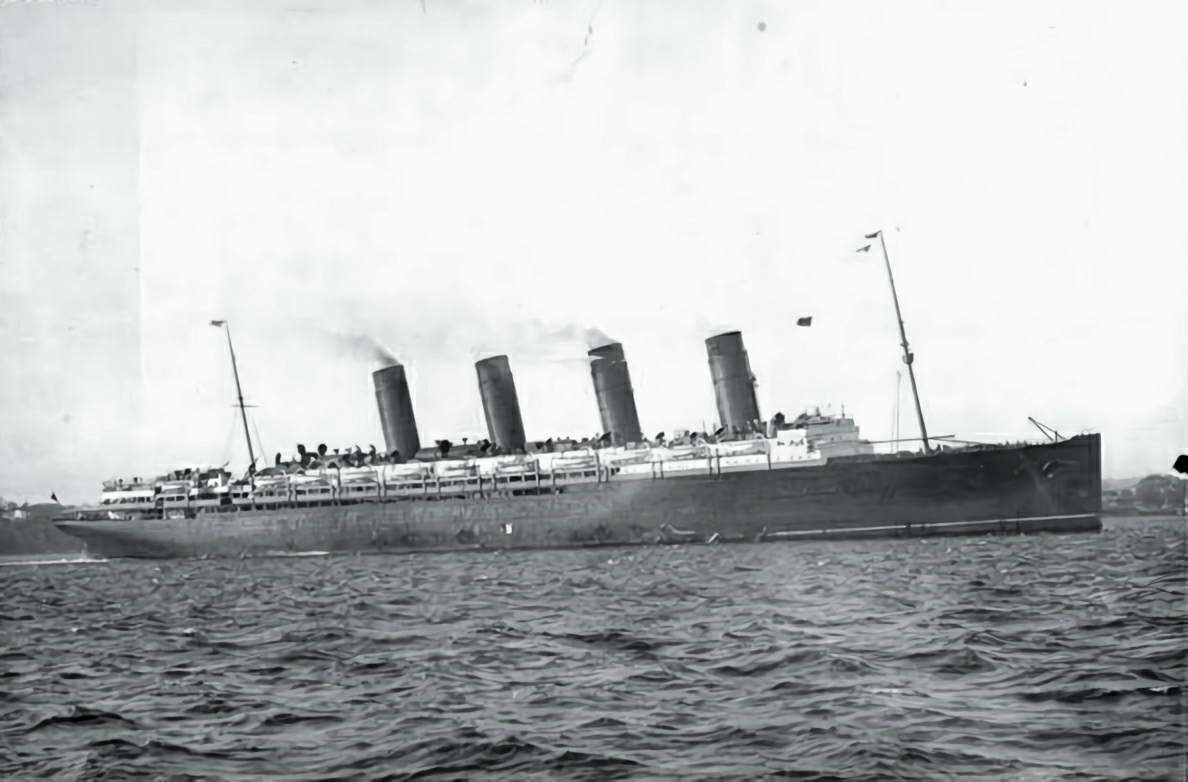
A German Submarine Sinks the Lusitania
A torpedo sank the British liner off Ireland in 18 minutes, killing nearly 1,200 people, among them 128 Americans.
On the afternoon of 7 May 1915, the British ocean liner RMS Lusitania was nearing the end of its transatlantic journey from New York to Liverpool. Operating off the Old Head of Kinsale on Ireland's southern coast, the vessel entered waters that the German Empire had designated a maritime war zone. Without warning, the submerged German submarine U-20, commanded by Walther Schwieger, fired a single torpedo into the liner's starboard side. A violent second explosion followed, and the colossal ship listed heavily before sinking beneath the surface in just eighteen minutes. Of the 1,959 passengers and crew on board, 1,198 died, including 128 Americans, and about 761 survived.
The disaster unfolded against the backdrop of an intensifying naval conflict. Following Britain's naval blockade of Germany, the German Imperial Admiralty stepped up its submarine campaign. In February 1915, Germany declared the seas surrounding the British Isles a war zone where Allied vessels could be destroyed. The Imperial German Embassy in Washington published a formal notice in American newspapers, which appeared on the day the Lusitania sailed, reminding travelers that Allied ships traversed those waters at their own risk. Captain William Thomas Turner commanded the liner, and British authorities had already warned that submarines were operating along the southern Irish coast.

Keep reading in Yester
Coming soonKeep following the story

Sources
Image: Unknown author · Public domain · Wikimedia Commons · cropped
