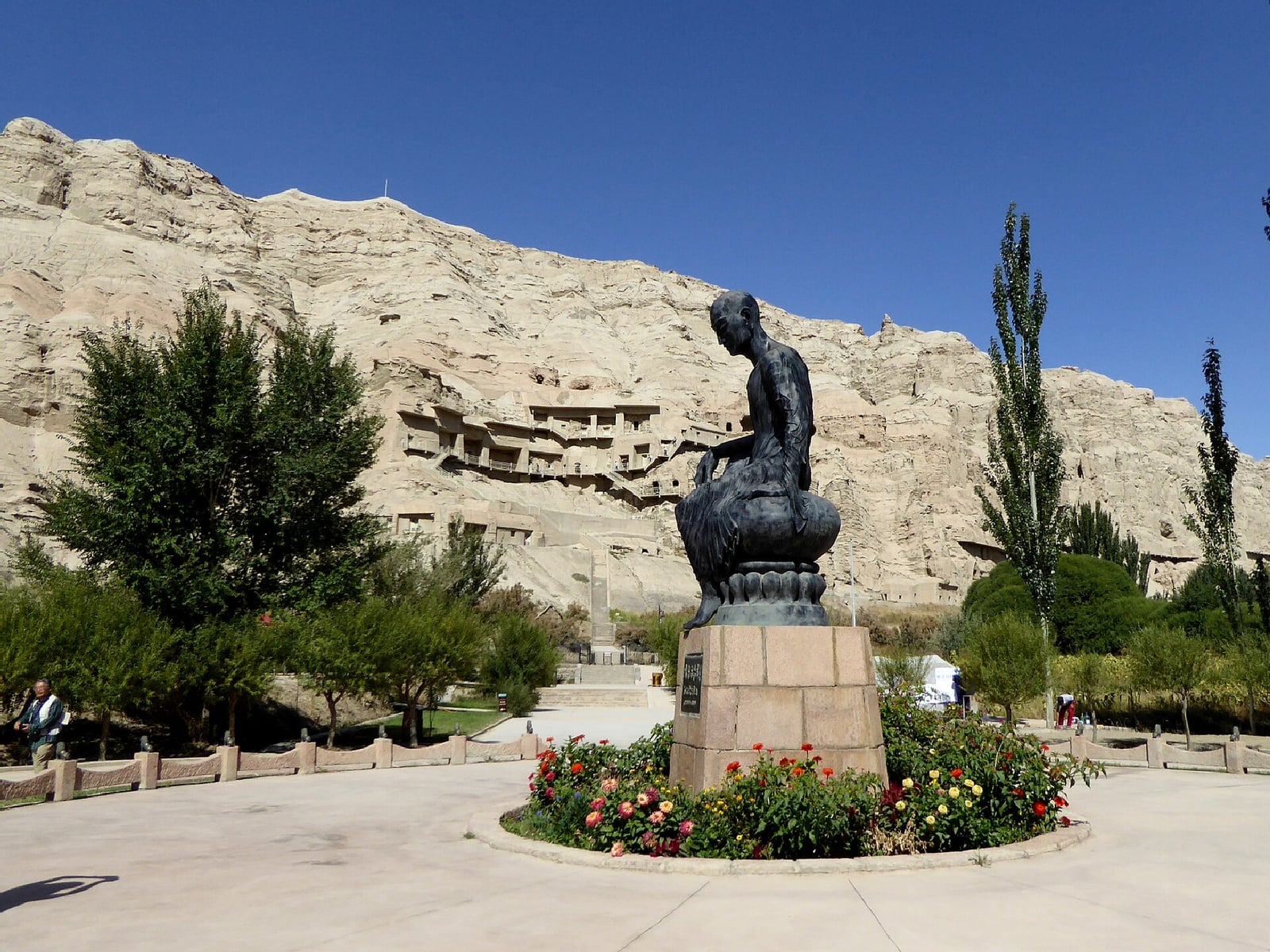
Kumarajiva Begins Translating Buddhist Sutras in Chang’an
A monk from the Silk Road oasis of Kucha produced the Chinese versions of sutras that East Asia still recites.
At the end of 401 CE by the Chinese calendar, early in 402 by the Western one, the Buddhist scholar and monk Kumarajiva was escorted into the northern Chinese capital of Chang'an following military campaigns waged specifically to secure him. Born in the oasis city-state of Kucha in the Tarim Basin to an Indian father of Brahmin descent and a Kuchean princess, Kumarajiva had gained renown across Central Asia for his command of Buddhist doctrine. He had initially immersed himself in Sarvastivada traditions before embracing the Madhyamaka philosophy of Nagarjuna. His intellectual reputation drew the attention of Chinese rulers, sparking rivalries that altered the course of his career.
His arrival in Chang'an came only after decades of forced detention. In the 380s, Emperor Fu Jian of the Former Qin dynasty dispatched a military expedition to Kucha to bring the monk east. However, general Lu Guang seized Kumarajiva and, breaking away during political upheavals to form his own regime, held him captive in Liangzhou for about sixteen or seventeen years. Kumarajiva was forced to compromise his monastic standing during this period, but he also acquired a deep practical fluency in the Chinese language. It was not until the rival Later Qin state under Yao Xing defeated the Lu warlords that Kumarajiva was finally delivered to the imperial court.

Keep reading in Yester
Coming soonKeep following the story
Sources
Image: Hiroki Ogawa · CC BY 3.0 · Wikimedia Commons · cropped
