Early Farmers Work the Kuk Swamp in New Guinea’s Highlands
Ancient mounds, pits and ditches show that New Guinea was one of the places where people invented farming independently.
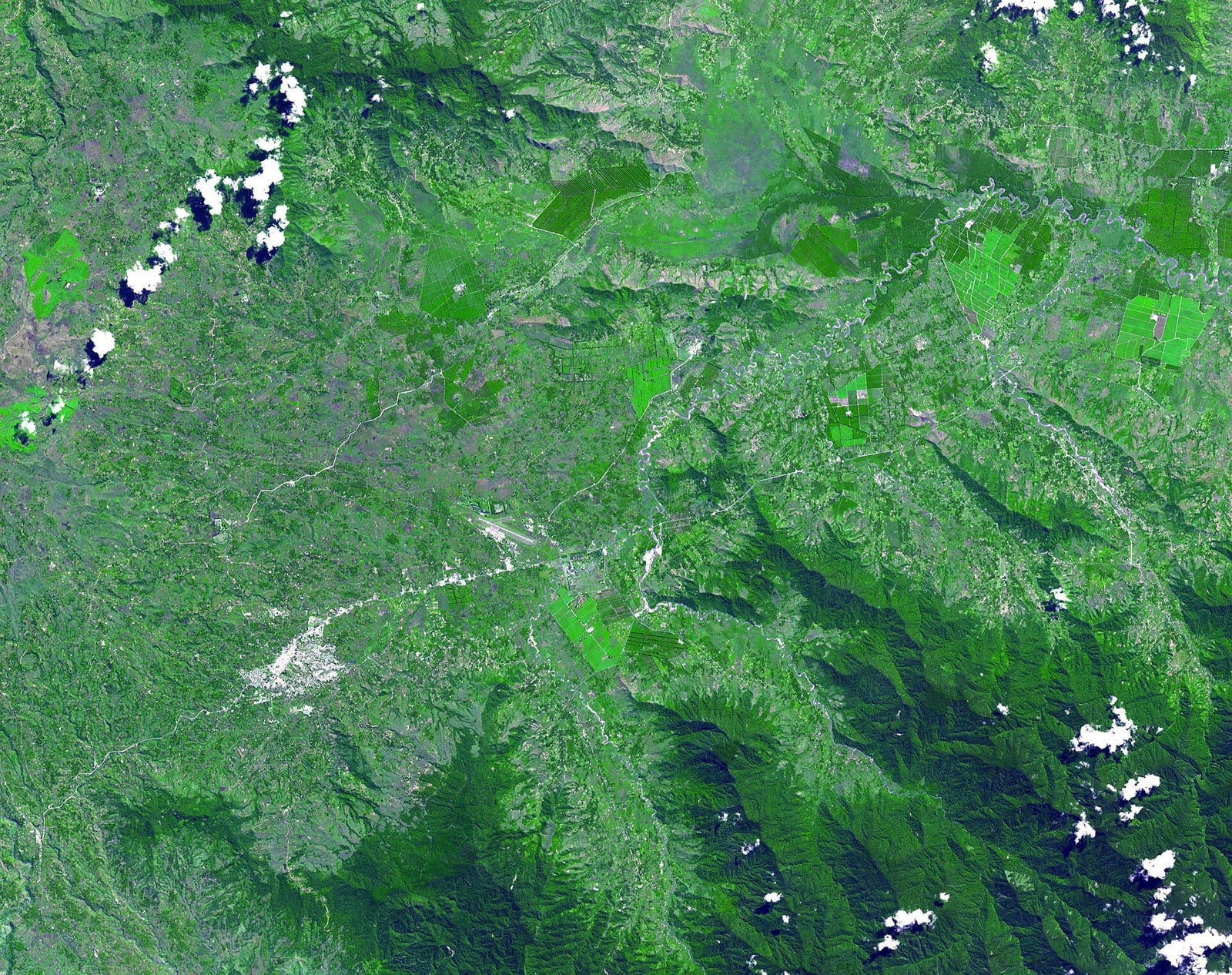
In the upper reaches of the Wahgi Valley in Papua New Guinea, roughly 1,500 to 1,600 metres above sea level, lies an ancient wetland known as Kuk Swamp. Located near Mount Hagen, the capital of the Western Highlands Province, the terrain originally formed within an old lake basin that gradually filled with alluvial sediment. Streams such as Kuk Creek carried water across an alluvial fan toward lower southern catchments. Without deliberate management, this natural drainage pattern frequently caused water to pool into marshland, yet archaeological surveys revealed that early human communities intervened extensively to control the hydrology.
Excavations led by Australian archaeologist Jack Golson, and later work by researchers including Tim Denham, traced human activity at the site back about 10,000 years. People first exploited and tended plants on the wetland margin, built cultivation mounds by about 7,000 to 6,400 years ago, and from roughly 4,000 years ago dug networks of drainage ditches. The types and layout of the ditch networks changed over time, but in every phase they drained into major channels crossing the wetland edge, and the later networks enclosed rectangular cultivation plots. Over these millennia, forest clearance and cultivation turned the surrounding landscape into grassland, and later drainage converted swamp into ground suitable for sustained plant production.

Keep reading in Yester
Coming soonKeep following the story
Sources
Image: NASA: JPL · Public domain · Wikimedia Commons · cropped
