The Kon-Tiki Raft Drifts from Peru to Polynesia
Thor Heyerdahl’s balsa raft crossed 6,900 kilometres of Pacific to test a theory most scholars rejected.
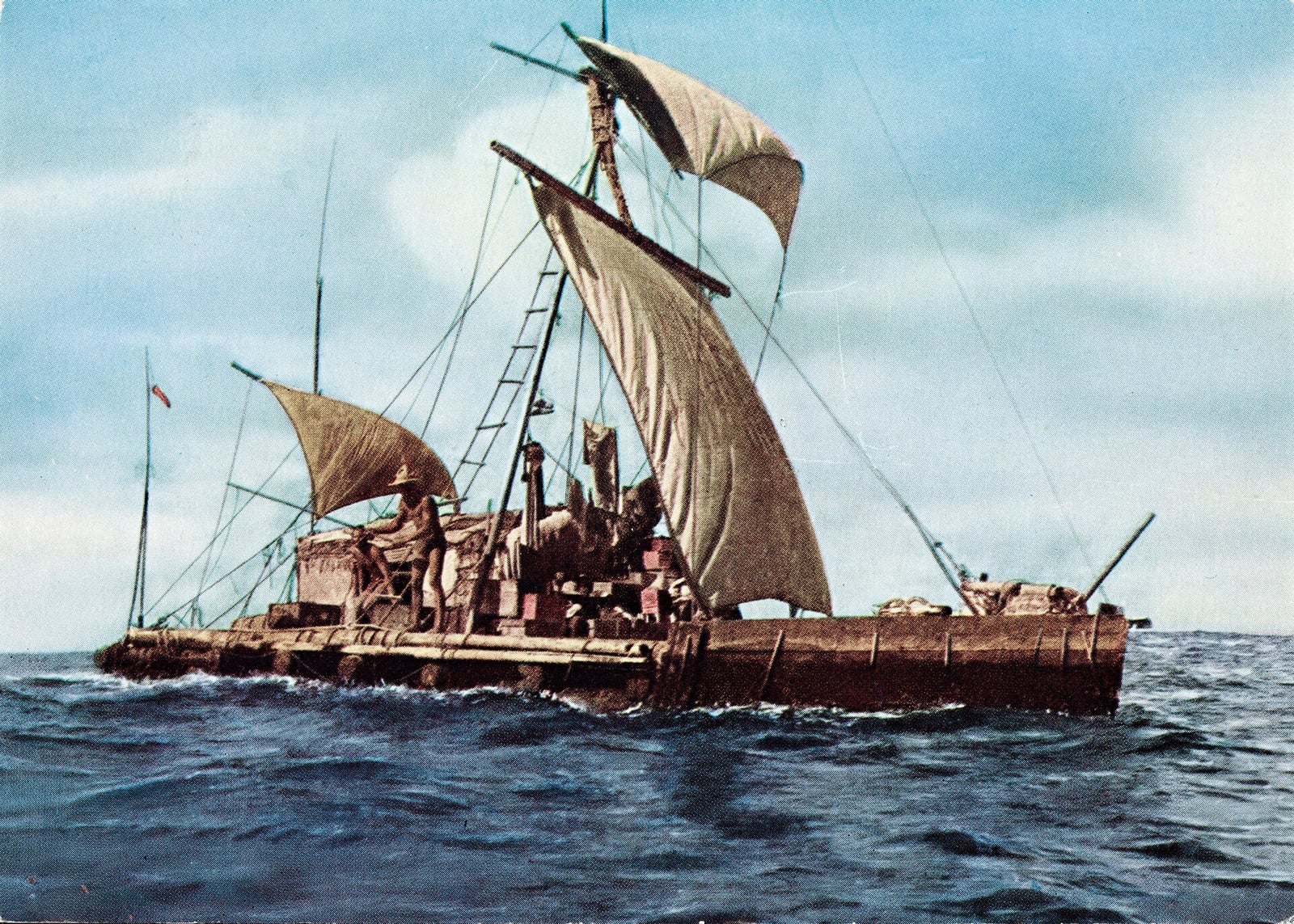
On April 28, 1947, a balsa wood raft was towed from the port of Callao, Peru, by the naval tug Guardian Rios to avoid coastal shipping before being cast adrift into the Humboldt Current. Led by Norwegian ethnographer Thor Heyerdahl, the vessel carried six men intending to cross thousands of kilometres of open ocean. Named Kon-Tiki after an alternate name for the Inca deity Viracocha, the craft was designed to demonstrate that ancient South American populations could have navigated directly across the Pacific Ocean to settle Polynesia.
The physical structure of Kon-Tiki was assembled in Peru using dockyard facilities provided by local authorities. Constructed without metal fittings, the hull consisted of nine large balsa trunks lashed with hemp rope, reinforced by cross-pieces, and fitted with pine splashboards and centreboards. An A-frame mangrove mast carried a large square sail, while a thatched bamboo cabin sat on the deck. The project received funding from private loans and was supplied with survival gear and rations from the United States Army Quartermaster Corps, while the crew packed native foods such as sweet potatoes, coconuts, and gourds, supplemented by modern radio apparatus and navigation instruments.

Keep reading in Yester
Coming soonKeep following the story
Sources
- Kon-Tiki, 1947 (Kon-Tiki Museum)
- Balsa raft completes 4,300-mile journey (History UK)
- Kon-Tiki (New World Encyclopedia)
- Polynesians, Native Americans made contact before European arrival, genetic study finds (Phys.org / Stanford)
- Native American gene flow into Polynesia predating Easter Island settlement (Nature, PubMed)
- Kon-Tiki expedition
Image: Nasjonalbiblioteket from Norway · CC BY 2.0 · Wikimedia Commons · cropped
