King Sejong Composes the Court Music of Korea’s Royal Ancestral Rites
Music Sejong wrote for Joseon court banquets became the music of the kings’ ancestor shrine and is still performed there every year.
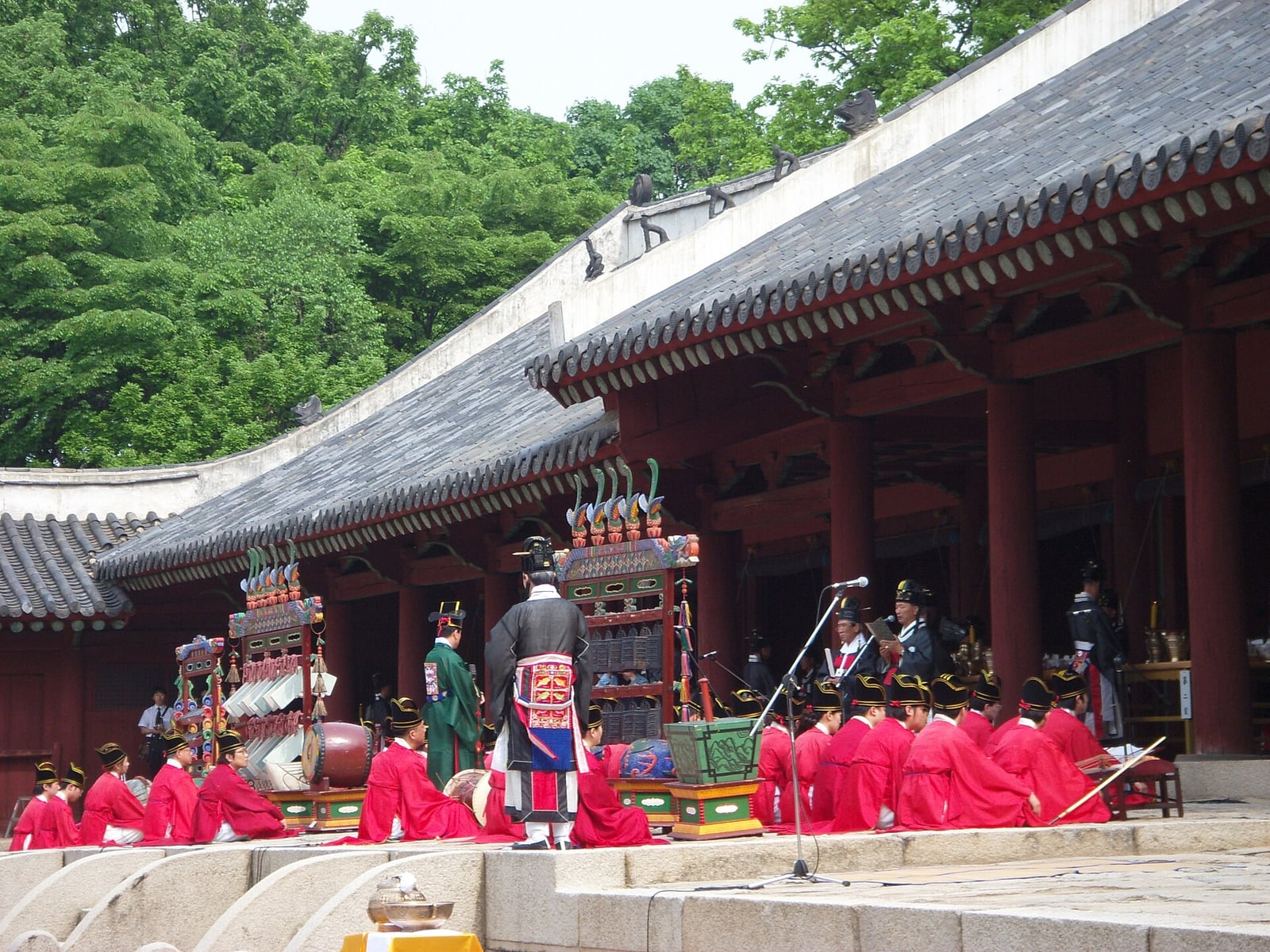
The Jongmyo jerye stands as Korea's preeminent royal ancestral rite, held to honor the deceased kings and queens of the Joseon dynasty at the Jongmyo Shrine in Seoul. Rooted in ancient Confucian royal ancestral shrine traditions common to premodern East Asia, royal ancestral rites have a long history in Korea, but the order of the ceremony performed today was set down in the fifteenth century under the Joseon dynasty. Alongside the Soil and Grain ritual at Sajikdan, this ceremony constituted one of the supreme ritual responsibilities of the Korean monarchy, designed to secure spiritual blessings and political continuity through filial reverence.
During the Joseon era, these rites incorporated distinct ceremonial music and choreography known as Jongmyo jerye-ak and ilmu. Earlier court ritual music traced its lineage to Chinese yayue imported during the Goryeo period. King Sejong changed this tradition by creating new music drawn largely from native hyangak, with some dangak, around 1447. His two suites, Botaepyeong and Jeongdaeeop, were first played at court banquets. Under his son King Sejo they were revised and, in the early 1460s, officially adopted as the music of the Jongmyo rites, sung with texts known as Jongmyo Akjang that praise the royal ancestors.

Keep reading in Yester
Coming soonKeep following the story
Sources
- Royal ancestral ritual in the Jongmyo shrine and its music (UNESCO Intangible Cultural Heritage)
- Jongmyo Jeryeak (Korea Heritage Service, Royal Palaces and Tombs)
- Jongmyojeryeak (National Gugak Center via Google Arts & Culture)
- Jongmyo Jeryeak concert from Seoul (Hungarian State Opera)
- Jongmyo Jeryeak: Rituals for Royal Ancestors (Esplanade, Singapore)
- Koreans celebrate culture with traditions (U.S. Army)
- Jongmyo jerye
Image: by joonghijung at Flickr · CC BY 2.0 · Wikimedia Commons · cropped
