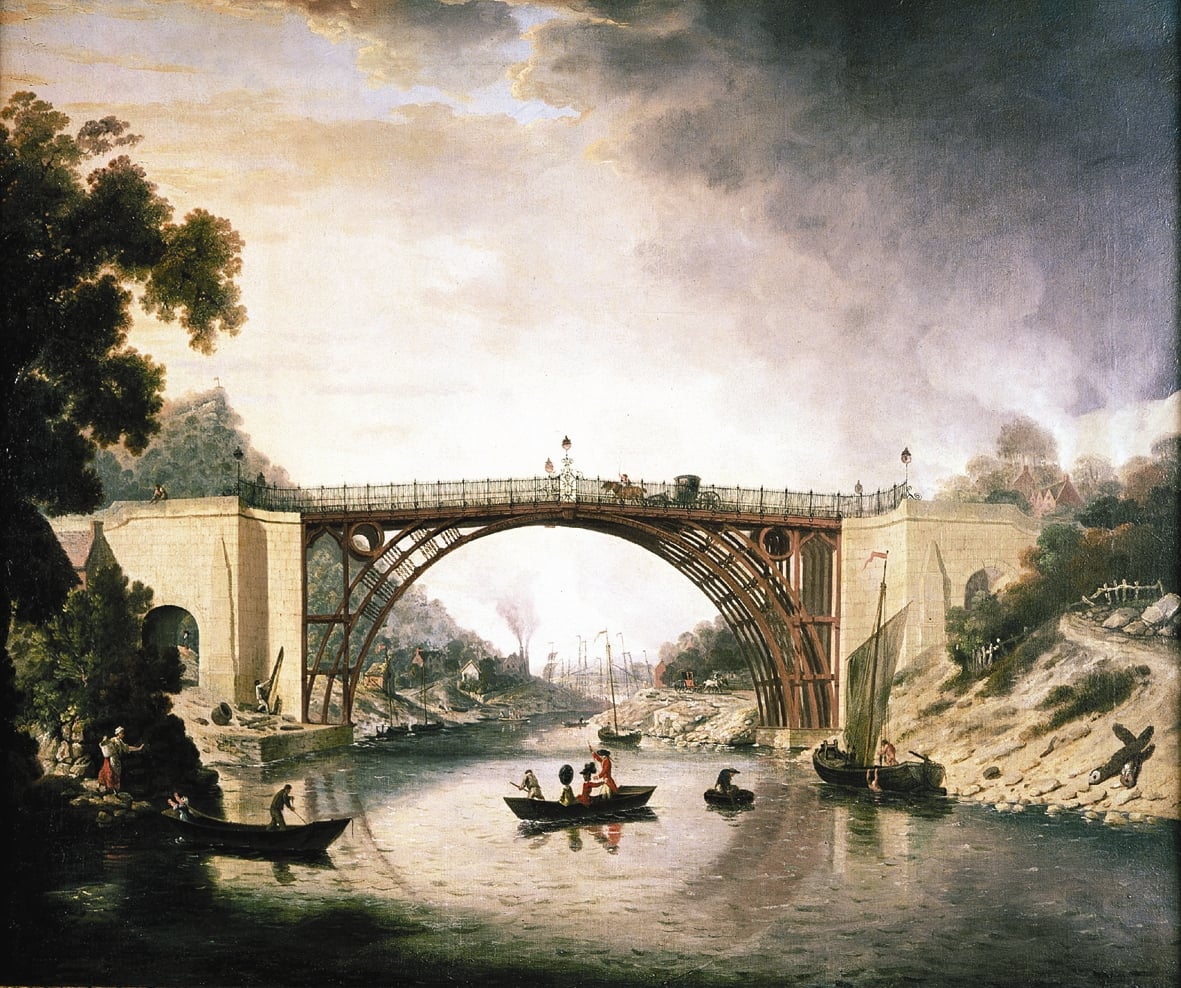
The Iron Bridge Rises over the Severn
In the gorge where Abraham Darby had smelted iron with coke, a single cast-iron arch was raised over the River Severn, a landmark of the new industry.
In the deep gorge of the River Severn in Shropshire, rich seams of coal, iron ore, and limestone lay close to the surface, fueling rapid industrial growth throughout the eighteenth century. Transportation remained a serious challenge, as the steep valley sides and strong river currents severed communication between the active parishes of Broseley and Madeley. The nearest river crossing was miles away at Buildwas, while vessel traffic required an unimpeded channel. In 1773, the architect Thomas Farnolls Pritchard proposed to local ironmaster John Wilkinson that a single-span arch made entirely of cast iron could cross the chasm without blocking boats.
Parliament passed an enabling act in 1776, and ironmaster Abraham Darby III took charge of casting and erecting the structure. Iron had been used in a few small structures before, but nothing on this scale had been built. Pritchard revised his measurements to create a main arch spanning 100 feet and 6 inches, but he died in December 1777 shortly after site work commenced. Darby and his foundry workers proceeded with the construction, raising stone abutments before casting more than 800 pieces at nearby Coalbrookdale.

Keep reading in Yester
Coming soonKeep following the story
Sources
- Iron Bridge history (English Heritage)
- Iron Bridge landmark (American Society of Civil Engineers)
- Iron Bridge (Grace's Guide to British Industrial History)
- Construction of the First Iron Bridge (EBSCO Research Starters)
- Abraham Darby (1678-1717) (Grace's Guide to British Industrial History)
- The Iron Bridge
Image: William Williams · Public domain · Wikimedia Commons · cropped
