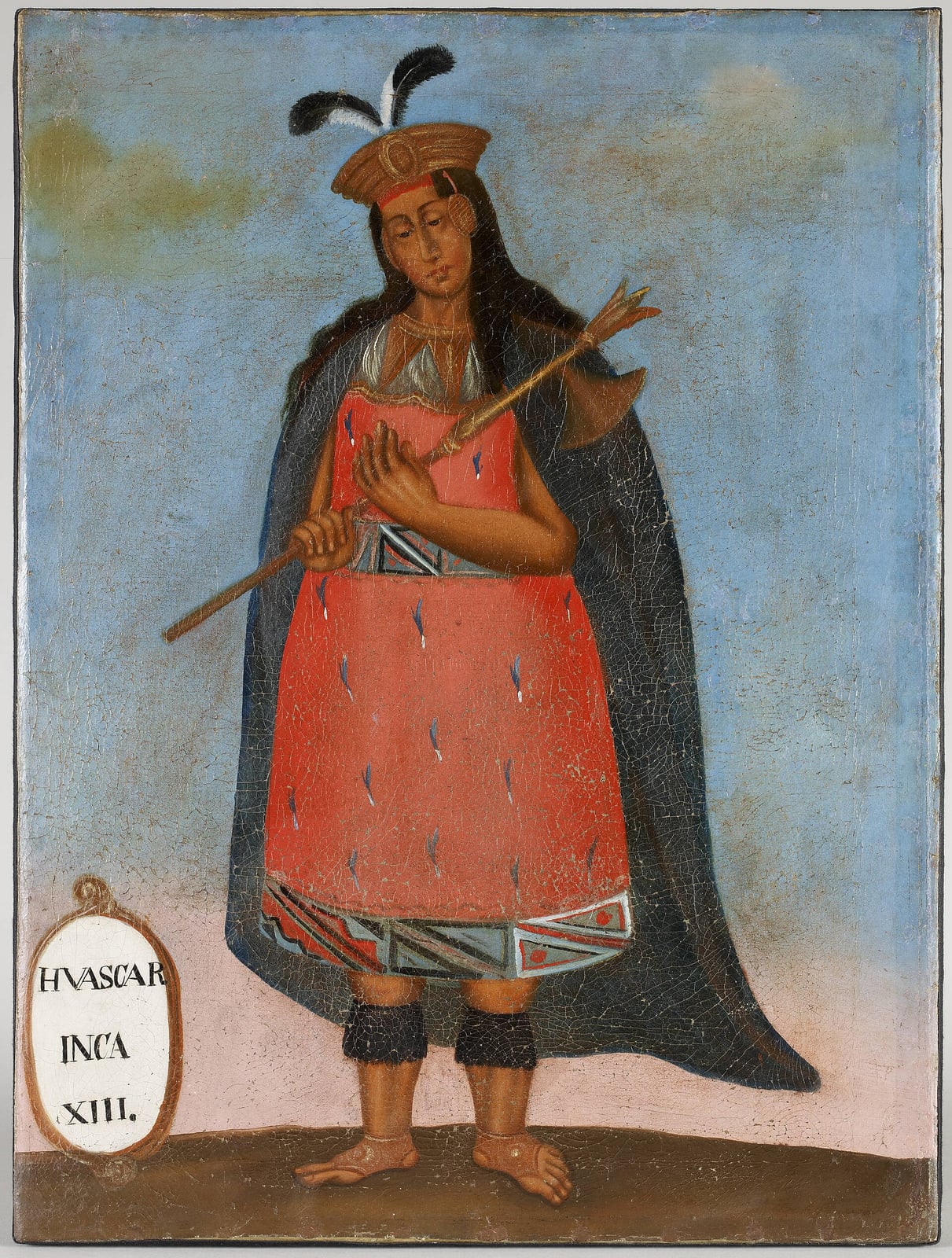
Two Royal Brothers Split the Inca Empire in Civil War
Huáscar and Atahualpa fought over the throne just as Spanish ships reached the coast.
Around 1527, the sudden death of Emperor Huayna Capac plunged the Inca Empire into a succession crisis. European explorers along the northwestern coast of South America had inadvertently introduced infectious diseases such as smallpox, measles, or influenza into indigenous populations lacking immunity. While staying at Tumebamba in the north, Huayna Capac succumbed to what may have been smallpox or malaria. His chosen successor, Ninan Cuyochi, died of illness around the same time before he could assume power. Because the imperial system lacked rigid rules of succession, the throne was traditionally awarded by noble consensus when a designated heir was absent.
The imperial vacuum created a rivalry between two of Huayna Capac's sons, Huáscar and his half-brother Atahualpa. In the capital of Cusco, the traditional aristocracy, high priests, and members of the Capac Ayllu lineage invested Huáscar with the royal crown, the mascapaicha. By contrast, Atahualpa had spent years campaigning alongside his father in the northern territories, securing the backing of seasoned commanders such as Quizquiz, Chalcuchimac, and Rumiñawi. Chroniclers and modern historians remain divided over Atahualpa's maternal lineage, variously identifying his mother as a noblewoman from Quito or a member of an elite Cusco panaka, a dispute that mirrors the regional and factional divisions fueling the friction.

Keep reading in Yester
Coming soonKeep following the story
Sources
Image: Unknown author · Public domain · Wikimedia Commons · cropped
