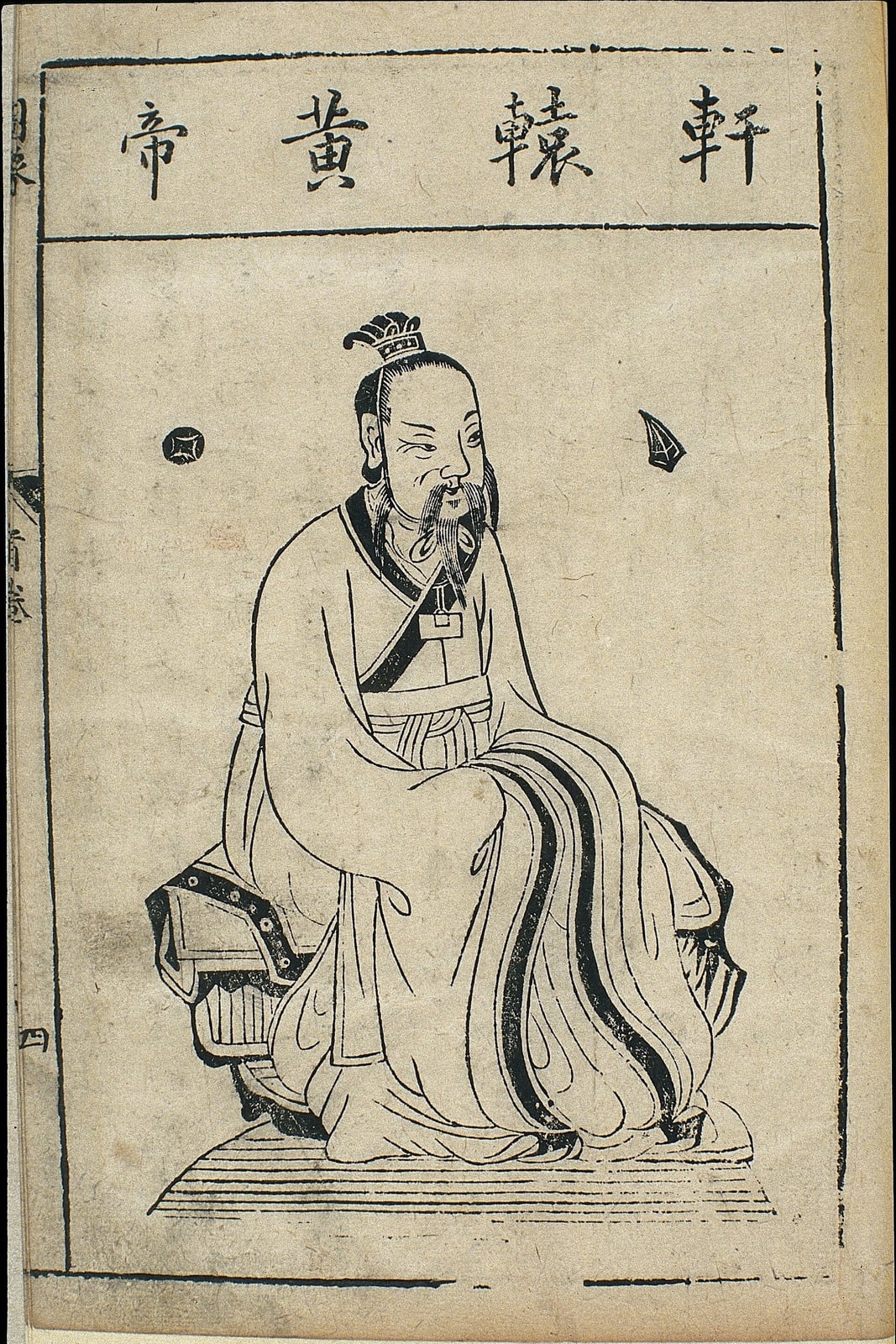
The Yellow Emperor’s Classic Lays the Foundation of Chinese Medicine
Framed as dialogues between a ruler and his physicians, it set out ideas of qi, yin and yang still used today.
The Huangdi Neijing, or Inner Canon of the Yellow Emperor, stands as a fundamental doctrinal source for Chinese medicine, revered across more than two millennia. Structured largely as dialogues between the legendary Yellow Emperor and his ministerial advisers, including the physician Qibo, the compendium approaches the human body through systematic natural philosophy. Rather than presenting a single unified voice, the work brings together diverse texts that framed physical health around systemic equilibrium, diagnostics, and therapeutics.
The core corpus that survived into later eras consists of two principal works, each arranged into eighty-one treatises: the Suwen, or Basic Questions, and the Lingshu, or Spiritual Pivot. While the Suwen establishes theoretical principles, bodily diagnostics, and cosmological models, the Lingshu concentrates heavily on acupuncture therapy. In practical medical traditions, references to the Neijing frequently denoted the Suwen alone, though related compilations, such as the seventh-century Taisu edited by Yang Shangshan, also preserved material from the same tradition.

Keep reading in Yester
Coming soonKeep following the story
Sources
- Huang di nei jing su wen, Jin dynasty edition (Library of Congress / World Digital Library)
- Huang Di Nei Jing Su Wen: Nature, Knowledge, Imagery (Paul U. Unschuld, University of California Press)
- A Philological, Text Critical Reading of Sections of Chapter Five of the Su Wen (John Aguilar Jr., University of Washington thesis, 2023)
- Huangdi Neijing
Image: Gan Bozong (Tang period, 618-907) · CC BY 4.0 · Wikimedia Commons · cropped
