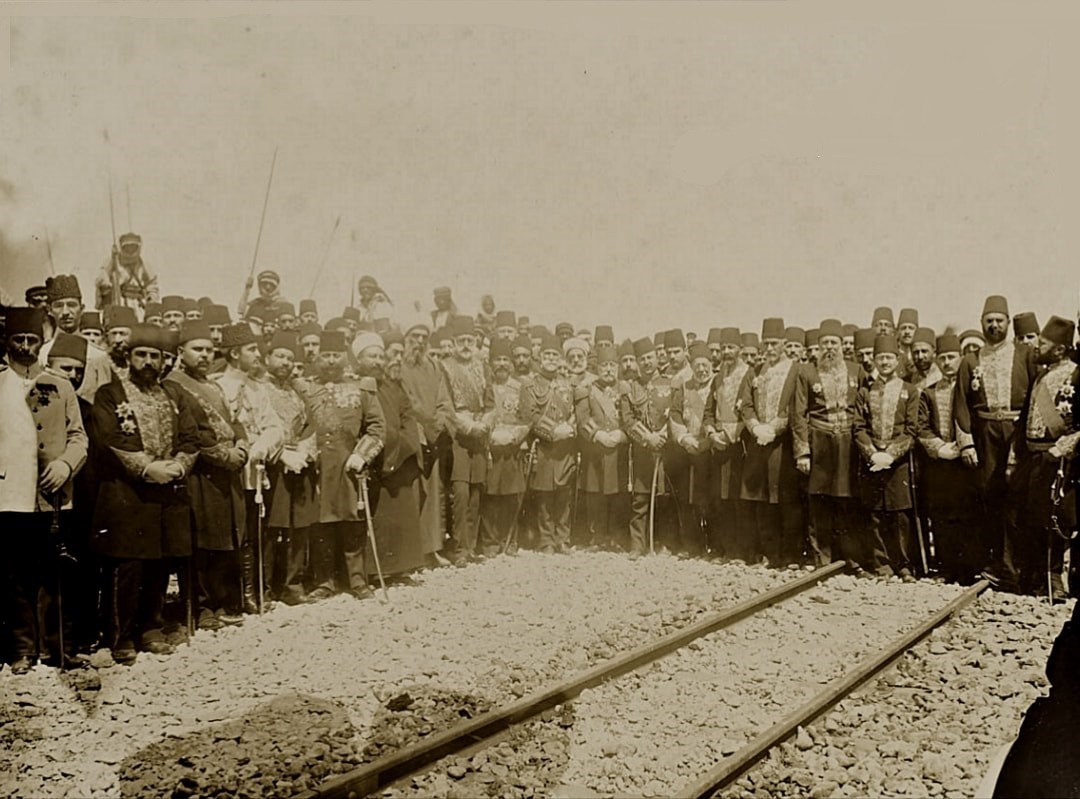
The Hejaz Railway Reaches Medina
The Ottoman railway from Damascus, funded partly by donations from across the Muslim world, carried pilgrims toward the holy cities of Arabia.
The first train from Damascus reached Medina in late August 1908, and on September 1, 1908, the Ottoman Empire marked the anniversary of Sultan Abdul Hamid II's accession by inaugurating the completed southern terminus of the Hejaz Railway in Medina. Ordered eight years earlier in March 1900, the narrow-gauge line spanned roughly 1,300 kilometres from Damascus through arid terrain. The project cut a difficult journey that had previously taken traditional overland caravans forty days down to a journey of only a few days by rail, drastically easing transit for Muslim pilgrims traveling toward the holy sanctuaries of Arabia.
The initiative carried deep ideological and strategic weight for the Ottoman state. Facing territorial contractions in Europe, the imperial government sought to highlight Islamic solidarity, counter rising nationalist currents, and strengthen administrative cohesion across its distant Arabian provinces. Abdul Hamid presented the endeavor as a Pan-Islamic enterprise financed by Muslim contributions and Ottoman taxes. The state solicited public contributions across the Muslim world, with donors recorded from India, Singapore and North Africa, among other places, and more than 20,000 names entered in volumes kept in Istanbul. Contributions covered about a third of the cost, and new taxes made up much of the rest.

Keep reading in Yester
Coming soonKeep following the story
Sources
Image: Unknown photographer · Public domain · Wikimedia Commons · cropped
