Britain Captures Havana
After a two-month siege, British forces took Spain’s key Caribbean port, then traded it back for Florida the next year.
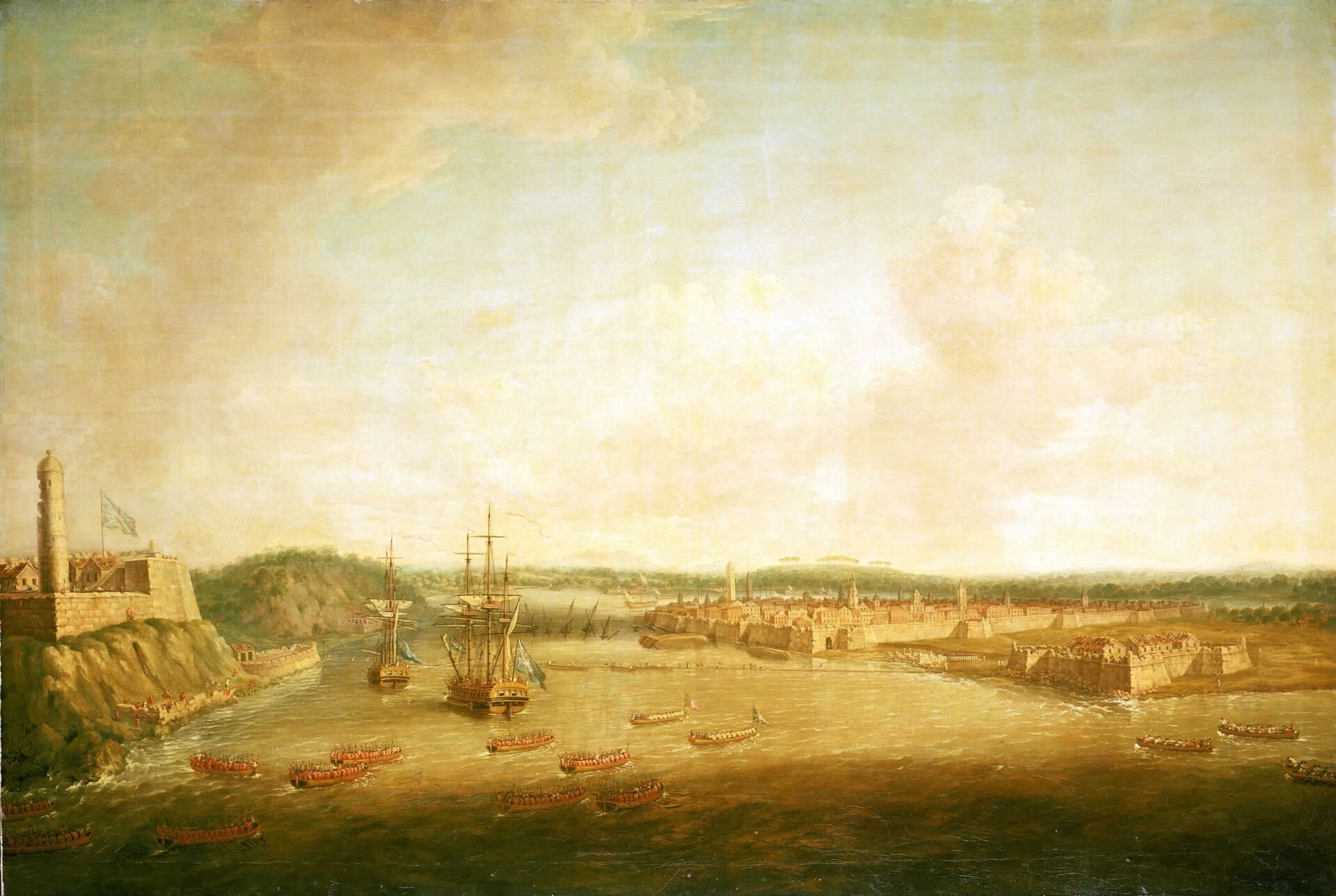
In June 1762, a formidable British naval expedition appeared unexpectedly off the northern coast of Cuba to lay siege to Havana. Spain had signed a secret treaty of mutual support with France in 1761, and Britain declared war on Spain in January 1762, prompting Great Britain to target Spain's primary Caribbean naval base. Havana housed the empire's preeminent shipyard and possessed formidable defenses, leading Spanish authorities to believe the port was virtually unassailable. That confidence rested partly on the belief that a large fleet could not safely use the dangerous Old Bahama Channel along Cuba's northern coast. Instead, the British admiral took that route with local pilots and captured Spanish charts, reaching Havana by surprise.
Captain General Juan de Prado and Admiral Gutierre de Hevia chose a defensive strategy of delay. Recognizing the superiority of the British fleet, they sank three warships across the narrow harbor entrance, effectively trapping their remaining vessels inside while deploying the sailors and naval guns to bolster land fortifications.

Keep reading in Yester
Coming soonKeep following the story
Sources
- The Siege of Havana: A Daring Strike (Warfare History Network)
- Capture of Havana (British Battles)
- 1762 - British expedition against Havana (Kronoskaf)
- The Capture of Havana, 1762: Storming of Morro Castle, 30 July (Royal Museums Greenwich)
- Cuba: Slavery and the Siege of Havana (UC Berkeley CLACS)
- Treaty of Paris, 1763 (US Office of the Historian)
- Siege of Havana
Image: Dominic Serres · Public domain · Wikimedia Commons · cropped
