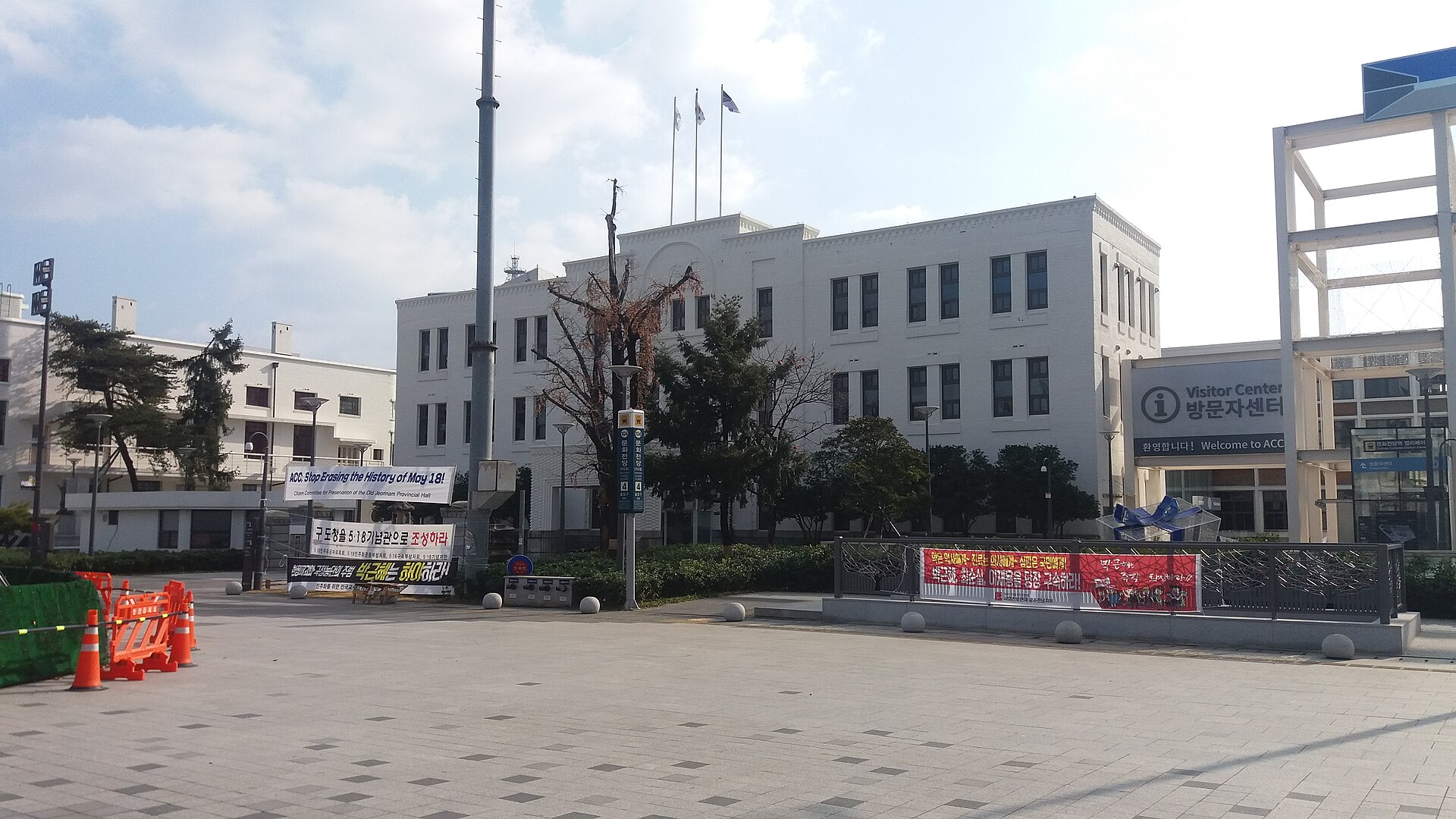
Citizens of Gwangju Rise Against Martial Law
Troops killed hundreds of protesters, and the uprising became a foundation of South Korea’s democracy movement.
On the morning of May 18, 1980, students gathered at the entrance of Chonnam National University in Gwangju to protest the nationwide expansion of martial law and the closure of their campus. The demonstrations followed the rise of General Chun Doo-hwan, who had seized control of the military in a December 1979 coup that came weeks after the October 1979 assassination of President Park Chung Hee. His junta then extended martial law, closed universities, banned political activities, and arrested prominent opposition leaders such as Kim Dae-jung. When airborne troops clashed with the initial demonstrators, the confrontations spilled into the center of the provincial capital.
The arrival of South Korean airborne troops dramatically escalated the crisis over the subsequent days. Paratroopers deployed harsh riot suppression methods, beating and bayoneting demonstrators and uninvolved bystanders alike. The violence grew as troops occupied commercial spaces, fired upon citizens, and detained large numbers of students. In response, local resistance broadened beyond the student body. On May 20, taxi and bus drivers formed convoys toward the South Jeolla provincial office after drivers carrying the wounded came under attack. Crowds set fire to the local MBC television station after it broadcast false reports about the protesters, and troops began firing live ammunition into the crowds.

Keep reading in Yester
Coming soonKeep following the story
Sources
- The Gwangju Uprising: A Battle over South Korea's History (Wilson Center)
- Moon vows justice 40 years after Gwangju Massacre (Asia Times)
- How the Gwangju Uprising in May 1980 Sparked Democracy in South Korea (Seasia.co)
- A Taxi Driver film guide: Introduction (Ohio State University East Asian Studies Center)
- Gwangju Uprising
Image: Neoalpha · CC0 · Wikimedia Commons · cropped
