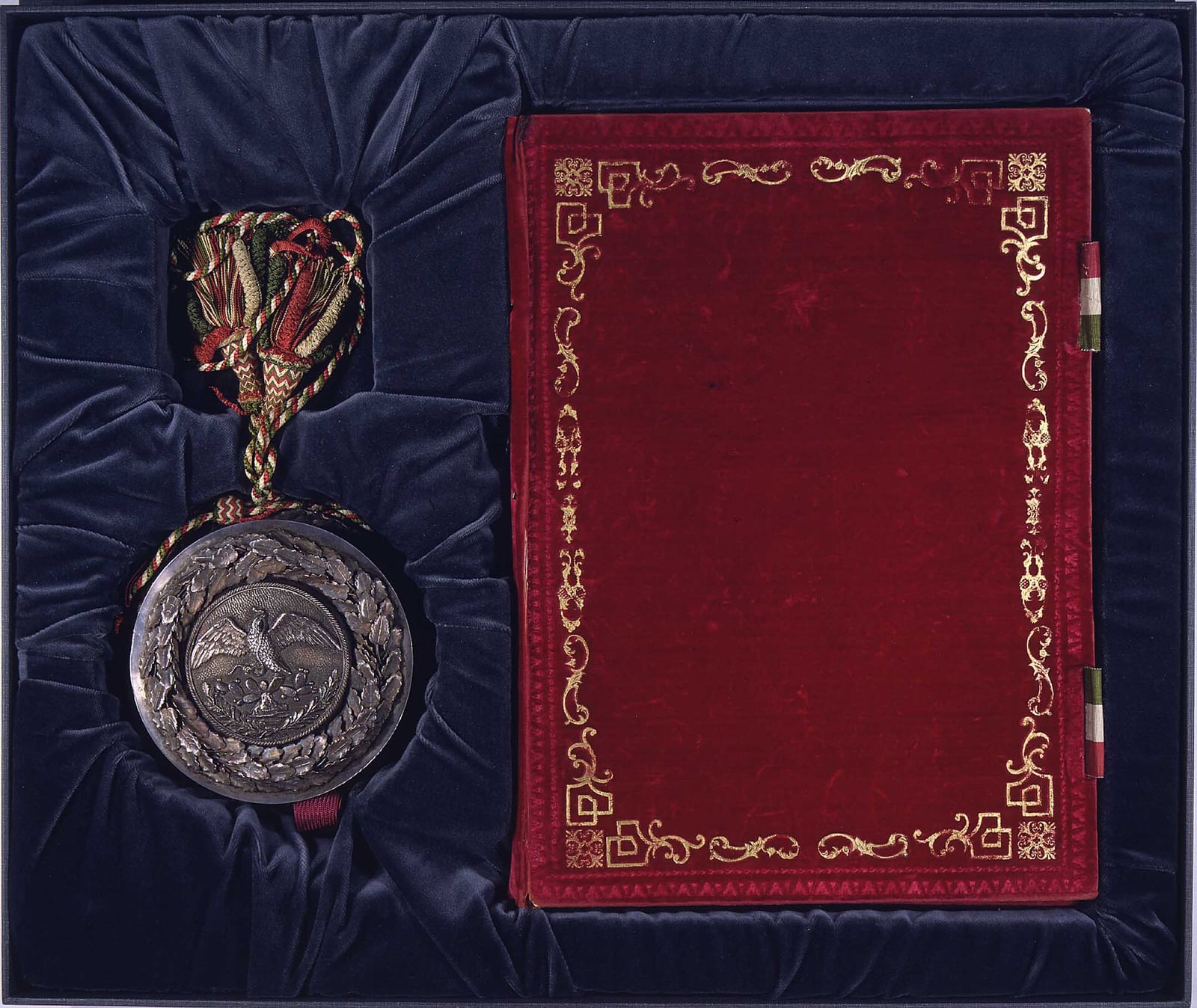
Mexico Cedes Half Its Territory in the Treaty of Guadalupe Hidalgo
The peace that ended the Mexican–American War moved California and the Southwest into the United States.
On 2 February 1848, representatives of the United States and Mexico met in the village of Guadalupe Hidalgo, just north of Mexico City, to sign the Treaty of Guadalupe Hidalgo. United States forces under General Winfield Scott had occupied Mexico City since September 1847, leaving the defeated Mexican government fractured and facing widespread domestic unrest. The American diplomat Nicholas Trist concluded the accord alongside Mexican plenipotentiaries Jose Bernardo Couto, Miguel de Atristain, and Luis Gonzaga Cuevas, despite President James K. Polk having formally recalled Trist after earlier peace talks had stalled.
The agreement resolved the Mexican-American War by formally adjusting the international border. Mexico relinquished all claims to Texas, accepted the Rio Grande as the boundary, and surrendered roughly 55 percent of its pre-war territorial claims. In the United States, the newly acquired territory outside of Texas became known as the Mexican Cession, encompassing Alta California and western Santa Fe de Nuevo Mexico. In exchange, the United States agreed to pay Mexico 15 million dollars, 3 million on ratification and the rest in annual installments with interest, and assumed 3.25 million dollars in existing claims owed by Mexico to United States citizens.

Keep reading in Yester
Coming soonKeep following the story
Sources
- Treaty of Guadalupe Hidalgo (1848), Milestone Documents (U.S. National Archives)
- Treaty of Guadalupe Hidalgo, full text (Avalon Project, Yale Law School)
- Annexation of Texas, the Mexican-American War, and the Treaty of Guadalupe-Hidalgo (U.S. Office of the Historian)
- Today in History: February 2 (Library of Congress)
- Treaty of Guadalupe Hidalgo
Image: Governments of USA and Mexico · Public domain · Wikimedia Commons · cropped
