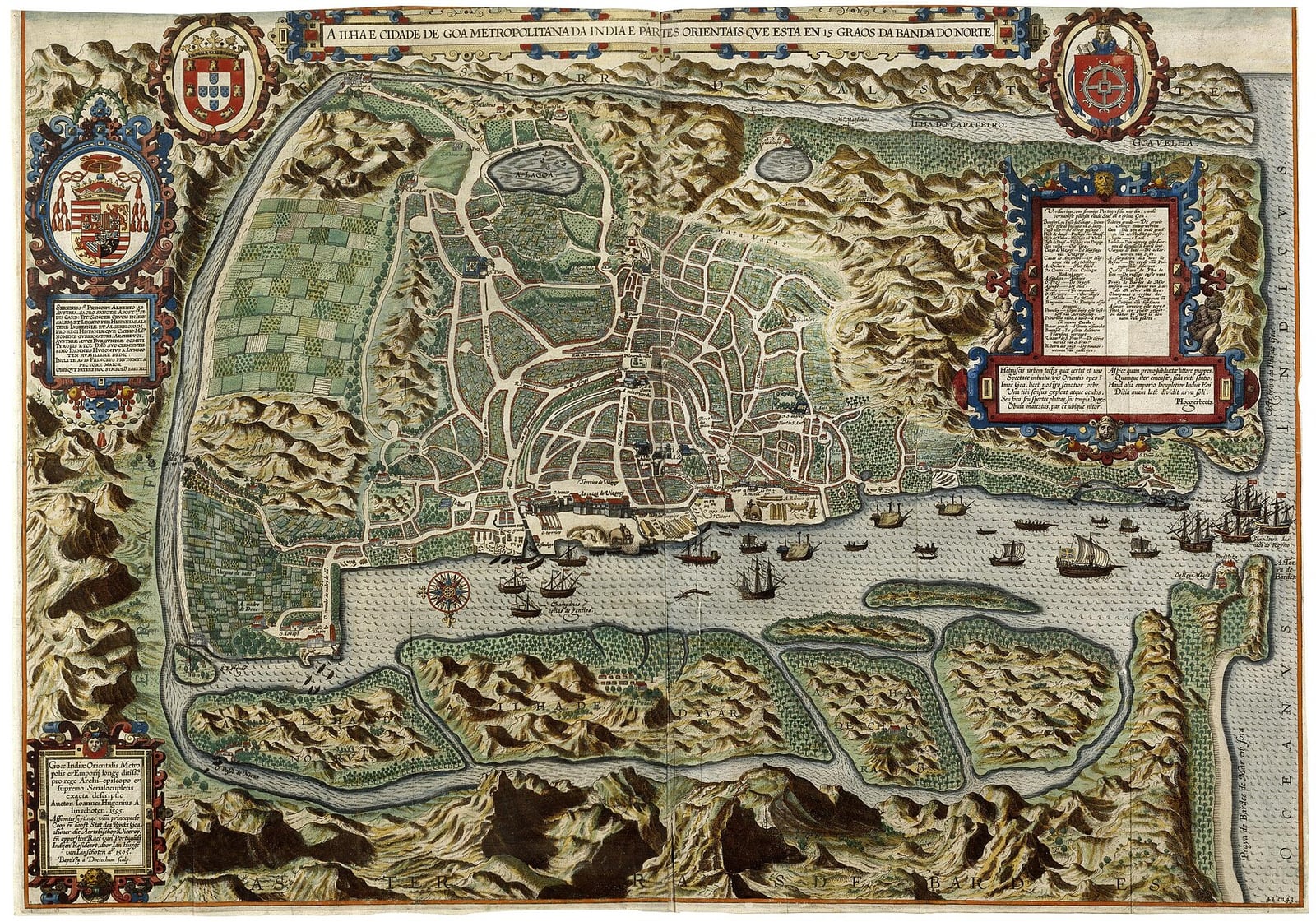
Afonso de Albuquerque Takes Goa for Portugal
The Portuguese commander seized Goa from the Sultanate of Bijapur, and it became the centre of Portugal's empire in Asia until 1961.
In early 1510, Afonso de Albuquerque departed Cochin intending to launch a campaign toward the Red Sea against a Mamluk fleet assembling at Suez. King Manuel I had directed him to seize Aden, Hormuz, and Malacca, aiming to break existing commercial networks across the Indian Ocean. While Albuquerque was anchored near Honavar, a regional privateer named Timoji proposed an alternative target: the port city of Goa, held by the Sultanate of Bijapur. Timoji reported that the recent death of Sultan Yusuf Adil Khan left the settlement weakly garrisoned under his young successor, Ismail Adil Shah, and offered local troops to support an invasion.
Albuquerque recognized that holding directly administered territory would provide the Portuguese crown with a far more secure base than relying on fragile alliances in Cochin or Cannanore. In February 1510, Portuguese vessels sailed into the Mandovi River, stormed the fort at Pangim, and accepted the surrender of Goa without further resistance. Albuquerque is said to have promised the inhabitants respect for their customs. This first occupation proved short-lived. Ismail Adil Shah concluded a temporary truce with a rival power, freeing thousands of soldiers under general Pulad Khan to counterattack during the monsoon.

Keep reading in Yester
Coming soonKeep following the story
Sources
Image: Jan Huyghen van Linschoten / Cornelis Claesz · Public domain · Wikimedia Commons · cropped
