Wovoka’s Vision Spreads the Ghost Dance Across the Plains
A Paiute prophet promised renewal through a circle dance, and US fear of it ended in the massacre at Wounded Knee.
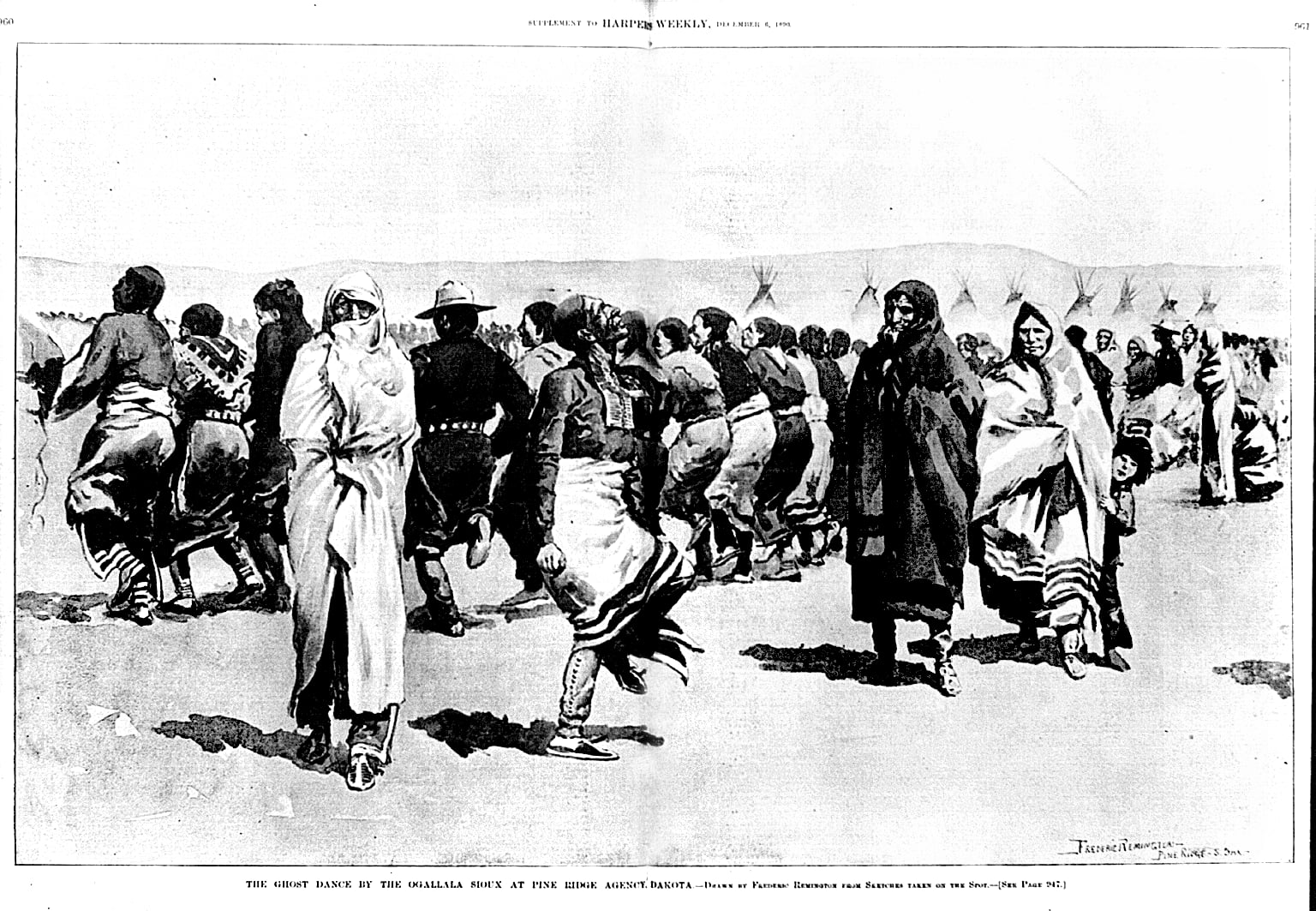
On January 1, 1889, during a solar eclipse, a Northern Paiute spiritual leader named Wovoka had the vision in western Nevada that would launch the Ghost Dance. Also known by his English name, Jack Wilson, Wovoka had trained as a weather doctor in Mason Valley under the guidance of elders, following the example of his father, who was also a Paiute healer. In his revelation, Wovoka reported standing before God, who showed him a pristine world populated by departed ancestors and teeming with game. The Creator instructed him to return to his people with a message urging universal peace, diligence, and the abandonment of warfare, lying, and traditional self-mutilation during mourning. Central to this divine mandate was a ritual circle dance, which Wovoka promised would reunite the living with the dead and rejuvenate the earth if performed at regular intervals.
This ceremony drew upon the older round dance traditions of the region, where participants joined hands in a wide circle and executed a measured side-shuffle step while singing sacred chants. Two decades earlier, around 1870, another Paiute healer named Wodziwob had introduced a comparable revitalization movement. Wovoka's new ceremony, however, spread far beyond Paiute territory. Delegates from indigenous communities across the Great Basin, California, and the Great Plains journeyed to Nevada to observe the prophet. As these emissaries returned to their respective communities, many syncretized his pacifist principles with local customs, spiritual practices, and regional needs.

Keep reading in Yester
Coming soonKeep following the story
Sources
- James Mooney Recordings of American Indian Ghost Dance Songs, 1894 (Library of Congress, Folklife Today)
- Wounded Knee Massacre: Topics in Chronicling America (Library of Congress)
- Wounded Knee Massacre facts, by Christopher Klein (History.com)
- The Ride to Wounded Knee (Smithsonian National Museum of the American Indian)
- Ghost Dance
Image: Unknown author · Public domain · Wikimedia Commons · cropped
