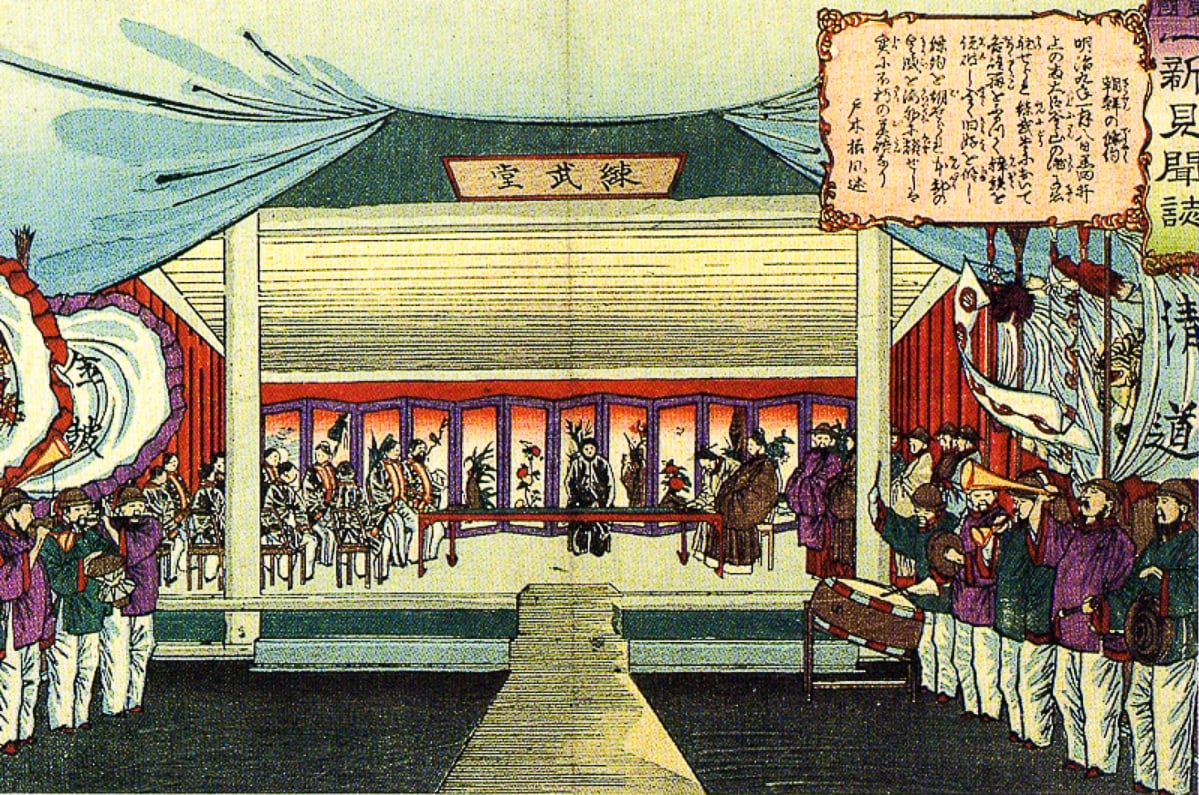
Japan Forces Korea Open with the Treaty of Ganghwa
Backed by warships, Japanese envoys made Korea open three ports and accept unequal terms, the end of its isolation.
On February 26, 1876, representatives from the Empire of Japan and the Kingdom of Joseon signed the Japan-Korea Treaty of Amity on Ganghwa Island. Also known as the Treaty of Ganghwa, the agreement concluded negotiations led by Japanese envoys Kuroda Kiyotaka and Inoue Kaoru and Korean general Shin Heon. The accord brought an official end to Korea's long-standing policy of diplomatic isolation, forcing the Joseon court to open ports, concede extraterritorial jurisdiction, and abandon centuries of traditional regional protocol under the threat of naval force.
For generations, the Joseon dynasty had strictly limited foreign contacts, maintaining formal tributary ties with Qing China and confined trade with Japan through the So clan of Tsushima at Pusan. Following King Gojong's accession in 1864, his father, the Heungseon Daewongun, governed as regent and reinforced this seclusion. The Daewongun viewed growing Western encroachments across East Asia as a direct peril to the realm, successfully resisting trade missions and punitive naval expeditions from France in 1866 and the United States in 1871. However, after King Gojong and his consort assumed direct royal rule in 1873, the Daewongun withdrew from power, leaving a court divided over how to respond to foreign pressure.

Keep reading in Yester
Coming soonKeep following the story
Sources
Image: Unknown author · Public domain · Wikimedia Commons · cropped
