Endless Rain Brings the Great Famine to Europe
Years of cold, wet weather rotted harvests and killed perhaps a tenth of the people of northern Europe.
In the spring of 1315, relentless downpours swept across northern Europe, opening several years of cold and waterlogged seasons. The unyielding wet weather prevented crops from ripening, drowned lowlands, and left the saturated earth too heavy for medieval plows to turn. Because hay and straw could not be cured in the damp, farmers lost essential animal fodder, while salt production plummeted as brine failed to evaporate without sun. Deprived of the main preservative for meat and facing ruined fields, communities rapidly consumed their immediate reserves, watching prices for basic staples multiply across markets from the British Isles to the borders of western Poland.
The disaster fell upon a continent ill-prepared for an agricultural collapse. Over the preceding centuries of the Medieval Warm Period, Europe had undergone substantial demographic growth, pushing populations to levels that strained arable land. Yield ratios had already declined from late thirteenth-century highs, leaving contemporary society with negligible margins of safety. When successive harvest failures struck between 1315 and 1317, the crisis extended across Scandinavia, northern France, Germany, the Low Countries, and the British Isles, bounded to the south by the Alps and Pyrenees. Most peasant families, the great majority of the population, had little or no food in reserve.

Keep reading in Yester
Coming soonKeep following the story
Sources
- The Great Flood and Great Famine of 1314 (Historic UK)
- The Great Famine (Medievalists.net)
- The Great Famine and the Black Death (Grand Valley State University)
- William Chester Jordan, The Great Famine: Northern Europe in the Early Fourteenth Century (Princeton University Press)
- Philip Slavin, The Great Bovine Pestilence and its economic and environmental consequences in England and Wales, 1318-50 (Economic History Review, via University of Stirling)
- Great Famine of 1315–1317
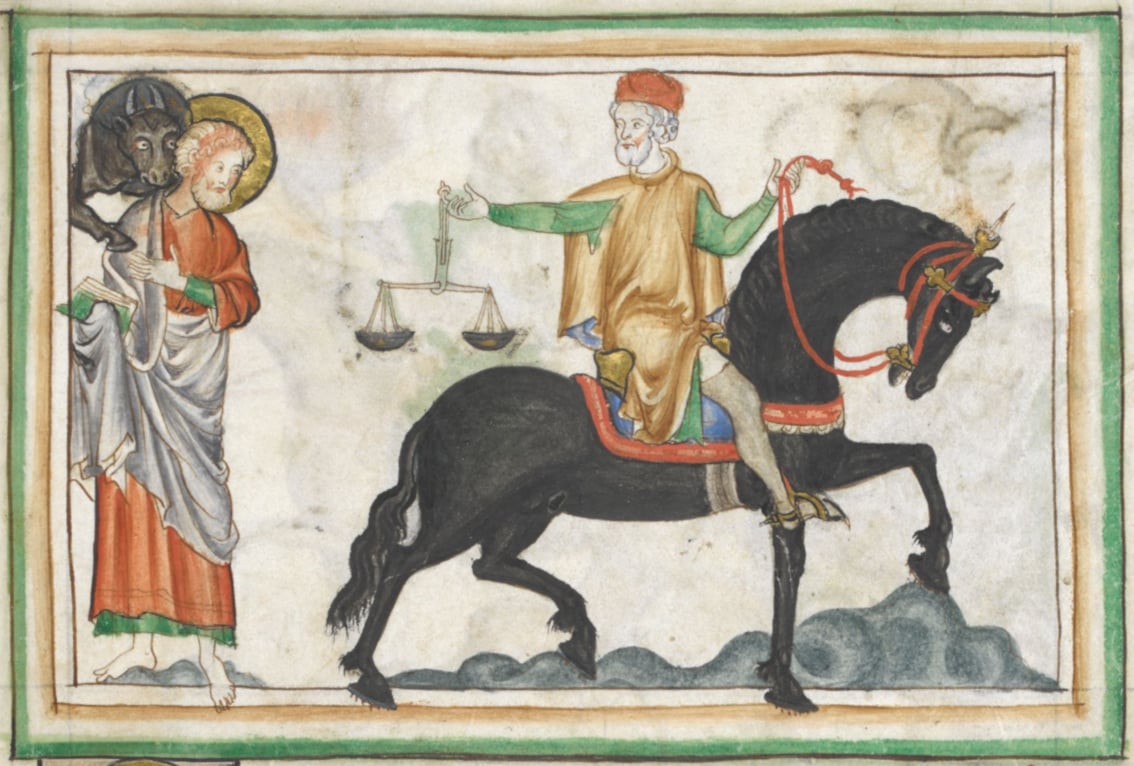
Image: Unknown author · Public domain · Wikimedia Commons · cropped
