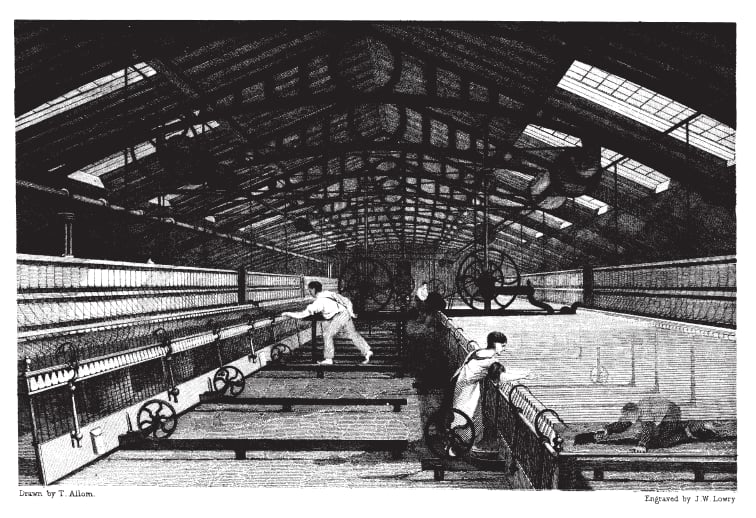
Britain Limits Child Labor in Its Textile Mills
Parliament banned the youngest children from textile mills, limited the hours of older ones and appointed paid inspectors to enforce the rules.
During the rapid expansion of mechanized industry in Britain, early parliamentary measures to regulate factory employment largely remained dead letters. The Health and Morals of Apprentices Act 1802 set hygiene standards and twelve-hour caps for parish apprentices, but it relied on local magistrates and the visitors they appointed, who seldom enforced the rules. A subsequent statute in 1819 prohibited employing children under nine in cotton mills, but it left enforcement to local magistrates and had little effect. Consequently, prosecutions were extraordinarily rare, and factory owners operating under prevailing laissez-faire doctrines faced little practical constraint.
By the early 1830s, working-class Short Time Committees across Yorkshire and Lancashire were campaigning vigorously for a statutory ten-hour working day. Evangelical reformers, including Richard Oastler outside Parliament and Michael Sadler within the House of Commons, publicized accounts of extreme fatigue and physical punishment suffered by mill children. Sadler gathered extensive testimony for a select committee report ordered to be printed in 1832. When Sadler lost his seat later that year, Lord Ashley took leadership of the parliamentary campaign and reintroduced a ten-hour measure. Critics in Parliament questioned the reliability of Sadler's unsworn witnesses, prompting the government to dispatch an official Factory Commission to survey the manufacturing districts.

Keep reading in Yester
Coming soonKeep following the story
Sources
Image: Baines · Public domain · Wikimedia Commons · cropped
