A Total Solar Eclipse Crosses Mainland Europe for the First Time Since 1999
The Moon’s shadow swept from Greenland and Iceland across northern Spain near sunset.
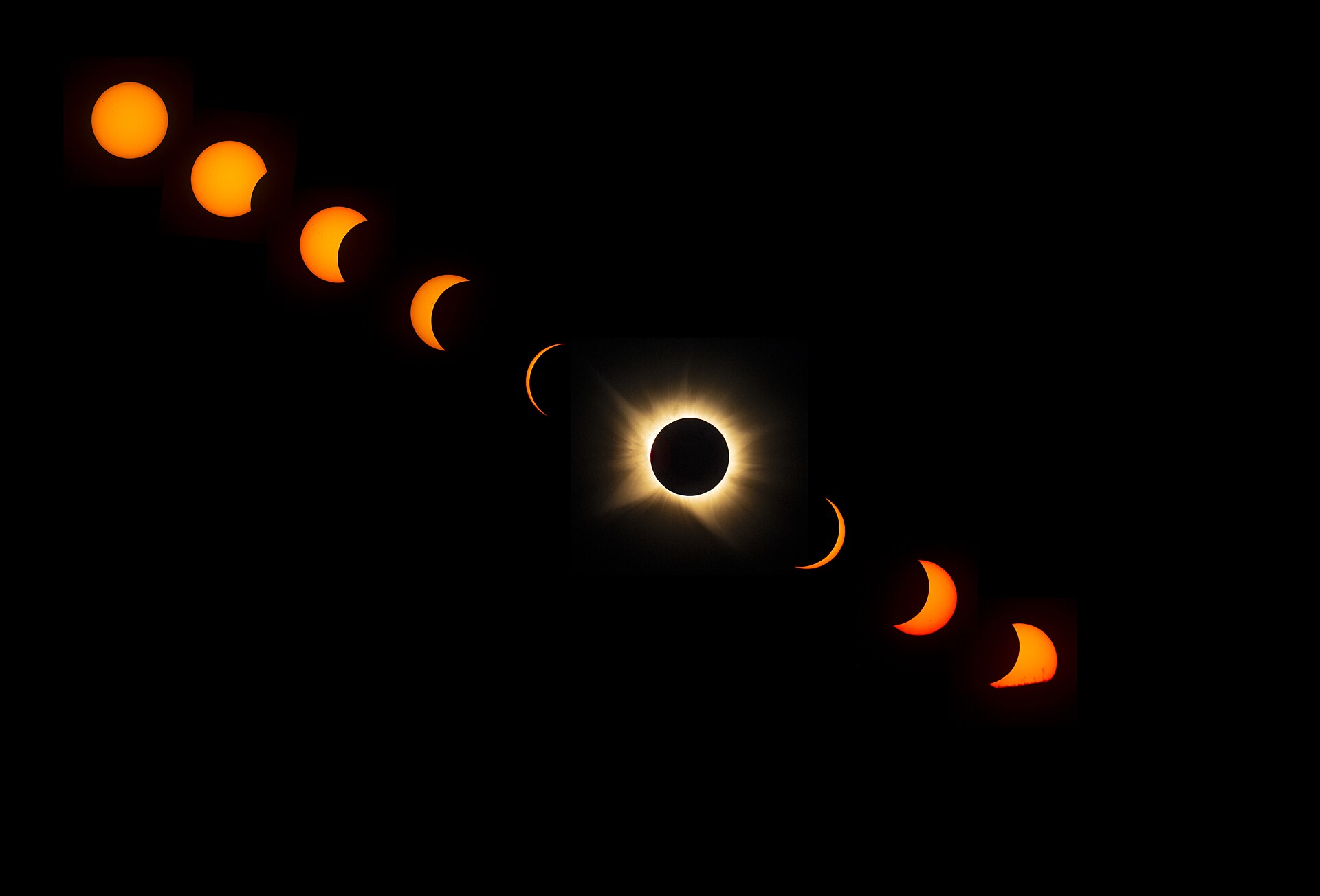
On Wednesday, 12 August 2026, a total solar eclipse crossed the Northern Hemisphere, marking the first time since 11 August 1999 that the Moon's central shadow touched mainland Europe. Occurring at the descending node of the lunar orbit just 2.3 days after perigee, the Moon presented a larger apparent diameter that completely obscured the Sun along a focused terrestrial track. While partial phases covered vast regions of Europe, North Africa, and northern North America, the path of totality traced an unusual arc across remote polar reaches before sweeping south across the Iberian Peninsula.
The trajectory of totality began in far northern Siberia and arced across the Arctic, passing near the North Pole before heading across Greenland and Iceland. The point of greatest eclipse occurred in the North Atlantic approximately 45 kilometres off Iceland's western coast, generating a maximum totality duration of 2 minutes and 18.2 seconds. On land, the longest viewing window unfolded at Látrabjarg in Iceland's Westfjords, where local authorities confronted infrastructure challenges on narrow roads to accommodate arriving observers.

Keep reading in Yester
Coming soonKeep following the story
Sources
- Millions crowd cities to see Spain's first total solar eclipse in over a century (AP/NPR via WUNC)
- Spain puts 33,600 officers on duty as millions prepare for solar eclipse (Murcia Today)
- 2026 Solar Eclipse in Iceland: The Complete Guide (Guide to Iceland)
- NASA Johnson Pilots Chase Moon's Shadow for Eclipse Science (NASA)
- Solar eclipse of August 12, 2026
Image: NASA/Bill Ingalls · Public domain · Wikimedia Commons · cropped
