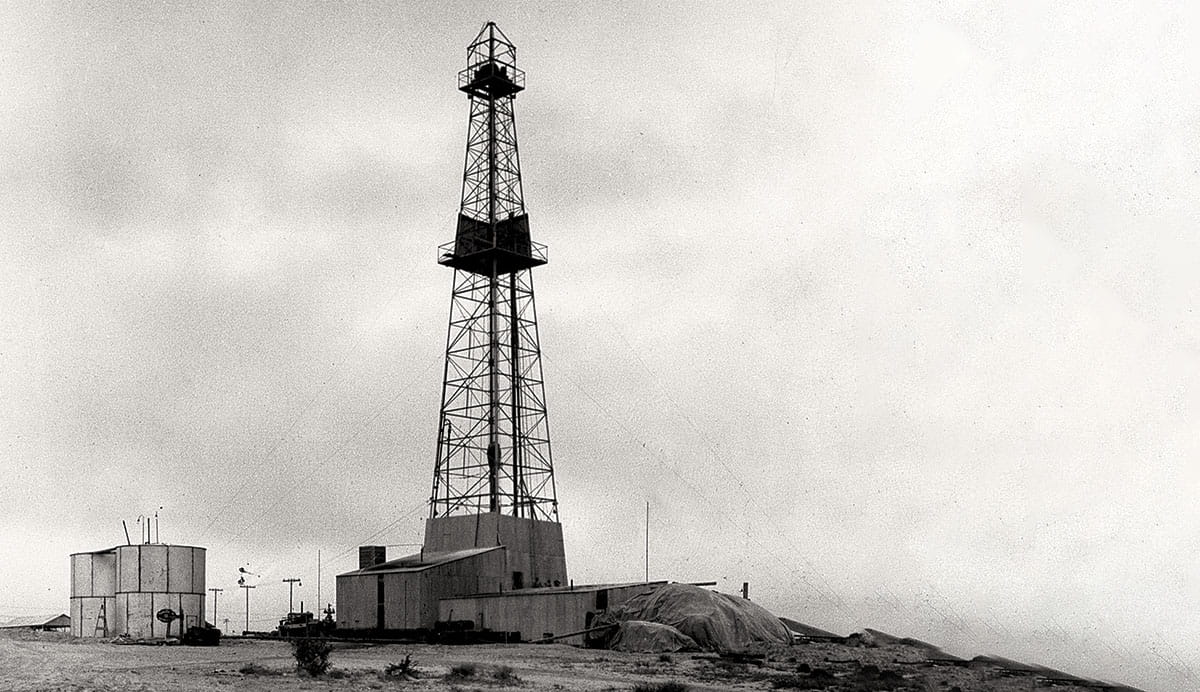
Oil Gushes from Dammam No. 7 in Saudi Arabia
After years of dry wells, a test well struck oil and began Saudi Arabia’s transformation.
During the early 1930s, the geological viability of petroleum reserves beneath the sands of Saudi Arabia remained unproven. The discovery of oil across the Persian Gulf in Bahrain in 1932 raised hopes that similar deposits lay on the Saudi side. In 1933, the government granted an oil concession to Standard Oil of California, which handed the work to its subsidiary, the California Arabian Standard Oil Company, the venture that later became Saudi Aramco. Surveyors and engineers subsequently established drilling sites along the kingdom's Eastern Province, a coastal territory that was primarily populated by small fishing communities and devoid of heavy industrial infrastructure.
Initial operations faced persistent logistical hardships, requiring the company to establish support networks and transport facilities entirely from scratch. Early exploratory efforts produced discouraging results. The enterprise drilled six consecutive boreholes, designated Dammam No. 1 through Dammam No. 6, but none produced petroleum in commercially viable volumes. Hopes came to rest on a deeper test well, Dammam No. 7, drilled to probe rock layers below the productive horizon identified in Bahrain.

Keep reading in Yester
Coming soonKeep following the story
Sources
Image: Unknown author · Public domain · Wikimedia Commons · cropped
