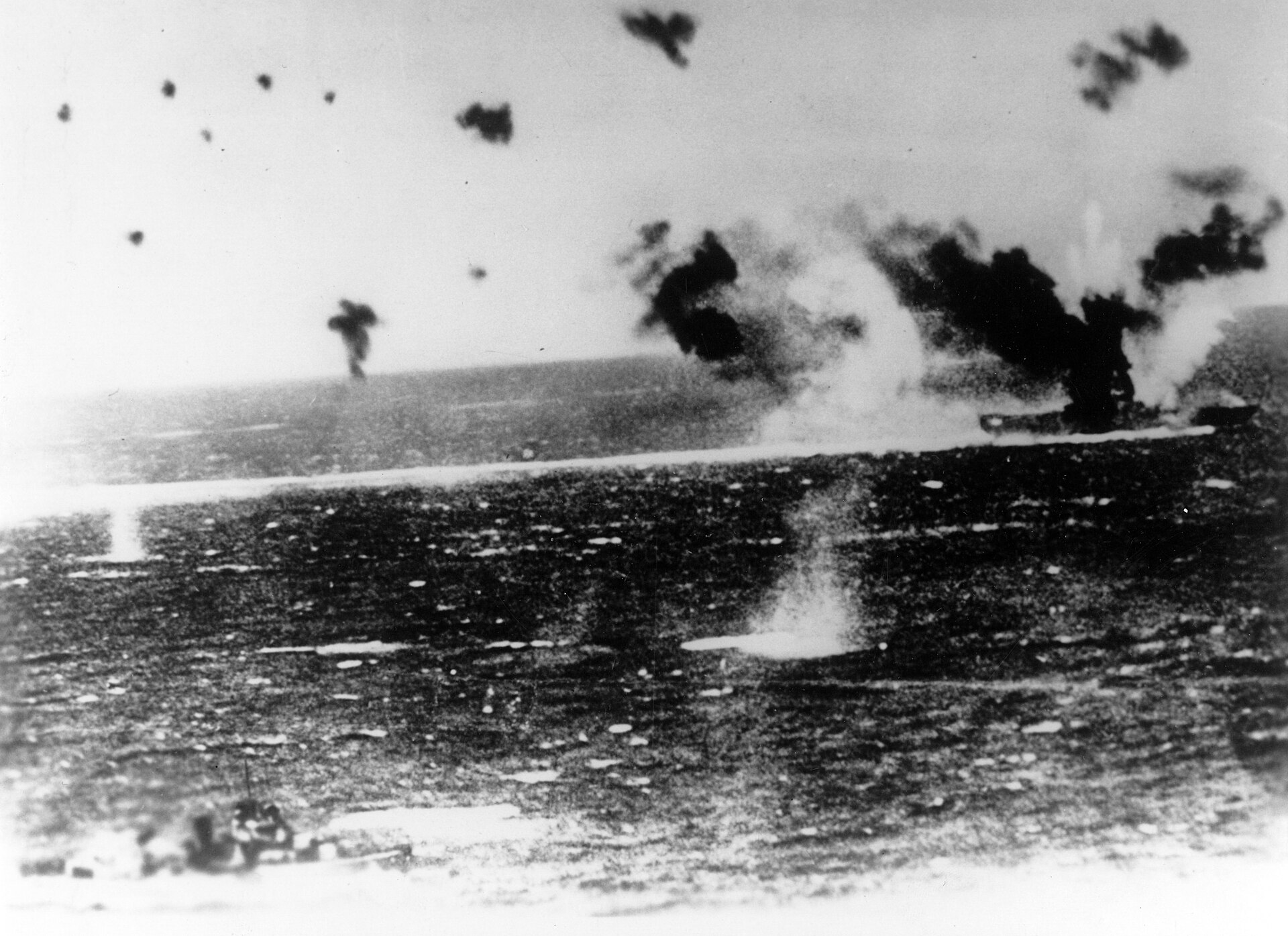
The First Naval Battle Fought Between Aircraft Carriers
American and Japanese carriers fought without their ships ever seeing each other, and Japan called off its sea attack on Port Moresby.
In early May 1942, naval warfare entered unfamiliar territory across the waters south of the Solomon Islands. The Imperial Japanese Navy intended to execute Operation MO, an amphibious offensive designed to capture Tulagi and secure Port Moresby on the southeastern coast of New Guinea. Controlling Port Moresby would bring northern Australia within reach of Japanese land-based bombers and protect the primary Japanese base at Rabaul. Alerted to the impending operation by signals intelligence that deciphered naval communications, Allied commanders dispatched two American aircraft carrier task forces alongside an Australian-American cruiser squadron to intercept the invasion armada.
The engagement began on 3 and 4 May when Japanese forces landed on Tulagi, only for their support ships to suffer unexpected aerial strikes from the carrier USS Yorktown. Realizing opposing carriers were operating nearby, the Japanese Carrier Strike Force, led by the fleet carriers Shōkaku and Zuikaku, navigated into the Coral Sea to seek out the Allied fleet. Over the next two days, both fleets operated blindly through squalls and overlapping scouting sweeps. On 6 May the opposing carrier forces came close to each other, but neither found the other.

Keep reading in Yester
Coming soonKeep following the story

Sources
Image: Unknown author · Public domain · Wikimedia Commons · cropped
