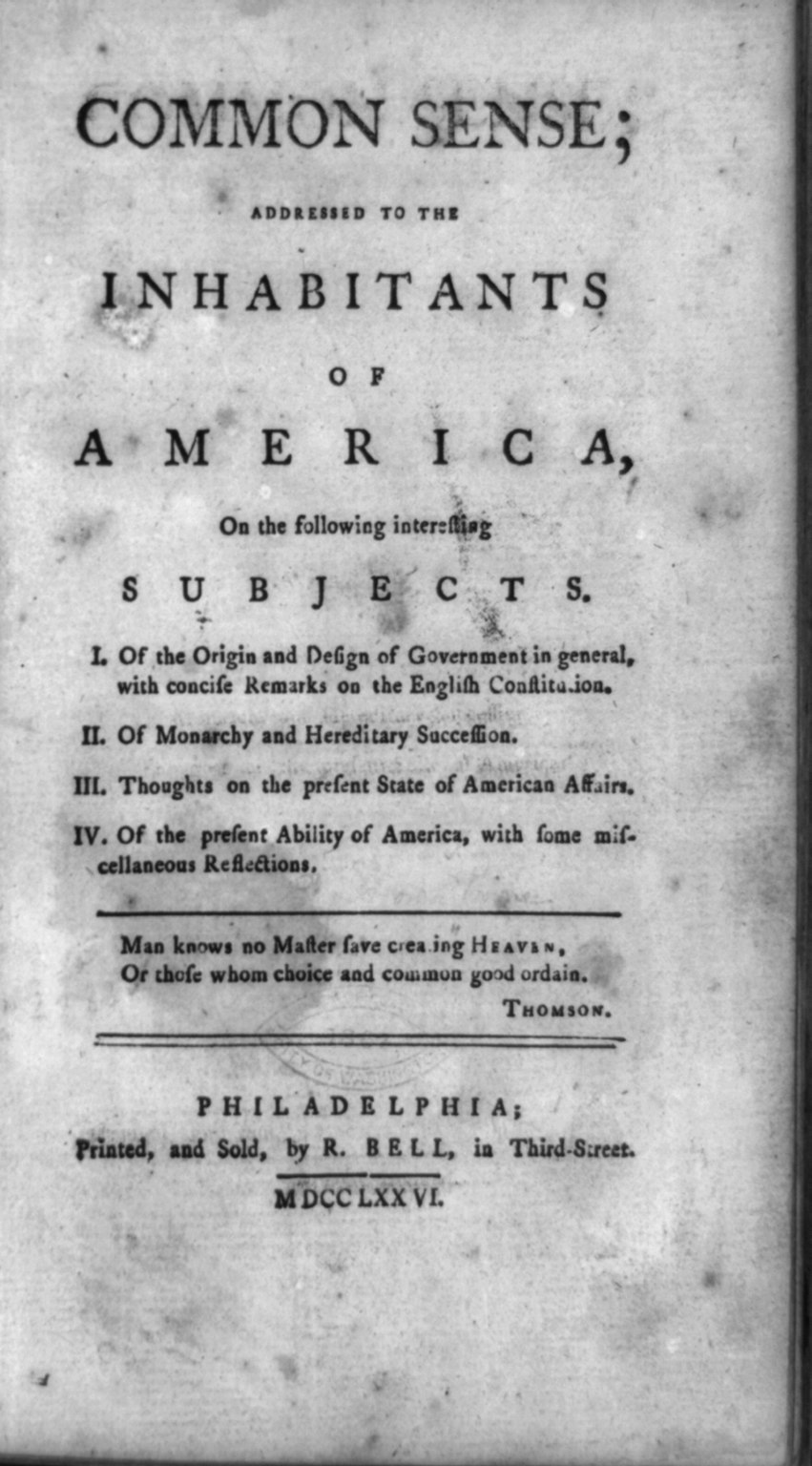
Thomas Paine’s Common Sense Makes the Case for Independence
A pamphlet by a recent English immigrant argued plainly for breaking with the king and spread through the colonies in many editions within months.
When Thomas Paine arrived in the American colonies in November 1774, open conflict had not yet shifted public sentiment toward separation from Britain. Even after armed clashes erupted at Lexington and Concord the following spring, colonial leaders and the public continued to seek reconciliation with the British Crown. Paine, an English immigrant who had settled in Philadelphia, observed that colonists remained obstinately loyal to the monarch. Recognizing that grievances were discussed without a unified demand for complete independence, he set out in late 1775 to write a political defense of separation, which grew into a pamphlet of under fifty pages.
First printed anonymously in Philadelphia on January 10, 1776, Common Sense attacked the institution of hereditary rule and proposed an independent American republic. Drawing on biblical passages and Enlightenment ideas about civil society, Paine asserted that government was at best a necessary evil, intended to protect human rights when populations grew too large for direct self-governance. He targeted the British constitutional balance between the Crown, the House of Lords, and the House of Commons, attacking hereditary rule as unjust and absurd. Paine rejected the notion that a constitutional monarch could safeguard freedom, arguing instead for a continental conference that would draft a charter for the united colonies.

Keep reading in Yester
Coming soonKeep following the story
Sources
Image: Paine, Thomas, 1737-1809.; American Imprint Collection (Library of Congress) DLC · Public domain · Wikimedia Commons · cropped
