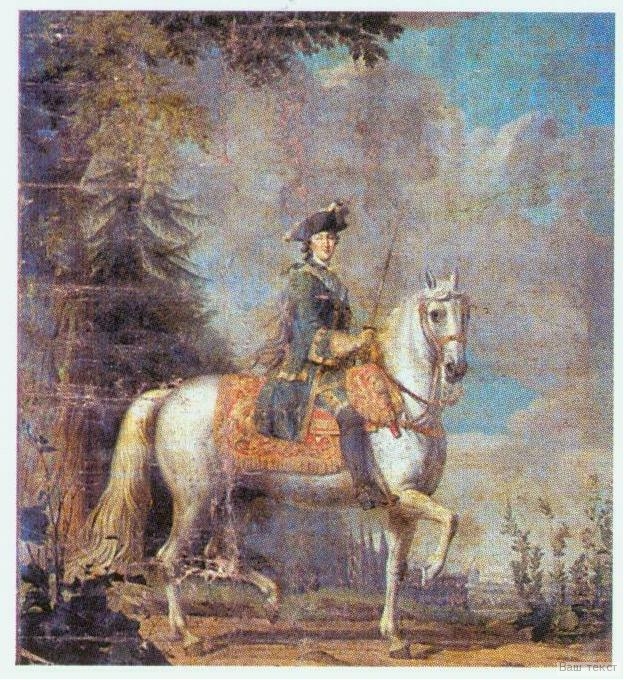
Catherine Seizes the Throne from Her Husband Peter III
With the backing of the guards regiments, the German-born empress overthrew Peter III after six months of his reign and ruled Russia for 34 years.
On 9 July 1762 (28 June Old Style), Emperor Peter III lost his throne, ending a short and erratic reign of about six months in a swiftly organized coup. Born Charles Peter Ulrich in Holstein-Gottorp, the grandson of Peter the Great had been brought to Russia in 1742 by his aunt, Empress Elizabeth, who named him heir presumptive to the imperial crown. In 1745, he married Princess Sophie of Anhalt-Zerbst, who adopted the Orthodox name Catherine. Long before Peter inherited the throne in January 1762, the marriage was characterized by deep personal estrangement, and both partners lived separate lives marked by mutual antipathy.
During his 186 days in power, Peter pursued an active domestic agenda, passing a large number of laws. He relieved the Russian nobility of mandatory peacetime state and military service, permitted nobles to journey abroad, and decreed the founding of a state bank to issue paper money. Furthermore, he prohibited landowners from murdering peasants under penalty of exile, brought an end to official persecution against the Old Believers, and drew up plans to secularize land belonging to the Orthodox Church. He also abolished the Secret Chancellery, criticizing its history of arbitrary arrests and physical interrogation.

Keep reading in Yester
Coming soonKeep following the story
Sources
Image: Эриксен · Public domain · Wikimedia Commons · cropped
