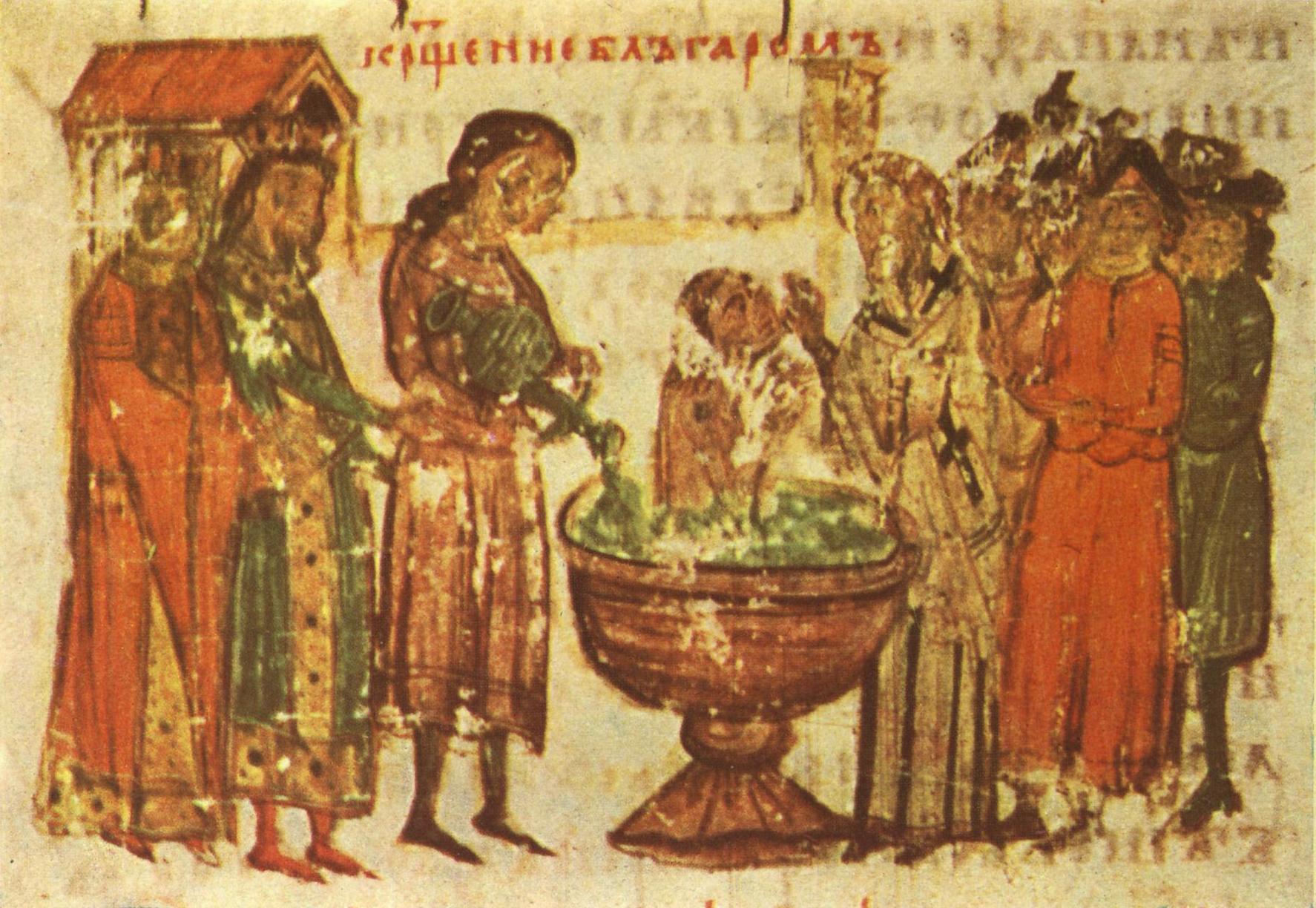
Khan Boris Brings Bulgaria into Christianity
Bulgaria’s ruler played Rome against Constantinople and won a church that would worship in a Slavic language.
In the mid-ninth century, the Bulgarian state occupied a precarious position between the Frankish realm and the Byzantine Empire. Following the territorial gains of Khan Krum decades earlier, Bulgaria had emerged as a dominant power in Southeastern Europe, yet its pagan status kept it diplomatically isolated from the surrounding Christian realms. Internally, the state was divided between Turkic Bulgar elites, Slavic populations, and native Christian groups. When Khan Boris I began his reign in 852, he confronted both the cultural hegemony of Constantinople and shifting military coalitions that crossed Great Moravia and the East Frankish kingdom.
Tensions peaked in late 863 when Byzantine armies struck Bulgaria to prevent Boris from forming a religious pact with Louis the German. Weakened by famine and other natural disasters, Boris sued for peace before significant military engagements occurred. He agreed to a peace settlement that gave Bulgaria the border region of Zagora and pledged that his realm would adopt Christianity from Constantinople. In 864, a Byzantine ecclesiastical mission arrived at the capital of Pliska. Boris, his family, and key dignitaries were baptized into the Eastern rite, and the ruler adopted the Christian name Michael, after his godfather, Emperor Michael III.

Keep reading in Yester
Coming soonKeep following the story
Sources
Image: Original: Constantine Manasses · Public domain · Wikimedia Commons · cropped
