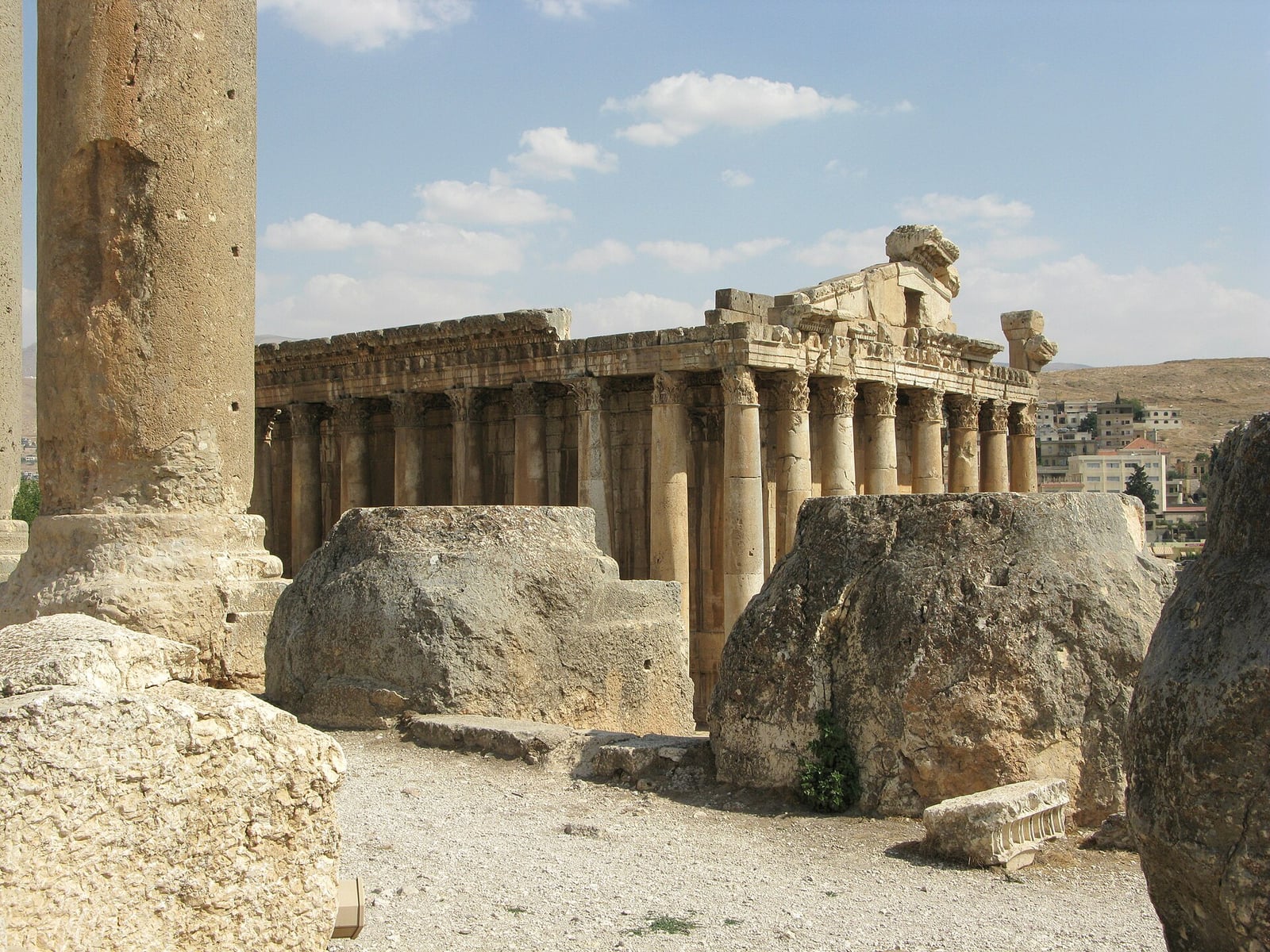
Rome Raises Its Grandest Temples at Baalbek
In the Beqaa Valley, Roman builders lifted some of the largest stone blocks ever moved into a temple complex.
In the fertile expanse of the Beqaa Valley east of the Litani River, the settlement of Baalbek became the site of one of the Roman Empire's most ambitious architectural undertakings. Known as Heliopolis, or sun city, during the Hellenistic period, the town came under Roman authority after Pompey annexed the region in 64 BCE. Its Roman name, Colonia Julia Augusta Felix Heliopolitana, suggests that legionary veterans were settled there under Augustus, although some ancient evidence dates its status as a colony later. From these early imperial beginnings, engineers and laborers initiated a sprawling sanctuary on the elevation of Tell Baalbek that transformed the regional landscape across several centuries.
The sanctuary served both political and spiritual functions, merging regional Semitic cults with imperial Roman religion. At the heart of the complex, the Temple of Jupiter arose above earlier sanctuaries, largely completed by around AD 60. Worshippers linked the storm god Baal Hadad with Jupiter and the Greek sun deity Helios. While imperial in execution, the sanctuary reflected local Levantine traditions, deviating from standard Roman layouts to accommodate regional rituals. On nearby grounds stood further grand structures, including the exceptionally well-preserved Temple of Bacchus and a sanctuary dedicated to Venus, establishing a sacred precinct that rivaled the greatest pilgrimage destinations in the Roman world.

Keep reading in Yester
Coming soonKeep following the story
Sources
Image: Vyacheslav Argenberg · CC BY 4.0 · Wikimedia Commons · cropped
