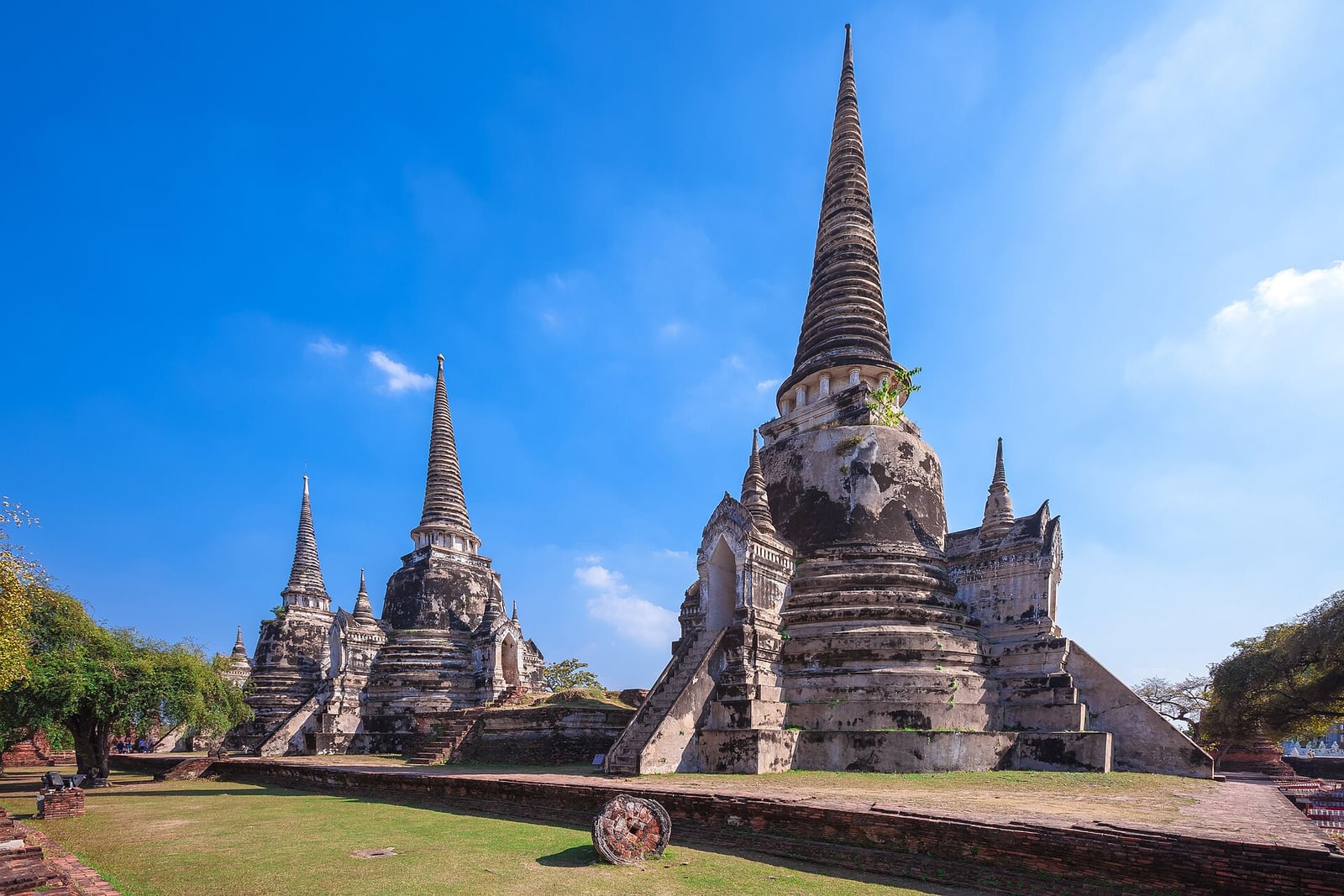
Ayutthaya Is Founded on an Island in the Chao Phraya
A capital of temples and canals grew into a great trading kingdom.
In about 1350, King Uthong established the city of Ayutthaya in the lower Chao Phraya river basin; Thai tradition dates the founding to 4 March 1351. Positioned on an island surrounded by three rivers, the new capital drew upon older riverine settlements in a floodplain that naturally flooded each year. The region had long supported communities such as Lavo to the east and Suphannabhum to the west, along with earlier river ports that traded across regional waters. By drawing together ruling lineages from these established polities, Uthong brought them under a single political authority, initiating an urban kingdom that would shape the region for more than four centuries.
Archaeological evidence demonstrates that settlement on the island began well before 1351. Beneath sites such as Wat Mahathat, excavators have identified building remains and pottery older than the city's traditional founding date. Epigraphic records and religious chronicles indicate that an earlier city known as Ayodhya was already home to Buddhist monks during the early decades of the fourteenth century. Rather than creating a capital from an empty landscape, Uthong built upon a thriving commercial community, consolidating influence in an area where local rulers had long maintained diplomatic and commercial connections with China and neighbouring states.

Keep reading in Yester
Coming soonKeep following the story
Sources
Image: Supanut Arunoprayote · CC BY 4.0 · Wikimedia Commons · cropped
