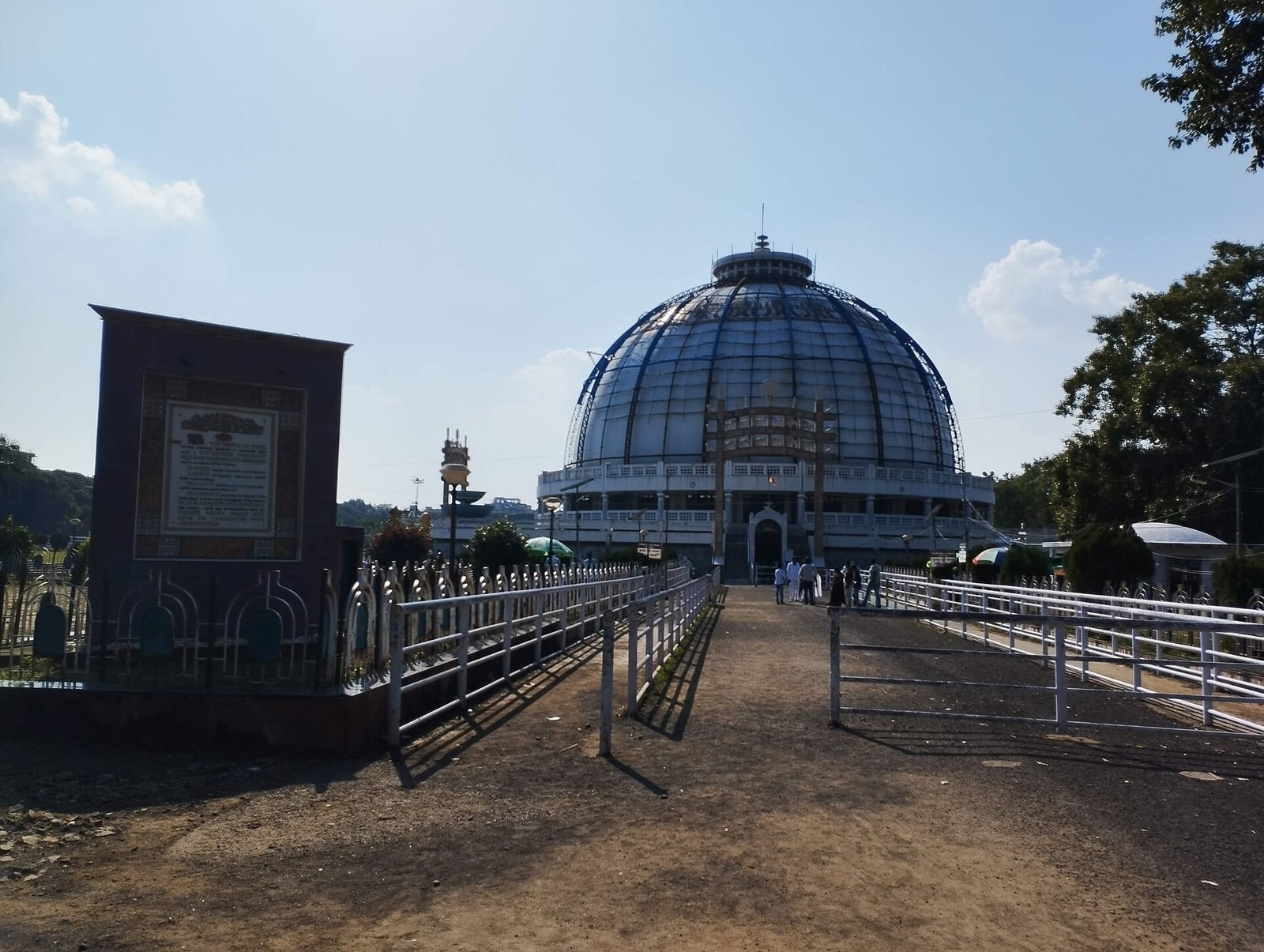
Ambedkar Leads Hundreds of Thousands of Dalits into Buddhism
The architect of India’s constitution rejected caste by converting with a vast crowd in a single ceremony.
On 14 October 1956, Bhimrao Ramji Ambedkar gathered with an enormous crowd at Deekshabhoomi in Nagpur, India, to renounce Hinduism and formally embrace Buddhism. Ambedkar, a prominent jurist and Dalit leader who had spent decades advocating for the civic and human rights of the country's most marginalized communities, had publicly stated his intent to leave Hinduism more than twenty years earlier, in 1935. At the Nagpur ceremony, hundreds of thousands of followers converted alongside him, with estimates commonly ranging from about 365,000 to 400,000 or more, marking the foundation of a modern socio-political and religious initiative known as the Dalit Buddhist movement.
Ambedkar's embrace of Buddhism followed a long engagement with Indian religious life. In the 1930s, during discussions on colonial constitutional reform, he had advocated for separate electorates for depressed classes, a measure opposed by Mahatma Gandhi and subsequently modified by the compromise Poona Pact of 1932. Convinced that liberation from the caste hierarchy was impossible within orthodox Hindu structures, Ambedkar examined various traditions, including Islam, Christianity, and Sikhism, before concluding that Buddhism offered the clearest foundation for social equality and rational ethics.

Keep reading in Yester
Coming soonKeep following the story
Sources
Image: দীপকজ্যোতি মহন্ত · CC0 · Wikimedia Commons · cropped
