Portugal Secures Its Independence at Aljubarrota
A small Portuguese army with English archers defeated Castile and confirmed John I as king.
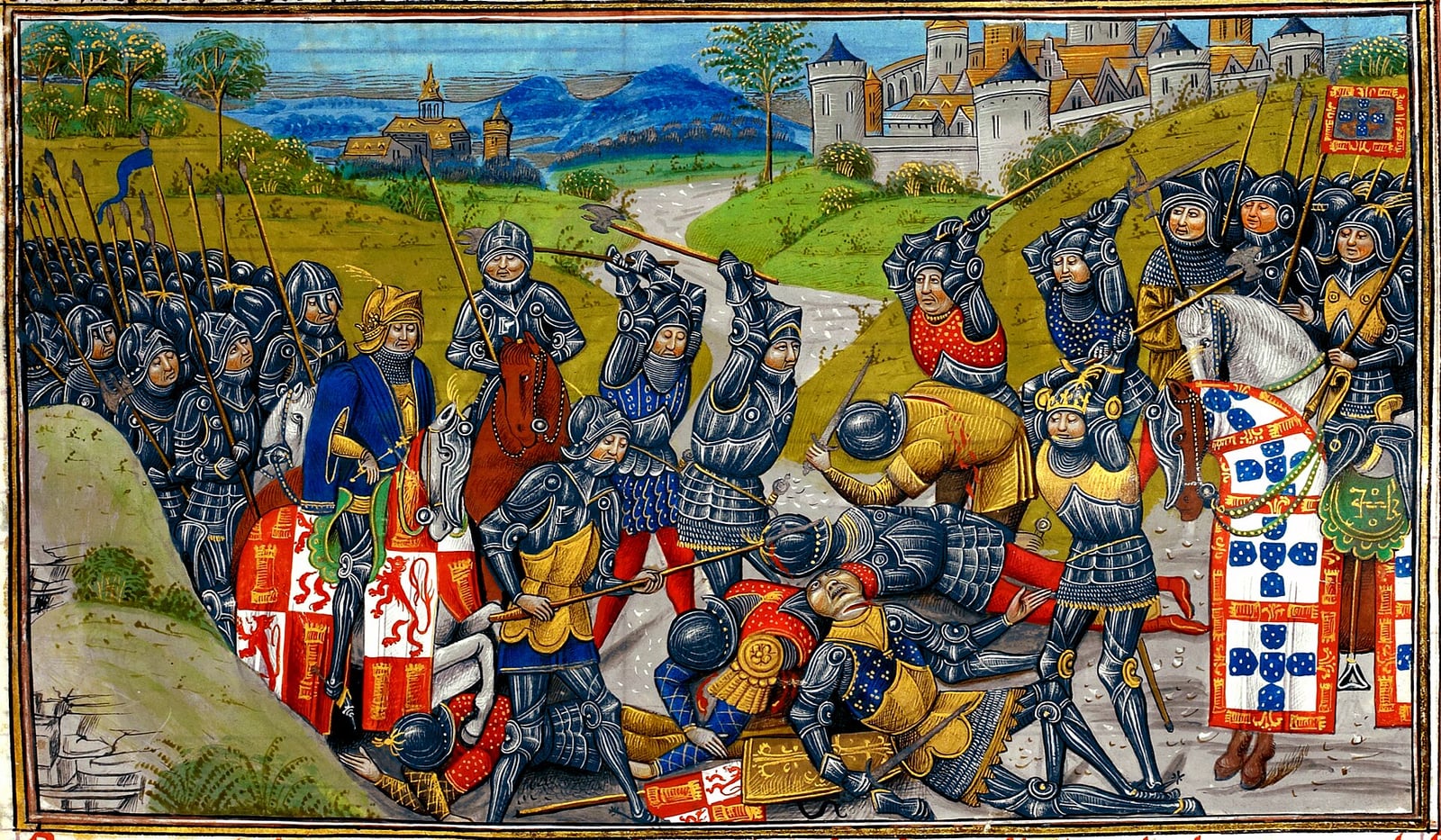
On 14 August 1385, an outnumbered Portuguese army under King John I and his constable, Nuno Álvares Pereira, confronted the forces of King Juan I of Castile at São Jorge, between Leiria and Alcobaça. The confrontation resolved the prolonged succession crisis that had gripped Portugal since the death of King Ferdinand I in October 1383 without a male heir. Under the Treaty of Salvaterra de Magos, the Portuguese crown was slated to pass to Ferdinand's daughter Beatrice and her husband, Juan of Castile. Fearing annexation, Portuguese towns and urban merchants resisted the union, prompting John, the Grand Master of the Order of Aviz, to lead a revolt that culminated in his acclamation as king by the Cortes of Coimbra in April 1385.
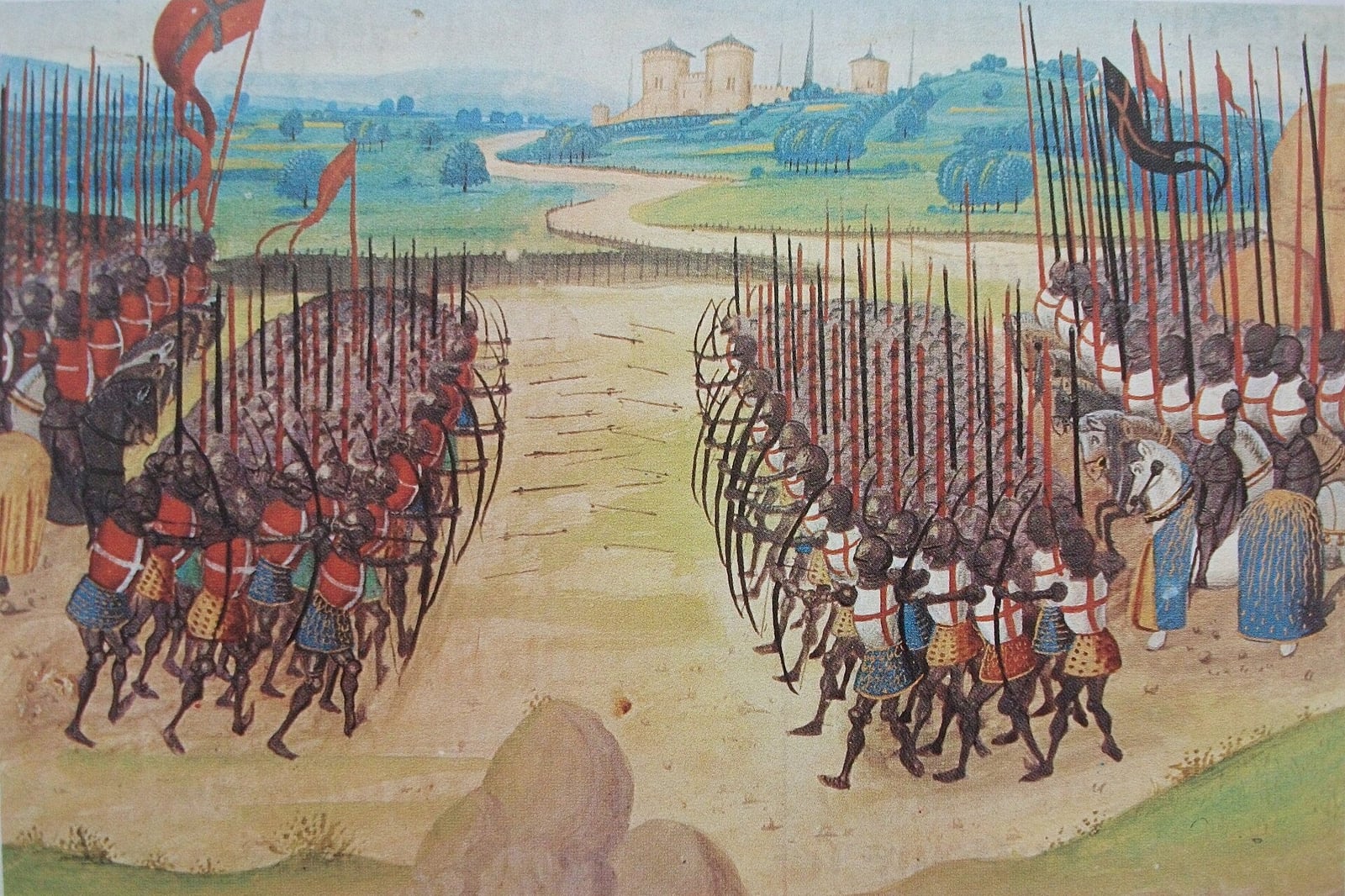
Determined to claim the realm, Juan of Castile launched a major invasion in 1385. To counter this threat, John of Aviz turned to foreign allies, relying on diplomatic contacts with England that yielded a small contingent of English and Gascon archers and men-at-arms, numbering a few hundred and many of them veterans of the Hundred Years' War. These troops operated alongside the Portuguese forces under Álvares Pereira, who selected a small, flattened hill bordered by creeks near Aljubarrota as the ideal defensive ground. The Portuguese intended to block the road to Lisbon, compelling the invading army to fight on terrain where defensive preparations could neutralize superior numbers.

Keep reading in Yester
Coming soonKeep following the story
Sources
Image: Jean d'Wavrin (Chronique d'Angleterre) · Public domain · Wikimedia Commons · cropped
