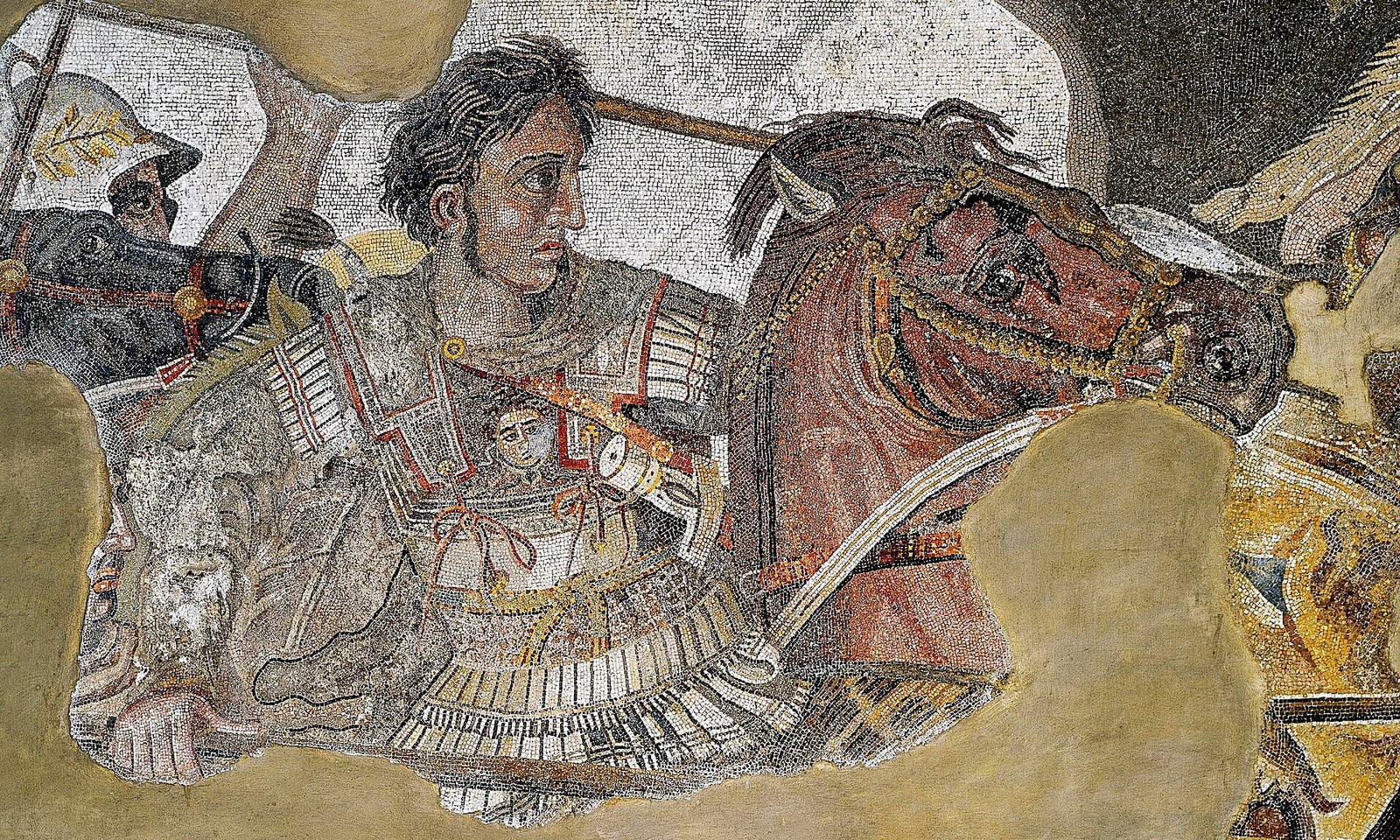
Alexander Marches from Macedonia to the Indus
In eleven years, Alexander of Macedon led his army from the Hellespont through Egypt and Persia to the Indus, then turned back and died in Babylon at 32.
In 334 BCE, Alexander crossed the Hellespont into Asia with a Macedonian and allied army, beginning an offensive campaign against the Achaemenid Empire. The Persian satraps of Anatolia pooled their regional forces to challenge him, selecting the Granicus River as their defensive barrier. Stationing their cavalry on the elevated riverbank, the Persian commanders sought to block the crossing. Alexander forced the crossing and broke the opposing line. After routing the cavalry and encircling the enemy mercenary reserve, Alexander secured control over western Asia Minor, accepting the capitulation of key administrative centers like Sardis.
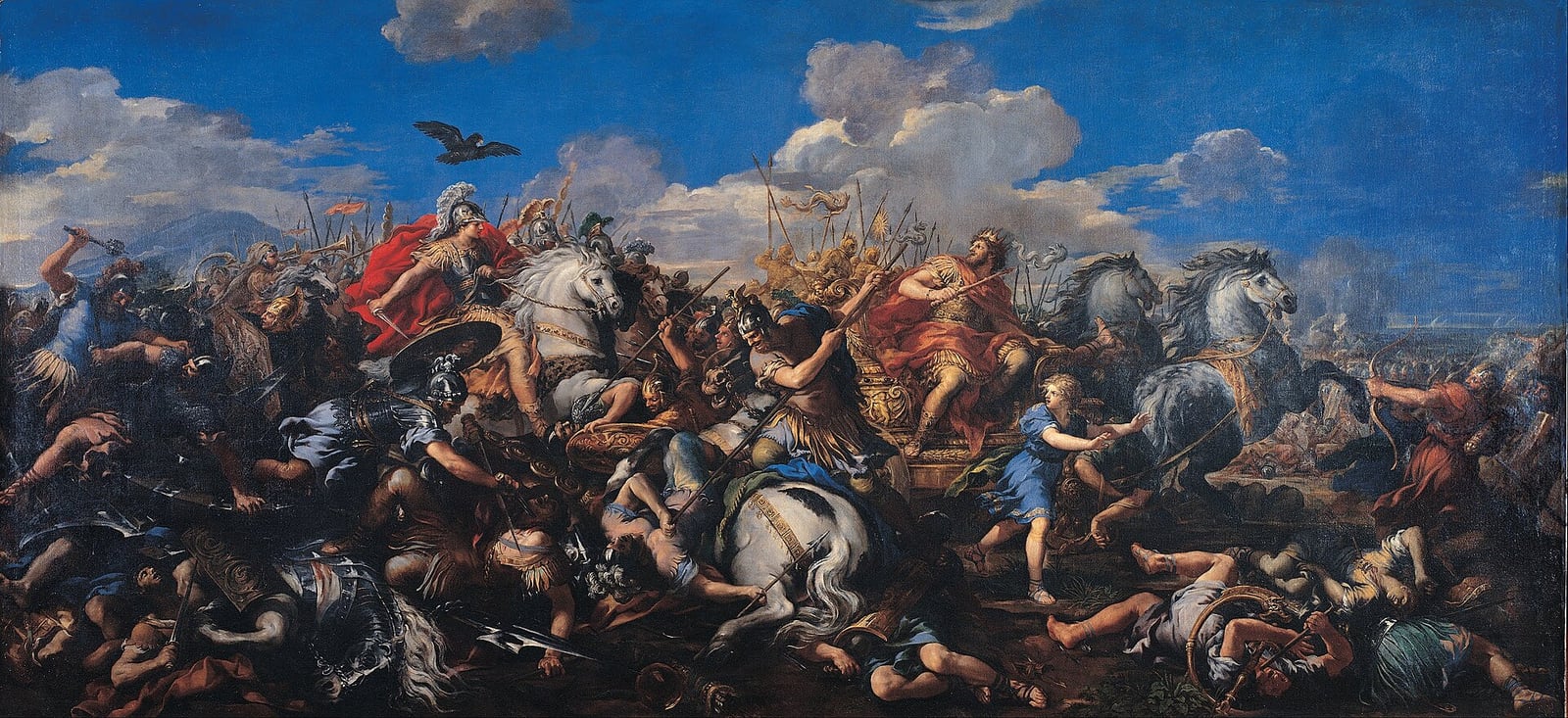
Advancing through Cappadocia and past the Taurus mountains the following year, the Macedonian army met the royal Persian forces under King Darius III at Issus in November 333 BCE. Darius had assembled a larger force than Alexander's and met him near the Pinarus River. Alexander led a cavalry attack that broke into the Persian line. Darius abandoned his chariot and fled the battlefield, leaving behind his camp and family. It was the first time Alexander defeated Darius III in person, and it opened the way to Syria and Egypt.

Keep reading in Yester
Coming soonKeep following the story
Sources
Image: Unknown author · Public domain · Wikimedia Commons · cropped
